Tag Archives: plot

Change of Scene (and genre)

It’s been a tough writing year for me. And by tough writing, I mean no writing.


Which isn’t actually true.


While my work on my middle grade fantasy novels stalled (basically completely) which makes me feel like I am not writing at all, I did start co-writing a series with one of my amazing critique partners, Samantha Cohoe. We’ve written two novels so far, including setting aside time, limiting distractions, and writing 30,000 words combined in only three days.


So my no writing, looks very much like being quite productive after all.


What are some of the not-so-secret secrets to our success?

  • Meeting genre-expectations: We’re writing mysteries with a light romance touch to it. That gives us a structure and a framework. We need a body. Someone to have actually done the deed. Other suspects who could have reasonably murdered our dearly departed character. A hot person of interest who our main character wants to get close to but something is keeping them apart. Knowing things we have to include to meet the expectations of reader in this genre give us a bunch of scene and character ideas. Which leads me to…
  • Bookends: We usually know roughly where the book will start but importantly, we know how it ends. We know the climax scene and the basics of how our main character will discover the true killer. But what to write?
  • A runway: Rather than calling it an outline, we start laying out the scenes of the book and developing a ‘runway’ – and once we have enough runway, just like at your local airport, we take off! Calling it a runway vs. an outline feels lighter, and also removes some of the pressure. And takes us out of a singularly linear approach. Because we runway…
  • Front to back and back to front: Our runway starts at the beginning-ish – and then usually somewhere around the middle, we hop around to our end scene (which as I said, we already know), and then we work back toward the middle again. Layering in, fleshing out, leading us to our destination, tightening and weaving as we go. But what’s the most important syllable in that sentence?
  • Collaboration: WE are writing a book. WE are brainstorming together. WE are counting on each other to get the thing done. Whichever one of us has the most energy helps motivate the other, and WE go back and forth on who is cheerleading who. And we have a built-in audience and readership – each other! Which also means we have more than one opinion to take into consideration, so it’s important that we decided…
  • We will not be too precious: We made an explicit agreement that we’re not going to be rigid in our thinking or in our demands. If something isn’t really crucially critically important to us, and the other person has a different opinion… we bend. We move on. We find a third option we can both dig. Something like that. There is basically no hill that we’re going to die on. And when the other person has a way to make a scene funnier, a line tighter – we take it. Take the edit. Make it better. Two heads are better than one.


This experiment/experience has been a real game changer for me. Having someone else count on my productivity keeps me to deadlines. Writing in a completely different genre has opened a brand new well of creativity.


Have you switched it up? What changes have you made that have inspired you and worked well for your writing?

 

6 Comments

Filed under Coral Jenrette

ODE TO REVISION

Revision.

You make me crazy!

“Explain,” you say.

You’re akin to blisters, pests, chores, and petty necessaries.

I have sweat and steamed over you,

rehashing plots, revamping chapters, recasting characters.

“Your point?” you ask.

Now, I am a fanatical, fervored writer

glued to my written mess.

Revision,

others warned

you would be a storm, thorns, and bricks on my brain!

“Why stay?” you say.

For those spectacular moments

when my story flows smooth as syrup

and sparks fill me,

singing “you can do this!”

And suddenly,

I’m a dancer, a bird, a shooting star, a perfect snowflake…

“Follow your characters,” you declare.

Exciting when I let them get into grand muck,

but then, I’m stuck in another written mess.

I breathe, cuss,

resume re-doing:

reorganizing scenes,

recalibrating action,

reconditioning description and dialogue.

Again.

Repeat.

Again.

Insane.

But my hope is refueled.

Alas, my main character has a new coat of conviction and chutzpah.

I can’t let her down.

Revision,

you’re a wild renovation that I can’t fully resolve.

“Congrats!” you say. “Resolving is for readers.”

Revision,

you wake me to characters in chaos,

off stowing secrets and lies.

Please give me a shortcut!

“Butt in chair,” you remind.

Revision,

my thick-skinned constant,

you make me crazy,

but I’ll keep my seat on your train,

wrecks and all.

Thank you.

Much obliged.

Appreciate you.


5 Comments

Filed under craft advice, critique, Karen McChesney, Main character, Motivation, Picture Books, Revision process, RMC-SCBWI

Why you should invest in coaching as a writer or illustrator

Bill Gates said in 2020 — “Everyone needs a coach. It doesn’t matter whether you’re a basketball player, a tennis player, a gymnast, or a bridge player.” But let’s finish that sentence.
It doesn’t matter whether you’re a writer. Or an illustrator. Or both.

Everyone needs a coach.

If you don’t immediately agree with me (or Bill) here are some benefits for you to consider. And if you do already agree with me, and are a member of the RMC-SCBWI, head right on over to read specifically about the Michelle Begley Mentor Program, a six month program that offers great value for investment, which I am thrilled to co-coordinate this year with Laura Perdew. The application is open until November 9, 2021 and this year we are offering a scholarship courtesy of the Writing Roosters and two grants!


Ongoing Critique and Feedback

I am part of two wonderful critique groups that meet regularly, yet working with a mentor is still a unique experience because *your work* and *your craft* are the entire focus of the conversation. Together you discuss your vision and over the course of multiple months, you bring that vision to light.


Improve your current work in progress

First and foremost, your mentor will work with you on a manuscript (or illustration portfolio) that you’ve been working on. As established professionals, they bring their expertise to your work and will help you develop it to be as strong as it can be. In my own mentorship with Anna-Maria Crum as my mentor, she helped me rework my plot and character motivation – my inciting incident was buried way down deep in my manuscript, and this reorganization immediately made my work stronger.


Improve your craft going forward

There will be countless elements of what your mentor points out in your work that you will be able to carry forward for years to come. Two personal examples — I learned about some of the weaknesses in my plot (build stronger motivation for action – no coincidences!) as well as in my dialogue (make sure my characters react to what is said as opposed to making unrealistic leaps in the conversation because the lines sound cool). It opened up my eyes not only to what I could improve in the novel we were discussing, but what I could carry over to every scene I’ve crafted since.


Coaches can help you set realistic goals

Our mentors have been there, done that, but the fact is that every artistic creator is different. A mentor can talk through your process and experience and help you set goals for your work – goals that are within your control and that you will meet during the course of the six months. Which leads us right to…


Having a coach is motivating

Coaches give you deadlines. They are there, waiting and expecting for you to work with them. They are looking forward to seeing your progress. And having that built in accountability can do wonders.


***

There are many other reasons to have a coach, and many personal experiences about successful mentor/mentee relationships. Read testimonials here about what others have gotten out of the Michelle Begley Mentor program, and share in the comments some of the benefits you have experienced in working with a mentor (or being a mentor!).

And consider securing a mentor of your own through the Michelle Begley Mentor Program. The application is open until November 9, 2021.


**Reading this after 11/9/21? Join us next time – the application period for the Michelle Begley Mentor Program is typically October through November 1.

2 Comments

Filed under Coral Jenrette, craft advice, critique, Revision process, RMC-SCBWI

DISCOVERING THE ROOT OF OUR STORIES

My mom asked me to stay while she napped. “Take a nap, honey…on my bed.” I couldn’t refuse my 92-year-old mom. Plus, her air conditioning felt wonderful. We had just come back from being outside on a very muggy day. She quickly dozed off on her small couch. I sat close by on her twin bed and looked around her studio apartment. I was tempted to stretch out and nap, but I was too distracted.

I found myself studying all her favorite things – fragile figurines, throw pillows, antique lamps. Then, I honed in on the walls, studying decorative plates, framed art prints, framed photos of my parents wedding day… I disappeared into studying everything on her walls and atop her furniture. I felt a bit comforted. Afterall, I grew up surrounded by all these things. They were home. My mom was an incredibly talented decorator. Our home was beautiful inside. Every plate, print, figurine had a specific place. And a story. She bought most things at antique stores or from collectors out on farms. In a way, she had bought someone else’s “story” and then went on to create her own. I admit, I didn’t appreciate these things growing up. My chore was dusting them. But then I learned to negotiate with my brothers, so I could mow the lawn – and one of them was happy inside dusting away!

My mom let out an occasional snore as I tip-toed around her little apartment. I wanted to stand close and get a good look at things. I got a bit misty eyed, thinking about all the stories behind them. I was surrounded by story. Then, it hit me. Lots of these things have shown up in my fiction writing – in my character’s homes, in my themes, plots, etc. How could they not, I suppose… Afterall, they are still deep in my roots. These things. Each one holds so many stories. Each one holds part of my story. Each one.

Cards and letters: A red file next to her phone contains recent cards and letters from her kids. Growing up, she stored cards and letters in a mini wood trunk. I love having my characters write or receive letters. And I’m over the moon just imagining one of my characters opening a drawer, then discovering a bunch of letters. I get so excited about the “and then and then”! Especially when a letter holds a secret.

Framed photos: Many black-and-white photos decorate her walls; many feature her parents and grandparents. I never knew them. They were born in Poland, but my mom never told their stories. Oh my gosh! One of my characters is growing up in a Polish family. Even though I only saw my Polish relatives a few times a year (and they taught me how to polka), I never knew their origin stories, their roots. Perhaps, I have desired “finding” them in my writing. Actually, I have.

Shoes: Her brown leather lace-up shoes sit on the floor across from her couch. They have sat there ever since she started wearing a pair of white Reebok shoes. I always picture my character’s shoes, even if I don’t mention shoes in my story. The color, the brand, the style. I’m especially intrigued with why my character would choose a certain shoe.

Landline telephones: My mom has three landline phones, each within a few steps. In our teen years, my brothers and I were always vying for our one landline. All of my YA’s take place in the days of landlines. I prefer the challenge inherent in a landline, such as a family eavesdropping, everyone racing to the ringing phone…

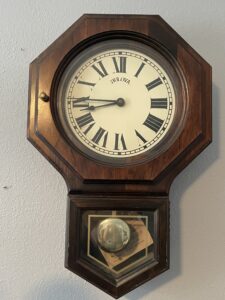
Clocks: There are four clocks spread throughout my mom’s. I remember the obnoxious sound of our cuckoo clock while the seven of us ate Sunday pot roast. Despite my struggle with chronology in writing, I thoroughly enjoy giving clocks a major role. Nothing like an alarm clock startling a character! By the way, my childhood kitchen clock hangs in my writer studio.

Here’s to the finding, discovering the root of our stories, where ‘er they come from! Children’s author E.E. Duncan summed it up best: “It’s interesting to look to ourselves and find those themes that recur in our writing and discover their roots.” Elizabeth is a member of my amazing critique group, Story Spinners. Her biographies and historical fiction explore how history affects everyday people. Her books include, Florence Sabin, Teacher, Scientist, Humanitarian; Felipe and Dolores Baca, Hispanic Pioneers; Ralph Carr, Defender of Japanese Americans; Helen Hunt Jackson, Colorado’s Literary Lady.

3 Comments

Filed under Karen McChesney

SOWING STORY SEEDS FOR KIDS

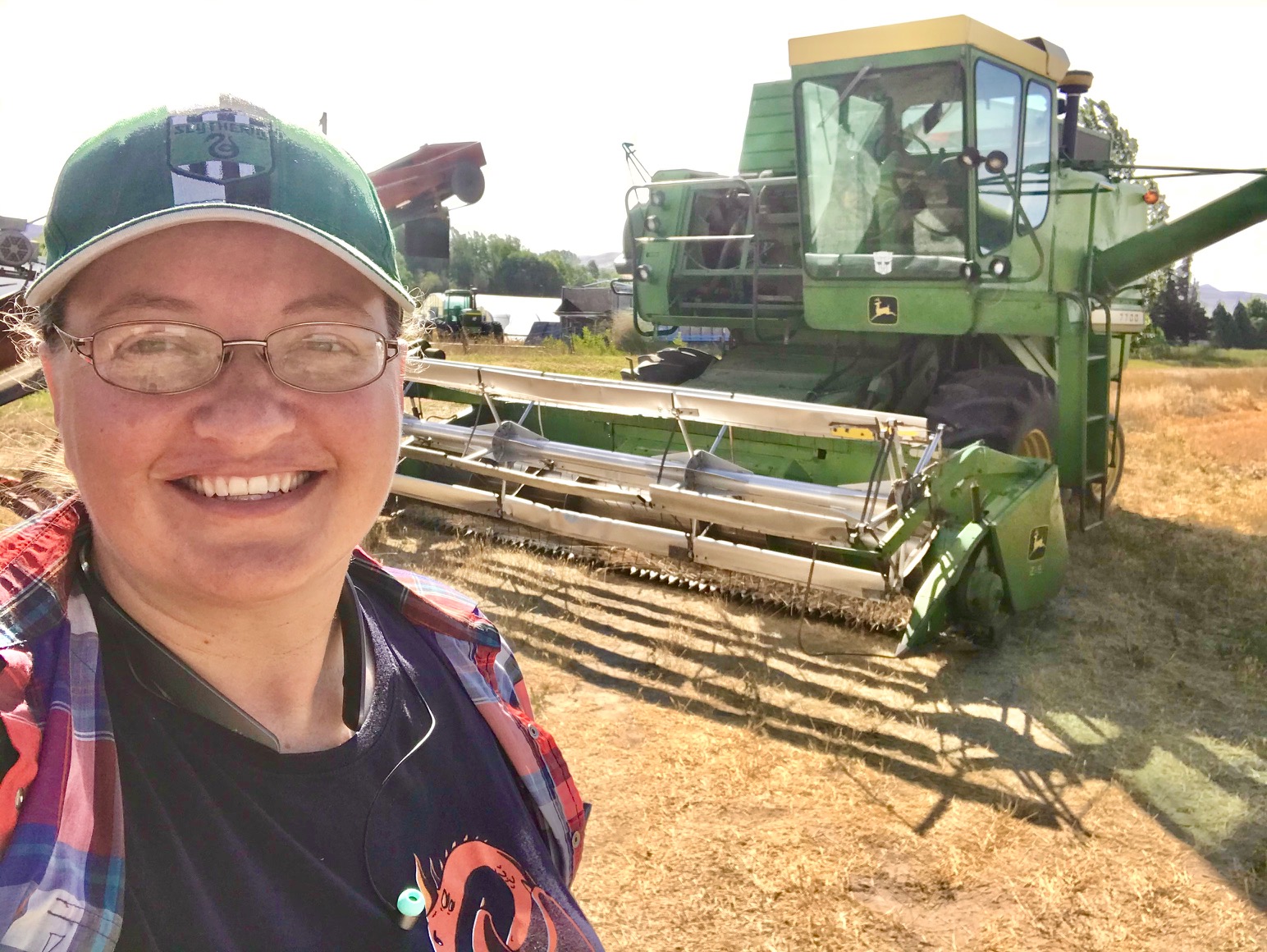
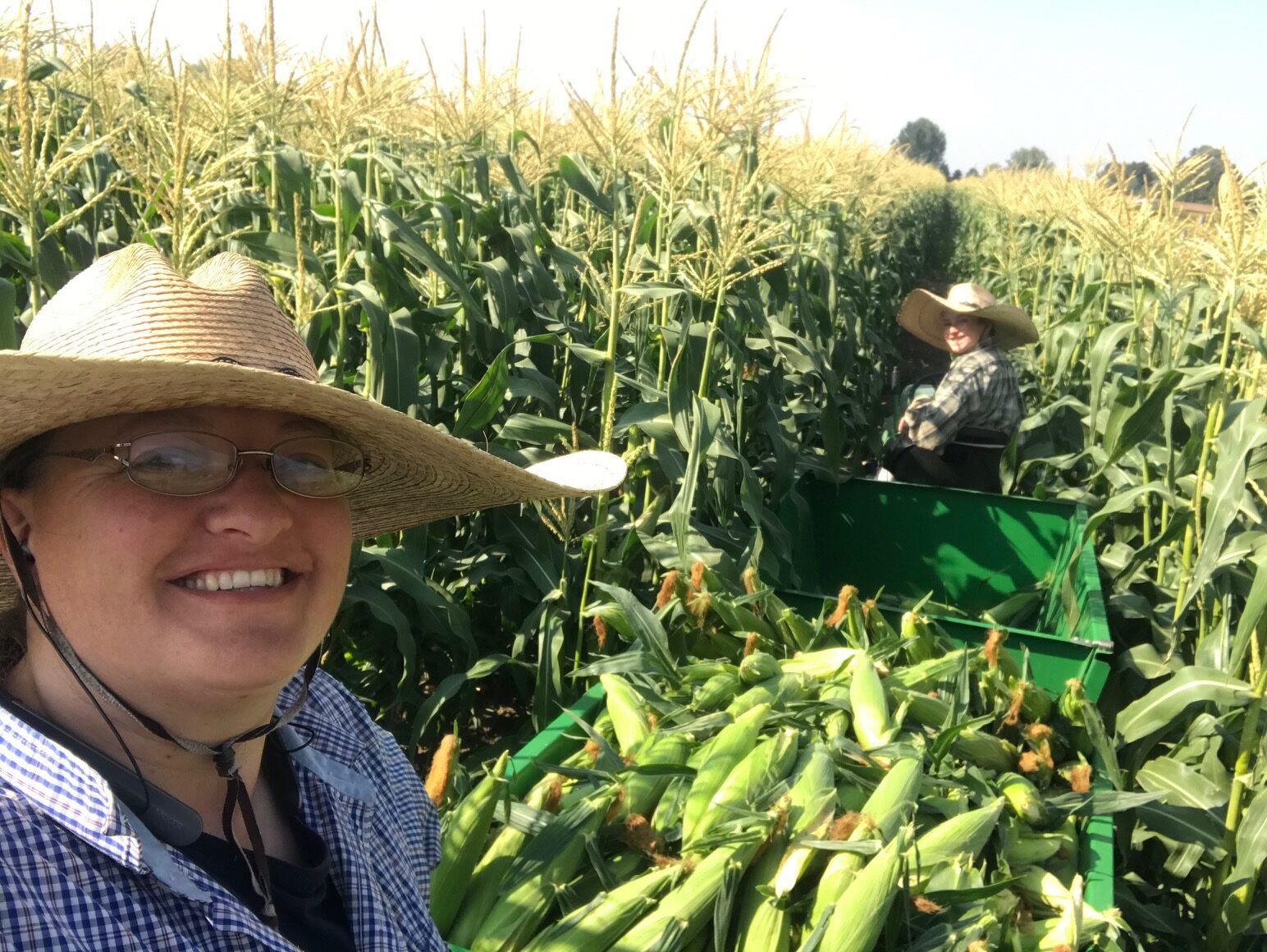
Her smile is as wide and natural as the 103-acre farm in the background. Clad in a flannel shirt, the woman tells viewers, “Alright, well, we’re inside the tractor now.” After she introduces the two cats watching from outside, she holds up her book cover, THE WISH AND THE PEACOCK; she opens it and announces, “Chapter one, hide-and-seek…” pauses, then reads, Finding lost things on the farm is the world’s hardest game of hide-and-seek. I’ve been searching for Dad’s favorite shovel for weeks.

Meet farmer and children’s book author, Wendy Swore. For the next 15 minutes, Swore reads the chapter, acting out sentences with gestures and animated faces, and changing her voice for each character. Viewers get acquainted with 12-year-old Paige, who lost her father and wants to save her family farm, located on an Idaho reservation. Swore knows her setting. For the past 20 years, she has lived and farmed on the Sho-Ban Reservation, where her husband and five children were born and raised.

Sponsored by her publisher, Shadow Mountain Publishing, Swore’s online read-aloud isn’t just for kids. “They’re for everyone stuck in quarantine!” says Swore. I recently interviewed her about her books and how she juggles farming and writing.

Was farming part of your childhood?

My dad was a crop duster and we moved all around. I got to sit on his lap while he flew his crop duster plane. That was my introduction to agriculture.

What is your first memory of writing?

In elementary school, I had a teacher who was extraordinary. She used to tell us things like, start writing about the color brown without using the color brown. As a fourth grader, that was really mind-blowing! She told me, ‘you’re really good, you should really write more’. I wrote about a Hunter Cheetah. My teacher made me feel like it was as amazing as I thought it was.

When did you start writing professionally?

About 15 years ago, my husband said, ‘you should write a story about the farm’. I sat down and wrote a 90,000 word young adult (YA) novel about this farm thing. He said, ‘no, I meant a little flier-coloring book thing to hand to kids.’ I said, ‘too late’, and I’ve been writing ever since! No one will ever see the 90,000. It was just for fun.

You kept writing. What motivated you?

I went to a writer’s conference and suddenly, my world opened. On a farm, I’m totally by myself, especially during off-season. And…when I started writing A MONSTER LIKE ME, my youngest was 10 years old. He would come home from school and ask, ‘do you have the next chapter ready’? He liked finding typos and wanted to see the screen.

Describe your writing rituals or habits.

I write while sitting on a ball and plug in earbuds, because I have narcolepsy. I don’t struggle with it while farming, but as soon as I stop moving. The ball lets me move around and helps me stay awake while writing; and, I listen to movie soundtracks without words.

Did the Covid pandemic affect your writing in any way?

My son who has Asperger’s wasn’t able to do his schoolwork, unless I was with him all the time. My writing time went out the window and pushed the writing of my new novel into farming seasion, so I was trying to write and farm at the same time. We do 12-hour farming days. When I only had one hour, I needed to get into the zone fast. I used music to pull me into that (mental) place that I need to be to write.

Five kids, plus farming, organizing a popular pumpkin patch and farmers markets… Egads, how do you make time to write?

I call winter my writing season. I average a minimum of half-hour a day and a couple weekends a month. If I only write in winter, then I’m having to re-learn it. So, I do a little in summer. But, my days are very full, so it is difficult to write for long periods. Early in the season is easier, because I can go out and water, then go home and write for several hours. If there is a day when I am not wiped out from farming, I go next door to my best friend’s house on Friday afternoon and we might write till one in the morning. Next door for us means half-a-mile away! We sit next to each other, so we’re totally absorbed in our imaginary world; we stop and brainstorm. It’s fun.

Do you think about your characters and plot while farming?

It’s a creative outlet that can go with me into the field. If I am farming with my children, I’ll say, ‘what do you think about a character who is like this. Then I ask, what do you think is the worst thing that could happen to this character. If I am thinking of a certain part of my story, I’ll say, so this is the situation, this is the character, how do you think this character can get from point A to B’.

You have published two middle grade (MG) novels. Do you have a favorite?

Each one satisfies a different need. A MONSTER LIKE ME was me as a child, a kid with hemangioma (a golf ball-sized protrusion on my face) who was bullied by kids and adults. I like to ask what-if questions when I write. A MONSTER LIKE ME was born because I wondered, what if I believed the people who called me a monster? THE WITCH AND THE PEACOCK was meaningful, because it captures what our life is  like now. Most farms around us have gone to houses. I needed a happy ending.

Congratulations on your new MG coming out in May. How is it different from your others?

STRONG LIKE THE SEA is my first contemporary MG; it’s not directly based on my world. The main character likes codes and figuring things out. That’s the furthest from me right now.

Any advice for writers?

Writing is hard! You have to love the things you’re writing about. I’m interested in people you might think are broken, but you get to know them and there’s more to them. I want kids to learn to love themselves. Even when you don’t have time to write, you can write stories in your head for when you do have the time.

Note: Original prose and photos were printed with the permission of Wendy Swore.


1 Comment

Filed under Karen McChesney, RMC-SCBWI

Facts From a Week in the Life of a Writer

I am ready for a game of Trivial Pursuit or Jeopardy! Perhaps, I’ll actually get a few answers correct. No, on the other hand, I have no need for a competition today. After all, trying to get published is plenty of competition for me. I would rather brew up some tea and share a cup of facts and findings from my past week of research for my new young adult novel, a nonfiction kids article, and a picture book. Oh, how lucky I am to be a perennial student, day after day!

Enjoy! (These are not in any particular order):

  • In the 1960’s, farm kids who ran away from home were called, “field rabbits,” because they roamed the roads with no attachment to their parents.
  • According to an FBI report, in 1967, there was a record number of teenage runaways in the U.S. Some 90,000.
  • The Beatles hit, “She’s Leaving Home,” is based on the true story of 17-year-old runaway Melanie Coe. In the 1997 biography PAUL MCCARTNEY: MANY YEARS FROM NOW, McCartney recalled, “We’d seen a story in the newspaper about a young girl who’d left home and not been found…there were a lot of those at the time, and that was enough to give us a story line. So, I started to get the lyrics – she slips out and leaves a note and then the parents wake up. It was rather poignant.”
  • A high school freshman in California has a collection of more than 3,000 library cards.
  • The first library cards were probably issued at membership libraries, 18th Century organizations where members paid fees (and sometimes books from their own collection) in exchange for the right to check out materials.
  • Crows have a unique way of marking the location of their snacks. They don’t bury food; they cover it with a leaf, twig, grass or other item.
  • Ever since their 2020 audition on “America’s Got Talent” TV show, Brothers Gage have made harmonica hip for teens. 15-year-old Brody and 17-year-old Alex have both been playing since they were five. The harmonica-playing, dancing duo perform at events and school pep rallies around Los Angeles.
  • Some researchers believe that in the 1970’s, teens were running TO something, such as communes, freedom, cults, etc., whereas, today, they are running AWAY from things, such as difficult home life.
  • A strong simple first sentence in a YA: “My name is Mary Katherine Blackwood.” WE HAVE ALWAYS LIVED IN A CASTLE by Shirley Jackson.
  • A strong simple character name in a YA: Uncle Big. THE SKY IS EVERYWHERE by Jandy Nelson, also author of I’LL GIVE YOU THE SUN.
  • A beautiful turning point in a picture book: “Feeling unsure, the girl thought the best thing was to put her hear in a safe place. Just for the time being. So, she put it in a bottle and hung it around her neck. And that seemed to fix things…at first.” THE HEART AND THE BOTTLE by Oliver Jeffers, also author of THE GREAT PAPER CAPER and HOW TO CATCH A STAR.
  • In the early- to mid-20th century, most New York City libraries had live-in superintendents. They were known as the families that lived behind the stacks! And, all their kids had 24-7 access to books. One girl used to have sleepovers and in 1965, went on to hold her wedding in the library.
  • Early library cards were also called “tickets.”
  • In 1886, a library card for the Lowell City Library in Massachusetts stated, “Marking of all sorts on books is punishable by statute with fine and imprisonment, and directors will prosecute.”
  • In 1924, Oakland Free Library (CA) issued two different cards: One was “good for any book.” The other stated, “No fiction shall be issued.”
  • Darby Free Library, which started in PA in 1743, is America’s oldest public library.

By the way, a photographer and journalist came up with the idea of Trivial Pursuit while playing Scrabble. Photographer Chris Haney was always open about being a high school dropout, often joking, “It was the biggest mistake I ever made. I should have done it earlier!” The board game artwork was done by 18-year-old Michael Wurstlin.

And, in case you’re wondering… the word trivia is a derivative of trivium. The origin of trivium is, place three roads meet. Oops, I forgot to share: Peril is a synonym for jeopardy.

Hmm, maybe I am ready for questions. Game on! If my answer is wrong and I get the gong, I’ll simply say, “I Should Have Known That!” (a board game for young adults) and brew up another cup of tea.


5 Comments

Filed under Karen McChesney, Main character, WORD NERD