2022 Picture Books To Look Forward To – According to Me.

Hello friends!

In my non-writing life I’m a librarian and recently I had the opportunity to share with patrons some picture books I think will be standouts in 2022. I thought I would share those same picture books with you you! Some disclaimers first:

  • These are books a) I think will be big sellers and/or b) look cool or important to me. HIGHLY subjective.
  • I’ve only actually READ a few of them, so my assessment is based on the past successes/work of the authors and illustrators, the covers, and publisher summaries.
  • Most, if not all, of these will be published in the first half of 2022.
  • I’m sure I missed a lot of great books because while I looked at several sources it’s impossible to know EVERYTHING that is coming out in 2022. Also I only had 20 minutes for my part of the presentation so I definitely had to be selective. There were more on my list.

So, without further ado, my picks. Add yours in the comments!

BOARD BOOKS (Ages birth – 2)

  • I’m Up and I’m Still Up by Antoinette Portis 
    • Companion books about a baby who is… you guessed it, awake. With repeating words and shapes, this will be a regular read-aloud.
  • Puppy Dog, Puppy Dog What Can You See? by Amelia Hepworth and Pintachan 
    • You can’t go wrong with an interactive lift-the-flap! For babies and toddlers, this will be a sure hit. Ask the question and then look at the hints to guess before lifting the flap to see if you’re right. Includes a mirror at the end to even further involve your little one in the story! Others in the series are Ladybug, Little Hen, and Elephant 
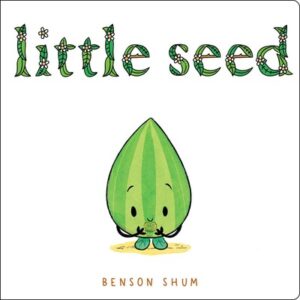
  • Little Seed by Benson Shum 
    • How cute is this? Little seed wants to hug the whole world! How do you hug a panda? An armadillo? 
  • My Nap/Mi Siesta and My Party/Mi Fiesta by Raúl the Third and Elaine Bay 
    • From the team behind the ¡Vamos! books we have this bilingual board book series featuring their character Coco Rocha who is, yes, a cockroach.  
  • First Morning Sun by Aimee Reed and Jing Jing Tsong 
    • Sharing your child’s milestones with rhyming text and beautiful illustrations. 
  • Boop the Snoot by Ashlyn Anstee 
    • What kid doesn’t want to be invited to “boop the snoot” of various animals? I might get a copy of this for myself, it looks so cute.  
  • Baby Bug by Wednesday Kirwan 
    • Baby bug explores the natural world and learns how to wiggle, roll and splash from her creepy crawly friends. The thick,dark outlines on the pictures make this a great book to share with babies under 1 whose eyesight is still developing!  

BOOKS FOR TODDLERS (Ages 1 – 4)

  • Little Pups in Big Trucks by Bob Shea and Brian Won (Adurable series) 
    • This is a new series by two book creators I love, Bob Shea and Brian Won. These puppies are just beginning puppy school. But when their teacher is stuck under some rocks, they’ll have to use everything they’ve just learned to help her!  
  • How To Say Hello to a Worm by Kari Percival 
    • The subtitle for this book is “a first guide to outside.” And that’s just what it is – a guide for littles on engaging with nature.  
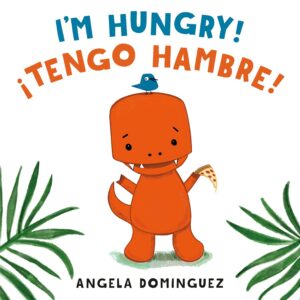
  • I’m Hungry/Tengo Hambre by Angela Dominguez 
    • Another great bilingual title from Angela Dominguez that seamlessly blends the two languages. Dinosaur is hungry, and bird is trying to figure out what he wants to eat.  
  • Little Cat Hide and Seek Emotions by Audrey Bouquet 
    • This looks like a sweet and fun way for children to learn the names for different emotions – which goes a long way toward easing their frustration when they don’t have the words to tell you how they feel.  
  • Big Green Garage by Jen Arena and Mike Dutton
    • The book advertises “15! Satisfying!  Novelty! Elements! And that is enough to pull any child in. Flaps to lift, gears to turn, tabs to pull and levers to… lever?  

FAVORITE AUTHORS/ILLUSTRATORS (All ages but mostly 3+)

  • Endlessly Ever After by Laurel Snyder & Dan Santat 
    • Fractured Fairy Tale! Choose-your-own-adventure! What’s not to love? 
  • The Blur by Minh Le and Dan Santat 
    • The team behind Drawn Together brings you a new superhero: THE BLUR. This child is able to do everything with supersonic speed, including growing up. Parents, sound familiar?  
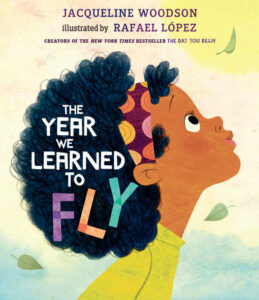
  • The Year We Learned to Fly by Jacqueline Woodson & Rafael López 
    • From the team behind The Day You Begin! Two children hear from their grandparents how their ancestors used their “brilliant and beautiful minds” to show their strength and resiliance. The children then follow suit, using their imaginations to overcome boredom dream of what might be.
  • Somewhere in the Bayou by Jarret & Jerome Pumphrey 
    • By the authors of the award winning Old Truck and last year’s Old Boat. A group of swamp critters discover that the log they’re using to travel across the pond isn’t a log after all.  
  • Hey Bruce! By Ryan T. Higgins 
    • Another title in the super-popular Bruce series! In this outing, readers follow the geese’s instructions to make Bruce do whatever they want. It’s interactive! 
  • Creepy Crayon by Aaron Reynolds and Peter Brown 
    • First we had creepy carrots, then a creepy pair of underwear, and now a crayon gets creepy! The first two in the series were super popular, so there’s no doubt this one will be too.  
  • Everything Will Be Okay by Anna Dewdney and Judy Schachner 
    • Little Bunny is having a bad day. In this rhyming story, Bunny finds some good in a day that starts out with a lot of bad. From the author of the Llama Llama books and illustrator of Skippyjon Jones.  
  • Believe in Yourself: What We learned from Arthur by Marc Brown 
    • For your nostalgia needs, Marc Brown has brought back his beloved character Arthur on his 25th anniversary. Filled with quotations and life lessons – this will be a popular book for graduation gifts!  
  • Llama Llama Back to School by Anna Dewdney and Reed Duncan 
    • While Anna Dewdney sadly passed away, this popular series (also now a Netflix show) continues.
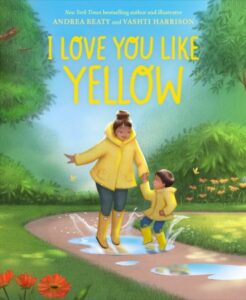
  • I Love You Like Yellow by Andrea Beaty and Vashti Harrison 
    • Andrea Beaty wrote the Ada Twist, Scientist series and Vashti Harrison wrote and illustrated the Little Leaders series – both New York Times bestsellers. This rhyming book celebrates unconditional love.  
  • Love You By Heart by Peter H. Reynolds 
    • Peter H. Reynolds is the author/illustrator of the “Creatology” series that includes The Dot and Ish and other bestselling books. This celebration of love will be a popular gift book.  

NEW AND NOTABLE (All ages but mostly 3+)

  • I Forgive Alex by Kerascoet 
    • From the team behind  I Walk With Vanessa. A boy named Alex upsets a friend and must ask for forgiveness. Wordless.
  • Being a Dog: A Tail of Mindfulness by Maria Gianferrari and Pete Oswald 
    • Enjoy the day with a child and their dog and follow the cues to bark, wag and sniff along. Backmatter includes a mindfulness walk you can take with your little one.  
  •  Beauty Woke by NoNiequa Ramos and Paola Escobar 
    • A puerto rican girl feels great about her heritage and how she looks but later starts doubting as she grows older and sees how people who look like her are treated. Her community helps her find that pride again! 
  • A is for Bee: An Alphabet Book in Translation by Ellen Heck 
    • How language is similar and different around the world.
  • Powwow Day by Traci Sorell and Madelyn Goodnight 
    • Traci Sorrell is one of the most well-known Native American (Cherokee, to be exact) authors writing picture books today! River feels the healing power of her community as she recovers from illness and wonders if she’ll ever dance in the Powwow again. 
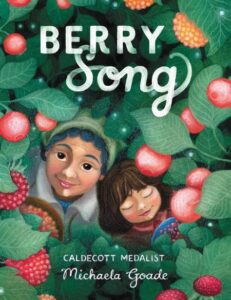
  • Berry Song by Micaela Goode 
    • Micaela Goade won a Caldecott medal for illustrating We Are Water Protectors, but this is the first book she’s written AND illustrated. A grandmother and granddaughter gather gifts from the earth: salmon, herring eggs, and so many kinds of berries, and express their gratitude for these gifts.  
  • Kindergarten, Where Kindness Matters Every Day by Vera Ahiyya (the Tutu Teacher) and Joey Chou 
    • Vera Ahiyya gained fame during the pandemic for her Instagram content as The Tutu Teacher. This is her first picture book, and it’s about the ways we show kindness to each other from the point of view of new kindergarteners.  
  • See You Someday Soon by Pat Zietlow Miller and Suzy Lee 
    • Pat Zietlow Miller has FIVE picture books coming out this year! I chose this one to share because I love Suzy Lee’s illustrations and the topic is especially timely – that those we love, even though they’re far away, are never far from our hearts.  
  • I Love You Because I Love You by Muon Thi Van and Jessica Love 
    • A call-and-response celebration of love featuring diverse families 
  • Blue by Nana Ekua Brew-Hammond and Daniel Minter 
    • You didn’t think anyone could create a WHOLE picture book about a color? Well, these two did!  And it sounds really cool! How did ancient Afghan painters make blue? When did blue become a mainstream, and not-expensive-to-create color? 
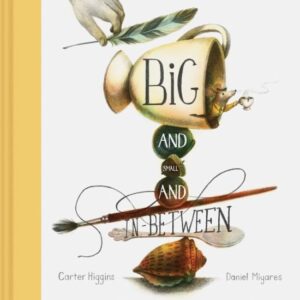
  • Big and Small and In-Between by Carter Higgins and Daniel Miyares 
    • Billed as YOU ARE (NOT) SMALL meets THE QUIET BOOK. It makes the concept of size personal. 
  • Daddy Speaks Love by Leah Henderson and E.B. Lewis 
    • Celebrates fathers, especially Black fathers, and how they guide and influence their children. With illustrations by the iconic watercolorist E.B. Lewis.  
  • Shapes: My first pop-up by Matthew Reinhart and Ekaterina Trukhan 
    • Matthew Reinhart is the KING of amazing pop-up books. This one is for toddlers and is a companion to a similar book about colors! 
  • Baby, Sleepy Baby by Atinuke and Angela Brooksbank 
    • I LOVE the partnership between Atinuke and Angela Brooksbank. They’ve created some of my favorite books, especially B is for Baby. This book is a lullaby based on a song Atinuke’s father used to sing to her in Nigeria.  

HUMOR (All Ages but mostly 3+)

  • No Bunnies Here by Tammi Sauer & Ross Burach 
    • A bear comes looking for some bunnies, so, thinking bear’s intent is to eat them, a bunny attempts to convince bear that there are NO BUNNIES HERE. A story about assumptions! Hilarious.  
  • My Parents Won’t Stop Talking! By Emma Hunsinger and Tille Walden 
    • A common lament! A girl’s trip to the park is ruined when her parents meet friends and then WON’T STOP TALKING to them!  
  • Don’t Eat Bees: Life Lessons from Chip the Dog by Dev Petty and Mike Boldt 
    • Seems like an obvious thing to do, right? But still, it happens. Chip gives us hilarious life lessons only a dog could have learned. From the author/illustrator team behind I Don’t Want to Be a Frog.  
  • Goodnight Butterfly by Ross Burach 
    • From the author/illustrator of The Very Impatient Caterpillar and The Little Caterpillar that Could. Butterfly is restless and can’t sleep, but he uses some mindfulness techniques to calm down and drift off.  
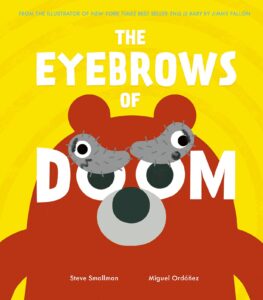
  • Eyebrows of Doom by Steve Smallman and Miguel Ordoñez 
    • Just the title makes me laugh. Bear finds a pair of slugs covered in fuzz while cleaning his cave. They inspire him to do unkind things. The eyebrows next find a young girl who does an equally unkind thing. This continues until they get a surprise at the zoo.  
  • Slug In Love by Rachel Bright and Nadia Shireen 
    • Continuing the slug theme, we have Slug in Love! Doug the Slug needs a hug. But who will hug a slug? Will he find love? 
  • Counting To Bananas by Carrie Tillotson and Estrela Lourenço 
    • This is a counting book, but Banana can’t WAIT for its turn to be counted! A MOSTLY rhyming book.  

SEQUELS (All ages but mostly 3+ 

  • Queen of Kindergarten by Derrick Barnes and Vanessa Brantley-Newton 
    • From the author/illustrator team behind the King of Kindergarten we have this companion title. This girl  is READY to rock Kindergarten.  
  • Pretty Perfect Kittycorn by Shannon Hale & LeUyen Pham 
    • The sequel to one of my favorites of last year, Itty Bitty Kittycorn. In this story, Unicorn worries that he’s not as perfect as everyone thinks he is and maybe kitty won’t be his friend anymore. A common worry for kids (and some adults like me). 
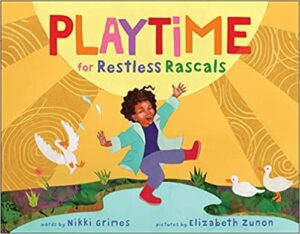
  • Playtime for Restless Rascals by Nikki Grimes and Elizabeth Zunon 
    • This follows the same pattern as their previous books Bedtime for Sweet Creatures and Off to See the Sea. This outing celebrates the bond between parent and child and the play, which is the “work of childhood” according to Mr. Rogers (and he was right).  
  • Amy Wu and the Warm Welcome by Kat Zhang and Charlene Chua 
    • The series started with Amy Wu and the Perfect Bao and continued with Amy Wu and the Patchwork Dragon. Now Amy Wu tries to make a new classmate from China feel welcome by inviting him to her dumpling party!  

COLORADO AUTHORS AND ILLUSTRATORS (All ages but mostly 3+)

I feel like I should preface this section by saying that this is by NO MEANS an exhaustive list of the amazing books being created by Colorado authors and illustrators. These folks just happen to be more on my radar (as they’re my friends, and, in one case, a work colleague). Also, I’m focusing on traditional publishing here. If you’re a Colorado author with a book coming out in 2022, please add it in the comments! I didn’t exclude you on purpose, I promise!

  • A Grand Day by Jean Reidy and Samantha Cotterill 
    • Celebrates the bond between grandparent and grandchild. 
  • Me and You in a Book Made for Two by Jean Reidy and Joey Chou
    • The sequel to What Will You Do in a Book About You? which was a popular graduation gift. 
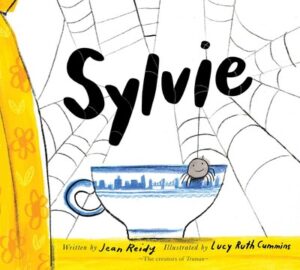
  • Sylvie by Jean Reidy and Lucy Ruth Cummins 
    • The team behind the beloved turtle Truman! Sylvie the Spider keeps watch over her people in the apartment building where she lives, out of sight. But when something seems off, Sylvie must decide whether or not to step into the spotlight to fix things. Truman even makes an appearance! 
  • Swim, Jim by Kaz Windness 
    • Jim is a crocodile, and afraid to swim. Can he find a way to learn, but on his own terms?  
  • Her Name was Mary Katherine: The Only Woman Whose Name is on the Declaration of Independence by Ella Schwartz and Dow Phumiruk  
    • Mary Katherine Goddard, a businesswoman and newspaper publisher ,stepped up and printed the Declaration of Independence so that it could be widely distributed. And she added her name at the bottom as a printing credit!  
  • Yes We Will: Asian Americans Who Shaped This Country by Kelly Yang and Dow Phumiruk 
    • Kelly Yang is a New York Times best selling author and Dow is one of several notable Asian-American illustrators to work on this book. 
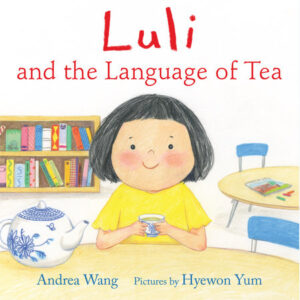
  • Luli and the Language of Tea by Andrea Wang and Hyewon Yum 
    • Luli makes friends in her ESL class by sharing a cup of tea, something familiar to all the kids in the class, no matter what their home language is. 
  • Strut, Baby, Strut by Amika Kroll and Ebony Glenn 
    • A celebration of girls as they grow up! 

Happy reading!

7 Comments

Filed under 2022, Mary Kuehner, Picture Books, Upcoming

The Best Children’s Books That Capture the True Spirit of Christmas

Part of the magic of Christmas is telling and sharing stories. Christmas picture books offer the opportunity to share the Christmas message with the children we love. The images and language in these special picture books convey the beauty and emotion of the season. 

Year after year, I seek out and collect children’s books that capture the true spirit of Christmas. My collection began when my first child was born, which was also the first year (of 25 or so years!) that I volunteered to teach Sunday School at my Presbyterian Church. As I read these books to my children and my students, I learned to love these stories. Repeated readings have made me appreciate the powerful language and illustrations that accompany these stories of deep faith and lessons for living.

On Christmas Eve, our family gathers to discuss the past year and to talk about our dreams for the coming year. Then we read a story and appreciate the emotions the book taps into… from remembering the wonder we felt as children to the spiritual messages that speak to our current lives.

I have put together a collection of these must-read books that address the spirit of Christmas for your bookshelf, from cherished classics to modern masterpieces, arranged by ages. Put yourself in the holiday spirit with these Christmas books, perfect for adults and children to read together this season.*


For Preschool and Early Elementary:
Who is Coming to Our House? by Joseph Slate, Ill. Ashley Wolff
Who is coming to our house? “Someone, someone,” says Mouse.
A modern Christmas classic with lovely woodcut illustrations shows how the animals prepare a cozy welcome for the baby Jesus. While Mary and Joseph are on their way to Bethlehem, Pig makes room, Lamb cleans up, Goose stacks the hay, and Duck lines the crib with eiderdown. All the animals are eager to welcome baby Jesus to their home. A warm, lyrical book your family will cuddle up with for years. 

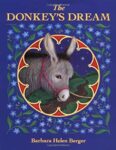
The Donkey’s Dream by Barbara Helen Berger  “Come. See what you and I have carried all this way, you and I.” It was only a tiny child. Yet, when the baby opened his eyes, the cave was full of light. The donkey blinked… and suddenly, the donkey was not tired anymore.
A beautifully illustrated story of the Nativity. As the donkey makes the long journey from Nazareth to Bethlehem, he carries a pregnant Mary. Along the way he dreams he is carrying a city, a ship, a fountain, and a rose. Finally, he dreams he is carrying a lady full of heaven. Barbara Helen Berger’s glowing artwork and lyrical text perfectly convey the beauty and majesty of the story of the Nativity.

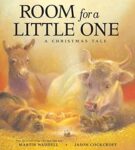
Room for a Little One: A Christmas Tale by Martin Waddell, Ill. Jason Cockcroft
“Come inside,” Kind Ox said. “There’s always room for a little one here.”
In the stable next to an inn, Kind Ox is just settling in for the night when Old Dog comes into the stable. Kind Ox makes room for Old Dog, who in turn makes room for Stray Cat, who then makes room for Small Mouse–and each time, the larger animal making room for a smaller animal. Finally, the tired Donkey comes by, carrying Mary, who asks “Where will my child be born?” Kind Ox replies, “There is always room for a little one here.” And so, Jesus is born in the stable with the animals all around Him.

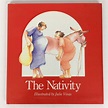
The Nativity, ill. Julie Vivas
“In the days of Herod the King, the Angel Gabriel was sent from God to the city of Nazareth. To a virgin espoused to a man whose name was Joseph, and the virgin’s name was Mary.”
The biblical story of the Nativity with text taken straight from the Bible is one about faith, love, and a miracle. It is a down-to-earth and humorous imagining of the events with a scruffy Angel Gabriel delivering the news, a clearly uncomfortable Mary on the exhausting journey to Bethlehem, and at last the deliverance of the baby Jesus.

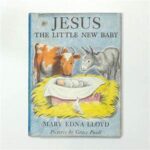
Jesus the Little New Baby by Mary Edna Lloyd
Gray Donkey stood very still. One long gray ear was up. One long gray ear was down. That day he had walked and walked and walked. He had carried someone on his back.
This sweet nativity story, published in 1951, with its simple pencil drawings, and child-friendly text capture the innocence and simplicity of the Christmas story for young children. Although it may be out-of-print, the book is a wonderful introduction to the nativity story.

For Elementary Grade Children:
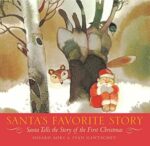
Santa’s Favorite Story by Hisako Aoki, Ill. Ivan Gantschev
“No, no, no,” said Santa in a kindly voice, “Christmas hasn’t got anything to do with me. Sit down and I’ll tell you the story of the first Christmas.”
The true meaning of the holidays is revealed as Santa Claus retells the story of the first Christmas in this picture book. When Santa Claus tells the forest animals that he is tired of delivering heavy packages, they are worried there won’t be a Christmas. To help the animals understand Christmas would still come even if he didn’t deliver presents, Santa tells the story of the first Christmas, and everyone, including Santa, learns lessons about the meaning of this special holiday.

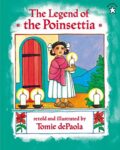
The Legend of the Poinsettia retold and illustrated by Tomie dePaola
A hush fell over the church. Voices began to whisper. “Look! Look at the weeds!” Lucida opened her eyes and looked up. Each weed was tipped with a flaming red star. The manger glowed and shimmered as if lit by a hundred candles.
This retelling of a Mexican legend tells how the poinsettia came to be, through a little girl’s unselfish gift to the Christ Child. Caldecott honor-winning illustrator Tomie dePaola’s distinctive illustrations highlight the Christmas traditions of Mexico. The book captures the excitement of the children preparing for Christmas as well as the hope of Lucida, who comes to learn what makes a gift truly beautiful.
 
How the Grinch Stole Christmas by Dr. Seuss
Then the Grinch thought of something he hadn’t before!
“Maybe Christmas,” he thought, “doesn’t come from a store.
Maybe Christmas… perhaps… means a little bit more?
Although this classic has been commercialized in recent years, it remains the ultimate book about the real meaning of Christmas. This heartwarming story about the Christmas spirit will touch even the smallest of hearts. Like mistletoe, candy canes, and caroling, the story of the Grinch is a mainstay of the holidays.

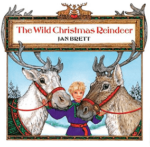
The Wild Christmas Reindeer by Jan Brett
Teeka was excited. And a little afraid. This year Santa had asked her to get the reindeer ready to fly on Christmas Eve.
Little Teeka is firm with the reindeer to get them ready for Santa’s important flight, but her yelling only gets them tangled up. She learns that kindness and love solve problems better than any firm hand. The beautiful, intricate illustrations draw on Swedish folk art and require readers to look closely to see all the details.

The Polar Express by Chris Van Allsburg
What I wanted more than anything was one silver bell from Santa’s sleigh. When I asked, Santa smiled. He stood, holding the bell high above him, and called out, “The first gift of Christmas!”
Skip the movie and take a ride aboard the Polar Express in this classic holiday picture book. A boy, lying awake one Christmas Eve, is welcomed aboard a magical train to the North Pole. The Polar Express makes its way to the city on top of the world, where the boy will make his Christmas wish. This is a story for all who believe in the spirit of Christmas and those who treasure the sound of a reindeer’s silver bell. The Polar Express is the 1986 Caldecott Medal winner and reading the story together is a beloved holiday tradition held by generations of families.

For Older Children:
The Fourth Wise Man retold by Susan Summers, Ill. Jackie Morris
Dark ledges of rock rose around him like the bones of ancient monsters. Shifting hills of treacherous sand blistered the earth … by night jackals prowled and barked in the distance. But he pressed on, faithfully following the bright new star…
Long ago a man named Artaban and three companions observed a new star in the night sky. They knew it signified the birth of a child who would bring change and hope to the world so they decided to follow the star. But along the way, Artaban stopped to help those in need. He never makes it to the stable to pay homage to the baby Jesus. Beautifully written and stunningly illustrated, this Christmas story is unlike any other. It focuses on one man’s lifelong commitment to doing good. The Fourth Wise Man truly captures the real meaning of Christmas.

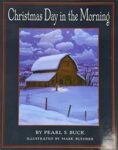
Christmas Day in the Morning by Pearl Buck, Ill. Mark Buehner
The thought struck him like a silver dagger. Why should he not give his father a special gift, too, out there in the barn? He could get up early, earlier than four o’clock, and he could creep into the barn and get all the milking done…. Milking for once was not a chore. It was something else, a gift to his father who loved him.
Rob wants to get his father a gift that shows how much he loves him. But it’s Christmas Eve and he doesn’t have any money to spend. Then, Rob thinks of the best gift of all. The acclaimed author Pearl S. Buck captures the spirit of Christmas in this elegant, heartening story about a boy’s gift of love. Originally published in 1955, this timeless, nostalgic story shares a long ago, beautiful Christmas morning.

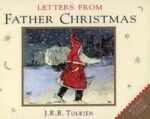
Letters from Father Christmas by J.R.R. Tolkien
For over twenty years the children of J.R.R. Tolkien got letters from the North Pole—from Father Christmas himself and from his remarkable assistant, the North Polar Bear, and his secretary, the elf Ilbereth.
Dear John, I heard you ask daddy what I was like and where I lived. I have drawn me and my house for you. I am just off now for Oxford with my bundle of toys- some for you. Your loving Father Christmas.
Every December an envelope bearing a stamp from the North Pole would arrive for J.R.R. Tolkien’s children. Inside would be a letter in strange, spidery handwriting and a beautiful colored drawing or painting. The letters were from Father Christmas. Tolkien’s love for his children and his vivid imagination is central to the wonderful tales of life at the North Pole. You’ll be charmed by Tolkien’s inventiveness and love in this holiday book.

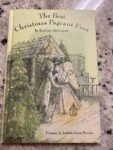
The Best Christmas Pageant Ever by Barbara Robinson, Ill. Judith Gwyn Brown
The Herdmans were absolutely the worst kids in the history of the world. They lied and stole and smoked cigars (even the girls) and talked dirty and hit little kids and cussed their teachers and took the name of the Lord in vain and set fire to Fred Shoemaker’s old broken-down tool house.
The Best Christmas Pageant Ever follows the Herdman siblings, or “the worst kids in the history of the world.” The siblings take over the annual Christmas pageant in a hilarious yet heartwarming tale. In this laugh-out-loud middle-grade novel, Ralph, Imogene, Leroy, Claude, Ollie, and Gladys Herdman show up at church for the free snacks and take over the Christmas pageant. It’s obvious that they’re up to no good, but the Herdmans, who have never heard the Christmas story before, reimagine it in their own, wonderful way.

*Thanks to amazon.com for providing great information about the books, including publishing information and synopses. I used amazon.com as a starting point for this blog.

4 Comments

Filed under Christmas books, E. E. Duncan, Elizabeth Duncan, the true spirit of christmas, Uncategorized

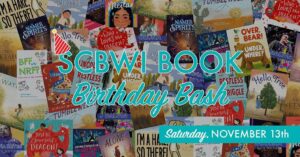
Happy Birthday to the Books of 2021!

On November 13, 2021, we celebrated the birth of 20 fabulous new children’s books, written and illustrated by the talented members of the Rocky Mountain chapter of the Society of Children’s Book Writers and Illustrators. The event was sponsored by the Second Star to the Right Book Shop in Denver, CO and was both in-person and virtual! For those of you who weren’t able to sing “Happy Birthday” or eat cupcakes with us that day, I’ve pasted the titles and synopses* below. Please consider purchasing them from your favorite independent bookstore or borrowing them from your local library.

PICTURE BOOKS

HELLO, TREE

Written by Ana Crespo and illustrated by Dow Phumirik

When a wildfire comes roaring into the forest, all the animals and humans flee. But all the tree can do is wait. Wait until many days and nights pass. Wait until the fire loses the battle. And wait until the forest is still before the forest can be reborn and the animals and the girl can come back. Inspired by the 2013 Black Forest fire, and told from the viewpoint of a tree watching its home destroyed, HELLO, TREE is about the kinship between humans and nature, and preservation of the environment.

SLOW DOWN, TUMBLEWEED!

Written by Haven Iverson and illustrated by Robert Sayegh

In our fast-paced society, children are often missing the value of slowing down. SLOW DOWN, TUMBLEWEED! is about a wild and roaming tumbleweed who thinks the world is only interesting if you rush through life. Then she gets caught on a fence and is forced to slow down. As she learns to sit in stillness and quiet, Mabel notices the beauty of the world around her―the music of wind chimes, the shapes in the clouds, the long eyelashes of a heifer. She sees there is so much that is interesting and beautiful right here, right now. You don’t have to chase it. This lovely book teaches children the importance of slowing down, pausing to take a breath, and cultivating mindfulness.

KINDNESS IS A KITE STRING

Written by Michelle Schaub and illustrated by Claire LaForte

This compelling book illustrates simple, yet impactful ways, to spread kindness and brighten the lives of others. Through poetry, the inspiring words uplift young readers, planting seeds of empathy, kindness and community support.

OVER BEAR! UNDER, WHERE?

Written by Julie Hedlund and illustrated by Michael Slack

Over and Under are two friends, and they’re enjoying a day at the park. They go on the swings (Over goes over Under) and the seesaw (Under is under Over). They meet a hot-dog dog (who joins them for a hot dog). And then they spot . . . a bear! (Unbearable!) But is he really the overall scary creature they first understand him to be?
In this hilariously punny story that will have readers laughing out loud as they pick apart the wordplay, a pair of pals overcome their fears as they discover that friendship underpins all.

WHO LOVES THE DRAGON? and JUST BE YOURSELF DRAGON!

Written by Bianca Schulze and illustrated by Samara Hardy

In this interactive follow-up to Don’t Wake the Dragon, our beloved Dragon is wide-awake and preparing to celebrate one of the kingdom’s most important events of the year: the annual Friendship Festival! It’s a time for everyone to gather and have fun, all honoring their meaningful friendships. But on the day of the feast, the cooks are called away to cater to the Queen and the knights must report for special duty in the Enchanted Forest. With everyone gone, Dragon is upset and worried that this year’s Friendship Festival is doomed. With colorful and humorous illustrations throughout, this read-aloud picture book encourages kids to interact with the text on every page. Young readers will love waving to characters, blowing kisses, dancing, and more on this fun ride alongside Dragon and her adorable friends.

In the third book of this delightfully fun series, Dragon is nervous about her first day of school. She’ll need readers’ help to soothe her anxieties and ease her nerves. Dragon is excited about having story time with the fortune-teller, learning to count while juggling, exercising with the knights, and – best of all – being with her friends. But when the day finally arrives, Dragon is overwhelmed and scared! She’s got a bad case of first day jitters, and something goes wrong during all of her morning activities. She can’t wait to have a break at lunch . . . until suddenly Dragon is left all alone and must summon the courage to make all new friends on her own.

I’M A HARE, SO THERE!

Written and illustrated by Julie Rowan-Zoch

When a chipmunk mistakes Hare for a rabbit, Hare puts him in his place. But actually, the chipmunk is a SQUIRREL. Or so he says. Ever wondered about the difference between a turtle and a tortoise? Or a sheep and goat? So have Rabbit and Chipmunk—er, I mean, Hare and Squirrel! This hilarious look at dynamic duos in the animal kingdom pokes fun at the lookalike animals we all love, while delivering a gentle lesson on appreciating differences and standing up for what you know to be true about yourself.

TAD LINCOLN’S RESTLESS WRIGGLE: Pandemonium and Patience in the President’s House

Written by Beth Anderson and illustrated by S. D. Schindler

Tad Lincoln’s boundless energy annoyed almost everyone but his father, President Abraham Lincoln. But Tad put that energy to good use during the tough times of the Civil War. Abraham Lincoln guided Tad’s wriggle on visits to hospitals, to the telegraph office, and to army camps. Tad greeted visitors, raised money for bandages, and kept his father company late into the night. This special and patient bond between father and son was plain to see, and before long, Tad had wriggled his way into the hearts of others as well. Beth Anderson and S.D. Schindler follow Tad’s antics during the Civil War to uncover the generous heart and joyful spirit that powered Tad’s restless wriggle.

WATERCRESS  

Written by Andrea Wang and illustrated by Jason Chin

Driving through Ohio in an old Pontiac, a young girl’s parents stop suddenly when they spot watercress growing wild in a ditch by the side of the road. Grabbing an old paper bag and some rusty scissors, the whole family wades into the muck to collect as much of the muddy, snail covered watercress as they can. At first, the girl is embarrassed. Why can’t her family get food from the grocery store? But when her mother shares a story of her family’s time in China, she learns to appreciate the fresh food they foraged. Together, they make a new memory of watercress.

MIDDLE GRADE NON-FICTION

Stars of Latin Pop/Estrellas Del Pop Latino series

by Jolene Gutierrez

SOFIA REYES

Sofía Reyes is on her way to becoming one of the top Latin Pop Stars in the world! Has she always loved music? How did social media help her? How has her creativity improved her career? Learn about Sofía, her rise to stardom, and how she’s supporting other musicians.

SHAKIRA

Shakira is one of the top Latin Pop Stars in the world! Has she always been so talented? What lifelong goals does she have? How is she changing the world, one child at a time? Learn about Shakira, her rise to stardom, and the charities she supports.

J BALVIN

J Balvín is one of the top Latin pop stars in the world! When did he start singing? How have his business skills helped his music career? Why are meditation and fashion so important to him? Learn about J Balvín and his rise to stardom.

OZUNA

Ozuna is a Latino musician who is breaking records and winning awards! Has he always loved music? How did YouTube change his life? How has collaboration improved his career? Learn about Ozuna, his rise to fame, and how he’s giving back to his community.

BFF OR NRF (NOT REALLY FRIENDS)? A GIRLS GUIDE TO HAPPY FRIENDSHIPS

Written by Jessica Speer and illustrated by Elowyn Dickerson

Friendships are tough to navigate, even for adults. The preteen years can be particularly sticky, but we’ve got your back! Packed with fun quizzes, colorful illustrations, and stories about girls just like you, BFF or NRF (Not Really Friends) is the ultimate interactive guidebook to help you learn the ins and outs of friendship. Explore the topics of gossip, bullying, and feeling left out, along with ways to strengthen the friendships that mean the most to you. Author Jessica Speer is an expert on post-pandemic friendships with experience in helping tweens, teens, and young adults navigate their social relationships.

MIDDLE GRADE FICTION

ALONE

by Megan E. Freeman

When twelve-year-old Maddie hatches a scheme for a secret sleepover with her two best friends, she ends up waking up to a nightmare. She’s alone—left behind in a town that has been mysteriously evacuated and abandoned. With no one to rely on, no power, and no working phone lines or internet access, Maddie slowly learns to survive on her own. Her only companions are a Rottweiler named George and all the books she can read. After a rough start, Maddie learns to trust her own ingenuity and invents clever ways to survive in a place that has been deserted and forgotten.

As months pass, she escapes natural disasters, looters, and wild animals. But Maddie’s most formidable enemy is the crushing loneliness she faces every day. Can Maddie’s stubborn will to survive carry her through the most frightening experience of her life?

CAPTAIN NEMO- THE SERPENT’S NEST

by Jason Henderson

Gabriel Nemo has never been your normal, everyday twelve-year-old. As a descendant of the famous Captain Nemo, he’s determined to use his Nemotech legacy for good. He and his best friends, Peter and Misty, spend their days studying at the elite Nemo Institute and their spare time trying to solve the mystery of what happened to the original Captain Nemo and his crew.

An engraved anchor pin from the abandoned Nautilus leads the trio to Cardiff Bay in Wales, where they find signs of mysterious underwater rescues. But before long, their search is interrupted when they cross paths with a new kind of sea serpent. Can Gabriel and his friends solve the mystery of the Serpent’s Nest before things turn deadly?

THE LOST LANGUAGE

by Claudia Mills

Sixth grader Betsy is the one who informs her best friend, Lizard, that thousands of the world’s languages are currently threatened by extinction. Betsy’s mother is a linguistics professor working frantically to study dying languages before they are lost forever. But it is Lizard who, gripped by the magnitude of this loss, challenges Betsy, “What if, instead of WRITING about dying languages like your mom, you and I SAVED one instead?”

As the girls embark on their quest to learn as much as possible of the near-extinct language of Guernésiais (spoken on the Isle of Guernsey, off the coast of France), their friendship faces unexpected strains. With Lizard increasingly obsessed with the language project, Betsy begins to seek greater independence from her controlling and charismatic friend, as well as from her controlling and charismatic mother. Then tragedy threatens Betsy’s life beyond what any words can express, and Lizard does something unthinkable.

Perhaps lost friendships, like lost languages, can never be completely saved.

THE NAMER OF SPIRITS

by Todd Mitchell

In the frontier village of Last Hope, people dismiss twelve-year-old Ash Narro as a flighty child who claims to hear the true names of things. But when enraged forest spirits attack, Ash shows that the names she hears have power.

After taming a destructive forest spirit, Ash teams up with Fen, a wild forest boy, and embarks on an unusual journey to save her village. In this steampunk eco-fantasy, the perils of deforestation and the power of friendship are explored through a fantastical adventure involving giant mistcats, tempestuous forest spirits, a supernatural puppy, and a girl with a special gift for shaping what things become.

THE MANY MEANINGS OF MEILAN

by Andrea Wang

Meilan Hua’s world is made up of a few key ingredients: her beloved grandmother, Nainai, the bakery her family owns in Boston’s Chinatown, and her favorite Chinese fairytales. But when Nainai passes, the family has a huge falling-out that sends Meilan, her parents, and her grieving grandfather on the road in search of a new home. They take a winding path across the country before landing in Redbud, Ohio. But everything there is the opposite of Chinatown. Being renamed “Melanie” at school only makes it worse. Meilan decides she is many Meilans. Sometimes she is Mist, cooling and invisible; other times, she’s Basket, carrying her parents’ hopes and dreams and her guilt of not living up to them; and occasionally she is bright Blue, the way she feels around her new friend Logan. Meilan tries to keep her facets separate until an injustice at school shows her the power of bringing her many selves together.

Written in stunning prose by award-winning author, Andrea Wang, THE MANY MEANINGS OF MEILAN is an exploration of all the things it’s possible to grieve, the injustices large and small that make us rage, and the peace that’s unlocked when we learn to find home within ourselves.

YOUNG ADULT FICTION

THE NETAHS, INTO THE WILDERNESS

by Lisa K. Cobb

Josh’s new foster sister Rose is a skunk, and his parents have no idea. She may look like an adorable toddler, but she has a feral attitude, an aversion to bathing, and a smell that follows her no matter where she goes. Whenever Josh’s parents aren’t looking, Rose talks to him like an adult and shows him her fur and teeth. Eventually, Rose reveals that she is a Netah, an animal shape-shifter sent to oversee Josh’s transformation as he comes of age. The bumps on his head aren’t just bumps; they’re antlers. Josh is a halfling, the son of his Netah elk father who abandoned him when he was born.

Josh is shocked to realize that many people in his life are also Netahs. The lunch lady at his school is a heron, his friend is a raven, and the bully who always pushes him in the hallways is actually a bear. It’s up to them to make sure Josh doesn’t expose their true nature to the other humans. When Josh finally does transform, the Netah council says he must pass three tests to join their society. Trapped in his animal form, Josh goes into the lush Colorado wilderness with four of his new Netah friends to master his ability to transform, but also to prove himself trustworthy to the council. If he doesn’t succeed, he will risk being an outsider forever.

*All synopses were edited from the listings on www.amazon.com.



5 Comments

Filed under Uncategorized

Why you should invest in coaching as a writer or illustrator

Bill Gates said in 2020 — “Everyone needs a coach. It doesn’t matter whether you’re a basketball player, a tennis player, a gymnast, or a bridge player.” But let’s finish that sentence.
It doesn’t matter whether you’re a writer. Or an illustrator. Or both.

Everyone needs a coach.

If you don’t immediately agree with me (or Bill) here are some benefits for you to consider. And if you do already agree with me, and are a member of the RMC-SCBWI, head right on over to read specifically about the Michelle Begley Mentor Program, a six month program that offers great value for investment, which I am thrilled to co-coordinate this year with Laura Perdew. The application is open until November 9, 2021 and this year we are offering a scholarship courtesy of the Writing Roosters and two grants!


Ongoing Critique and Feedback

I am part of two wonderful critique groups that meet regularly, yet working with a mentor is still a unique experience because *your work* and *your craft* are the entire focus of the conversation. Together you discuss your vision and over the course of multiple months, you bring that vision to light.


Improve your current work in progress

First and foremost, your mentor will work with you on a manuscript (or illustration portfolio) that you’ve been working on. As established professionals, they bring their expertise to your work and will help you develop it to be as strong as it can be. In my own mentorship with Anna-Maria Crum as my mentor, she helped me rework my plot and character motivation – my inciting incident was buried way down deep in my manuscript, and this reorganization immediately made my work stronger.


Improve your craft going forward

There will be countless elements of what your mentor points out in your work that you will be able to carry forward for years to come. Two personal examples — I learned about some of the weaknesses in my plot (build stronger motivation for action – no coincidences!) as well as in my dialogue (make sure my characters react to what is said as opposed to making unrealistic leaps in the conversation because the lines sound cool). It opened up my eyes not only to what I could improve in the novel we were discussing, but what I could carry over to every scene I’ve crafted since.


Coaches can help you set realistic goals

Our mentors have been there, done that, but the fact is that every artistic creator is different. A mentor can talk through your process and experience and help you set goals for your work – goals that are within your control and that you will meet during the course of the six months. Which leads us right to…


Having a coach is motivating

Coaches give you deadlines. They are there, waiting and expecting for you to work with them. They are looking forward to seeing your progress. And having that built in accountability can do wonders.


***

There are many other reasons to have a coach, and many personal experiences about successful mentor/mentee relationships. Read testimonials here about what others have gotten out of the Michelle Begley Mentor program, and share in the comments some of the benefits you have experienced in working with a mentor (or being a mentor!).

And consider securing a mentor of your own through the Michelle Begley Mentor Program. The application is open until November 9, 2021.


**Reading this after 11/9/21? Join us next time – the application period for the Michelle Begley Mentor Program is typically October through November 1.

2 Comments

Filed under Coral Jenrette, craft advice, critique, Revision process, RMC-SCBWI

Highlights of Highlights!

By Rondi Sokoloff Frieder

I have very strong childhood memories of getting the Highlights for Children magazine in the mail. First of all, it was mail – for me! (And my brothers, but mostly for me.)  I’d spot it on the kitchen counter, whisk it off to my bedroom, and immediately turn to the hidden pictures page. Then I’d search and search until I found every last rake, spoon, ice cream cone, and whatever else was listed at the bottom of the page! Today, Highlights publishes entire workbooks of these puzzles. They even have an app.

The first issue of Highlights magazine came out in 1946 and was published by the Pennsylvanian husband-and-wife team – Garry Cleveland Meyers and Caroline Clark. These days, the company’s corporate headquarters is  based in Columbus, Ohio, and includes Zaner-Bloser, Stenhouse Publishers, and Staff Development for Educators. But there’s another arm of the organization you may not know about – The Highlights Foundation. This is a 501 c-3 non-profit, established in 1984, that offers “workshops, retreats, and other support to writers, illustrators, and all creators of kid-friendly content.” (For a quick history of the company, go to: https://www.highlights.com/about-us/history.) The Foundation was established in 1984  in Chautauqua NY, but is now located in an idyllic rural setting in Honesdale, PA. George Brown, a descendant of Garry and Caroline, is its dynamic Executive Director.

During the pandemic, I took two of the Foundation’s classes online: “Filling the Writer’s Toolbox” with Emma Dryden, and “DIY Revision for your Novel or Non-Fiction” with Susan Campbell Bartoletti. But in August, after being prodded by my writing coach and award-winning author Sarah Aronson, and fellow Story Spinner and RMC-SCBWI Regional Advisor, Susan Wroble, I attended my first in-person event. And even though I am not a fan of mosquitos, ticks, humidity, or frizzy hair, this truly was the “highlight” of my summer.

“The Whole Novel Workshop,” was a six-day intensive for writers of MG and YA fiction. It differed from my other two classes in that it required an application. That meant submitting the first fifteen pages of my MG manuscript, a synopsis, and a cover letter. When my acceptance arrived, I literally whooped and hollered to the dog! Only that’s when the real work began. Not only would I be working on my revision during the workshop, I would also be receiving an in-depth critique of my full manuscript (from the brilliant, hilarious, and award-winning author, Crystal Allen) before I even arrived on campus. There were also three Zoom meetings with our  group (twenty participants and ten faculty), two books to read (one YA novel, one on craft), and partial manuscripts, synopses, and cover letters to read from the members of our assigned “Brain Trust” group (7-8 people). We used the Canvas platform to introduce ourselves (and our pets) and to explore writing prompts, articles, and podcasts. Needless to say, “The Whole Novel Workshop” could have been called “The Whole Summer Workshop!”

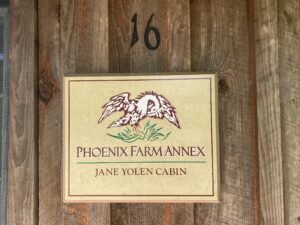
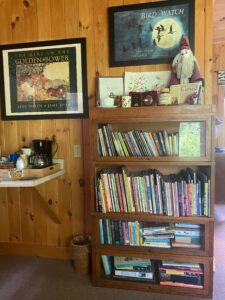
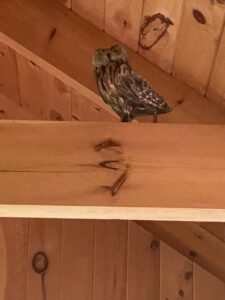
Finally, on August 21, the big day arrived. I pulled up to my home for the week, “#16,” the Jane Yolen cabin! (OMG – how did they know???) and basked in the beauty of my surroundings. There was a lovely front porch, with windows overlooking a wooded glen, a bookshelf filled with Jane’s books, posters on the wall, and an owl perched on the rafters. (I love OWL MOON!)

                .                                 

That evening, we all gathered for the start of what can only be described as a week of serious work, tremendous growth, and pure joy. There were craft workshops, thought-provoking morning prompts, critiques, time to write (alone or in community), Brain Trust groups (45-minute discussions about your manuscript led by YOU), one-on-one discussions, interviews with your main character (conducted by the dramatic Crystal!), pristine walks, and time to think about and work through your revision ideas. And the food! Ask anyone who has attended a Highlights workshop and they will definitely talk about the food. The chefs and servers prepare gourmet works of art three times a day, with snacks available twenty-four seven!

I could talk about this magical week for hours. (And believe me, I have.) Instead, here’s a  stream-of-consciousness recap:

Know who your audience is and what your character really wants. (So true, Rob.) Emotion drives action. Look for the fractals. (Jennifer) Journal until you’ve figured things out and do the swirlies. (Sarah) Discuss ideas with fellow novelists. (We love talking about these things, right Nora?!) Go for long walks. (Thanks for being our guide, George.) Play with tense and POV and balance dialogue, narrative, and description by using colored pens. (Nancy) Get rid of unnecessary characters. (Find your orderly, get rid of the priest- Crystal) Try new plotting tools. (Can’t wait to use yours, Erin.) Writing prompts open your mind to new possibilities! (Yes, Melissa!) No writing is wasted time. (More Melissa) Don’t be afraid of marketing. (I will be in touch, Mia.) And other assorted other words of wisdom: Pay attention to your secondary characters. It’s all about voice. Play and think in the rock garden. Be open about making changes. Make writer friends and support their work. (Miss you all!)

And of course… Keep going!

Our incredible faculty rocked it EVERY DAY and worked alongside us. (There was an open mike night on our last evening… WOW!) Endless thanks to: Crystal Allen, Sarah Aronson, Nora Shalaway Carpenter, Rob Costello, Erin Dionne, Mia Garcia, Jennifer Jacobsen, Erin Entrada Kelly, Alex Villasante, Nancy Werlin, Melissa Wyatt . Can you believe this line-up? I am still in awe of each and every one of them.

You must go to Highlights. (Even with the mosquitoes, ticks, and frizzy hair.) Put it on your to-do list. Right now. highlightsfoundation.org/upcoming/workshops.

I can’t wait to go back.


5 Comments

Filed under craft advice, critique, Partners in Literacy, Revision process, Rondi Frieder, Susan Wroble

DISCOVERING THE ROOT OF OUR STORIES

My mom asked me to stay while she napped. “Take a nap, honey…on my bed.” I couldn’t refuse my 92-year-old mom. Plus, her air conditioning felt wonderful. We had just come back from being outside on a very muggy day. She quickly dozed off on her small couch. I sat close by on her twin bed and looked around her studio apartment. I was tempted to stretch out and nap, but I was too distracted.

I found myself studying all her favorite things – fragile figurines, throw pillows, antique lamps. Then, I honed in on the walls, studying decorative plates, framed art prints, framed photos of my parents wedding day… I disappeared into studying everything on her walls and atop her furniture. I felt a bit comforted. Afterall, I grew up surrounded by all these things. They were home. My mom was an incredibly talented decorator. Our home was beautiful inside. Every plate, print, figurine had a specific place. And a story. She bought most things at antique stores or from collectors out on farms. In a way, she had bought someone else’s “story” and then went on to create her own. I admit, I didn’t appreciate these things growing up. My chore was dusting them. But then I learned to negotiate with my brothers, so I could mow the lawn – and one of them was happy inside dusting away!

My mom let out an occasional snore as I tip-toed around her little apartment. I wanted to stand close and get a good look at things. I got a bit misty eyed, thinking about all the stories behind them. I was surrounded by story. Then, it hit me. Lots of these things have shown up in my fiction writing – in my character’s homes, in my themes, plots, etc. How could they not, I suppose… Afterall, they are still deep in my roots. These things. Each one holds so many stories. Each one holds part of my story. Each one.

Cards and letters: A red file next to her phone contains recent cards and letters from her kids. Growing up, she stored cards and letters in a mini wood trunk. I love having my characters write or receive letters. And I’m over the moon just imagining one of my characters opening a drawer, then discovering a bunch of letters. I get so excited about the “and then and then”! Especially when a letter holds a secret.

Framed photos: Many black-and-white photos decorate her walls; many feature her parents and grandparents. I never knew them. They were born in Poland, but my mom never told their stories. Oh my gosh! One of my characters is growing up in a Polish family. Even though I only saw my Polish relatives a few times a year (and they taught me how to polka), I never knew their origin stories, their roots. Perhaps, I have desired “finding” them in my writing. Actually, I have.

Shoes: Her brown leather lace-up shoes sit on the floor across from her couch. They have sat there ever since she started wearing a pair of white Reebok shoes. I always picture my character’s shoes, even if I don’t mention shoes in my story. The color, the brand, the style. I’m especially intrigued with why my character would choose a certain shoe.

Landline telephones: My mom has three landline phones, each within a few steps. In our teen years, my brothers and I were always vying for our one landline. All of my YA’s take place in the days of landlines. I prefer the challenge inherent in a landline, such as a family eavesdropping, everyone racing to the ringing phone…

Clocks: There are four clocks spread throughout my mom’s. I remember the obnoxious sound of our cuckoo clock while the seven of us ate Sunday pot roast. Despite my struggle with chronology in writing, I thoroughly enjoy giving clocks a major role. Nothing like an alarm clock startling a character! By the way, my childhood kitchen clock hangs in my writer studio.

Here’s to the finding, discovering the root of our stories, where ‘er they come from! Children’s author E.E. Duncan summed it up best: “It’s interesting to look to ourselves and find those themes that recur in our writing and discover their roots.” Elizabeth is a member of my amazing critique group, Story Spinners. Her biographies and historical fiction explore how history affects everyday people. Her books include, Florence Sabin, Teacher, Scientist, Humanitarian; Felipe and Dolores Baca, Hispanic Pioneers; Ralph Carr, Defender of Japanese Americans; Helen Hunt Jackson, Colorado’s Literary Lady.

3 Comments

Filed under Karen McChesney

Stepping UP

By Susan Wroble, August 2021

I love the Rocky Mountain Chapter of the Society of Children’s Book Writers and Illustrators (SCBWI). I’ve been a member for a very long time (since 2004), but for most of the first decade and a half, I would attend the regional conferences, and write and file. It was only after our kids were grown that I was able to focus on writing more seriously.

It has been a very rough year for SCBWI. What had started as a labor of love had grown over a half-century into a large international professional society, and the structure had not always kept up with best practices. For various reasons, all of the regional team members of the Rocky Mountain Chapter resigned en masse this summer. I felt sure of only one thing—I wanted to make sure our chapter survives this crisis.

In normal times, I doubt if I would have ever applied to be a regional team member, but among my skill set were pieces that I thought would help. Most importantly, I am pretty good at keeping organizations going. As one example, I’ve run a long-standing support group for parents of twice-exceptional children. These kids are both highly gifted and have numerous learning issues. Most are on the autism spectrum; many have health issues and nearly all struggle with anxiety and depression. As a result, my role is often listening, and helping people find resources when they are at extremely difficult times in their lives. Similar groups tend to have social workers or psychologists as their moderator. That’s not me (I majored in engineering!). Yet somehow, I’ve managed to keep this group afloat for so long that some of our “kids” are now post-college.

I’d also organized large events, including multi-day regional speech meets with hundreds of competitors and judges. And I’d had experience volunteering in various capacities with SCBWI. Since 2018, I’ve co-led, with author Judy Rose, the Denver South Connect. After consulting with the outgoing team, I decided it was time to step up.

With the amazing writer, illustrator, caricature artist and graphic novelist Stan Yan, I’m honored to say I’ve been selected as one of the new Co-Regional Advisors for SCBWI’s Rocky Mountain Chapter. The outgoing regional team has been incredibly generous both with their time and in helping us understand the workings of the chapter. Unfortunately, anytime an entire team leaves, institutional knowledge will be lost. While I had loved our programming and had hoped to keep things going as they were, due to the timing of the resignations, the fall conference had to be put on hold. Some of our other programs are also on hold while we find new volunteers.

Thus far, it’s been a steep learning curve. I know that the year might live up to the chapter name—it will likely be Rocky. I’m committed to embracing that rockiness. I have gotten so very much from this chapter, and I want to keep it supporting others as it has helped me.


8 Comments

Filed under RMC-SCBWI, Susan Wroble

Receiving Feedback

Critiquing is a critical part of the writing process – getting feedback from others gives us guidance and can shed a light on where we might focus in revision. There is so much we can’t see as the writer of our own work and getting other people’s responses to what we’ve written is truly illuminating.
 

But receiving feedback – literally sitting there while someone tells us what they think about our work –can be hard. Sometimes it can be really hard. It’s great when people say, “I love what you’ve done!” but it can be hard to listen to people say, “Here are the things I think you need to fix.”  It can even be hard when they say, “I love what you’ve done but here are some things to fix.” Someone can love your piece, and it can still need work.

The fact is, even if it it’s combined with positive feedback, receiving critical feedback can be challenging.

Here are a few recommendations for how to handle the moments when your piece is getting critiqued.

  • If your group is reading the piece for the first time while together, allow someone else to read your piece aloud. Hearing where they read smoothly and where they stumble can give great insight as to where you might want to revise at the sentence and word level.
    • No critique partners? Critique partners read everything in advance? Your piece is longer than a picture book or a few pages? Use a Read Aloud function, like you can find in Word – Google docs also seems to have a text to read function
  • Try to take feedback in and listen without getting upset.  It’s very natural to have a knee-jerk reaction to critical feedback. “But that’s not what I meant” or “you’re not understanding” – if they didn’t understand, it might not be on the page the way it is on your head. Try to take in critical feedback without being defensive.
    • If you’re too defensive or upset receiving critical feedback, it may hurt people’s ability to be honest with you in the future.
    • The exception — respond to any kind of clarifying question that will help someone provide feedback from a place of understanding
    • Sometimes one critiquer will say something is missing on the page (a motivation, for example, or an emotion), while another critiquer will have gotten exactly what you were trying to say. In this instance, consider whether what you are trying to get across is obvious enough. It may be. It may not.
  • Relish the positive things people have to say. You need to learn what works in your work. Even if a line is cut or a scene doesn’t make it, if people loved it, find out why so you can replicate.
    • Some people are great at this. For others, it can be really hard to take in the positive. Some people want to skip right over the positive and get to the critical because that’s where the work is, but make notes about what people love, so you can keep those things in your writing, and celebrate those things as the critical feedback comes rolling in.


What other recommendations do you have else for those moments during a critique while people are actively giving you feedback?


**Image by Gerd Altmann from Pixabay

4 Comments

Filed under Coral Jenrette, craft advice, critique, Revision process

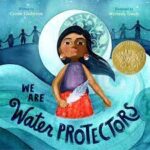
Book Review: We Are Water Protectors by Carole Lindstrom, illustrated by Michaela Goade

“We fight for those/ Who cannot fight for themselves…
The winged ones/ The crawling ones,

The four-legged/ The two-legged/The plants, trees, rivers, lakes,

The Earth. We are all related.”

We Are Water Protectors by Carole Lindstrom, illustrated by Michaela Goade, is a powerful reading experience for children that highlights how water affects and connects all living things. The book explores the fight to protect water from pollution and invites all children to become stewards of the Earth and protectors of water.

This picture book won the 2021 Caldecott Medal, awarded annually to the artist of the most distinguished picture book published for children in the United States. Artist Michaela Goade, a member of the Tlingit and Haida Tribes of Alaska, is the first Indigenous artist to win the award. Carole Lindstrom, the author of the text, is an enrolled member of the Turtle Mountain Band of Ojibwe.

Goade’s illustrations, vibrant, multi-hued watercolors are the highlight of the book. Swirling, flowing strokes of paint bring the natural world to life. The theme of water flows through every illustration and connects everything with blue and green cascading colors. Linstrom’s text makes effective use of a chorus, “We stand/ With our songs/ And our drums./ We are still here,emphasizing the enduring connection that native peoples have with the land.
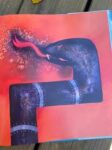
An ancestral prophecy from Ojibwe culture forms the basis of the book. While the people honor water as sacred, the text recounts the Seven Fires Prophecy, which foretells a black snake that “…will destroy the land… spoil the water… and wreck everything in its path.”  A “snake” has now fulfilled the prophecy, in the form of oil pipelines that cross native lands, damaging the Earth and polluting the water.

The illustrations show the contrast of humankind choosing a natural path that leads to peace, unity, and a healthy Earth and the alternate path in which humans embrace technology with little regard for the Earth. One breathtaking illustration shows a sparkling mountain lake at sunset, bathed in russet light and surrounded by animals, revealing to the reader the beauty of our untouched world. In another double-page spread, the black snake fills the pages, the pipelines that form its body cover a barren blood-red field, its frighting head spewing fire and venom.

For the reader, the choice is clear. The book then calls people to action. The young Ojibwe narrator, with hair that spills like water across the pages, joins others in protest of the pipeline. She evokes the stories of her people and the spirits of her ancestors to give her strength to stand strong for the water and the land, against the black snake. She invites other children to join her as Earth stewards and water protectors.

We Are Water Protectors reflects the “own voices” movement, allowing children who are underrepresented in books to see themselves and celebrate their culture. The book introduces all children to Native American heritage and the philosophy that underlies their worldview.  It promotes an environmental imperative, showing the world is in danger and that everyone, including the children, must take a stand for a better tomorrow.

This book can be shared with children as young as preschoolers, its bright, (although sometimes scary) pictures drawing them into the wonders of nature and the beauty of Ojibwe culture. It can be used to show how individuals take action for issues they care about. They will understand the idea of standing up for what is right. For older students, it can serve as a springboard to understanding the underlying ideas that move people to action, as well as the power of groups of people standing together for a common goal. I believe the book will be a powerful teaching tool for the elementary classroom.

Carole Lindstrom and Michaela Goade’s picture book, We Are Water Protectors is a book that deserves the praise and honors it has been given.

4 Comments

Filed under Ojibwe Picture Book, Uncategorized, We Are Water Protectors

WRITING IS A STICKY BUSINESS!

By Rondi Sokoloff Frieder

In the “About” section of this blog, In the Writer’s Web, we end our mission statement with the following sentence: “We want to provide insight, information, and inspiration to writers everywhere. Because… writing is a sticky business.” I love that last line. But what exactly does sticky mean? The Merriam-Webster online dictionary provides these synonyms: gluey, gummy, tacky, difficult, problematic, sensitive, tough, tricky, complex, complicated, hard, intricate, involved, serious, demanding, exacting, exhausting, stressful, and problematic. Yikes! On the other hand, here are some antonyms from the same site: easy, effortless, manageable, painless, simple, straightforward. So, if writing is a such a tricky-sticky business, why do we do it? Because we love it!

Most of you will agree that the past fourteen months have been extremely “sticky.” It was the epitome of so many of those adjectives I listed above. But the writer in me actually got a lot done. I became unstuck in many ways. I used my new stay-at-home lifestyle to develop a more serious writing practice. I hunkered down in my studio each morning to write and read. I revised a novel, got feedback from trusted critique partners, and revised again. I also dusted off another novel that had been sitting in a virtual drawer and began making some important changes. I attended online classes, webinars, conferences, and book launches. My critique group, The Story Spinners, began meeting on Zoom, twice a month, rather than once, in-person. And my Tuesday writing group, The Nanos, got together for Zoom writing sessions and lunch every week! I can honestly say that my writing, and my writing community, became my biggest comfort during this time of isolation.

But don’t get me wrong. I had many sticky writer moments during the pandemic. At one point, I had to put my novel aside. The events happening in our world today were so similar to what was going on in my historical MG novel. Hatred and bigotry still rage in our communities. On the flip side, I’m even more motivated to get my book out there, not matter how sticky the process might be.

When YOUR writing life becomes sticky, try some of these strategies:

  1. Write something new. A first draft written with abandon, or an early morning writing prompt might just be what you need to get those juices flowing. Journal, draw, make lists!
  2. Try writing in a different genre. If you’re writing picture books, take a stab at a middle grade or a novel in verse.
  3. Interview your characters, both primary and secondary, at various times. They may have changed during the course of your revision. (http://www.rondibooks.com/getting-to-know-my-characters-again/)
  4. Make a map – seriously – draw out where your story takes place with colored pencils or markers. It will help you navigate the details as your characters move through your setting.
  5. Chart out how many times each character appears in your book. Are they all necessary? If the answer is yes, you may need to have them do more so the reader will remember them.
  6. Color-code dialogue, narrative, and description, and see if you have a balance. You can print the pages out and use markers, or highlight with different colors on your computer.
  7. Take classes! I particularly enjoyed workshops with Emma Dryden, Kate Messner, Linda Sue Park, Julie Berry, and Grace Burrowes. I also worked one-on-one with Sarah Aronson and am looking forward to my next class with Susan Campbell Bartoletti. The pandemic has isolated us, but also brought us together. These classes were all available on Zoom along with handouts and recordings.
  8. Have others read your work and take time to digest the feedback. Emma Dryden says that 80% of the feedback will not resonate, 15% will make you think, and 5% will be so on point, you’ll go running to your computer to put in the changes!
  9. Make a list of strong verbs and inspirational metaphors from mentor texts. Then find ways to strengthen your own writing.
  10. Get rid of unnecessary words. I totally overuse: just, that, I think, begin. Also, trim tag lines.
  11. When you’re in the thick of revision, Sarah Aronson suggests writing down what your main character is like at the beginning and end of your book. Have they changed? How? Julie Berry had us write a love letter to our novel. So great! I go back and read this from time to time. It reminds me why I am working so hard to make this book the best it can be.
  12. Have the computer read your manuscript out loud to you. In Word, go to Review and click on Read Aloud. It’s a computery voice, but it still helps you pick up on repetitive sentences and awkward dialogue.
  13. Read books on craft. Even just a chapter or two. And do the exercises suggested.
  14. Read inspirational books about being a writer/illustrator. Here’s one of my favorites:
  15. Read  a wide variety of books, but be current on what’s being published in your genre. With picture books, you can also find read-alouds on Pinterest.
  16. Subscribe to writing blogs (like this one!), join groups on Facebook (especially SCBWI, Sub It Club, and Kidlit411) and connect with other writers/illustrators on Twitter and Instagram.
  17. Take classes and attend workshops. Places to look online: SCBWI regional and national webinars and conferences, local SCBWI regional Connects, Free Expressions, Highlights, Writers Barn, Lighthouse Writers, Writer’s Digest, StoryStorm, ReFoReMo, NANOWRIMO, etc.
  18. THINK about your book. Go for walks, ride your bike, or hang out in the shower. When an idea occurs to you, send yourself a text (or you may forget this little inspirational nugget) and transfer it to your notebook or actual ms when you get a chance.

No matter what – Stick with it, stick to it, and stick it out, because although writing is a sticky business, it is also very, very sweet!

Note: This was the blog I wrote in January before I left my laptop toooooo close to a humidifier. It got… misplaced for a while.

11 Comments

Filed under craft advice, critique, Main character, Revision process, RMC-SCBWI, Rondi Frieder, WORD NERD, Writing during the pandemic