Children’s Literature Throwback

IMG_2902It’s been several years since I enjoyed children’s literature as a child. But, no matter how much time passes, I remember the excitement of reading a beloved story from way back in the day.

The first picture book I made my parents read to me night after night was THE MONSTER AT THE END OF THIS BOOK. I don’t know if it was Grover, a favorite character from Sesame Street, that captured me. Or if it was the plot of Grover begging the audience not to read one more page because of the monster at the end. SPOILER ALERT: Little did Grover know, that he was the monster at the end of the book.

If Grover epitomized my early years, HATCHET embodied my reading during middle school. It was Brian Robeson’s survival story that hooked me. I felt like I was watching a movie, a thriller, and I had to know how it ended. I hadn’t read anything like it up to that point. It was my crossover from sweet and fun books to daring middle grade.

My tastes continued to evolve over the years. While I grew up listening to and reading Judy Blume books, I discovered one of my favorites, FOREVER, in high school. The book and Judy spoke to me about love, the love of your life, and break ups. Something, I didn’t have much knowledge about but was anxious to experience.  In a way, reading these stories helped me comprehend things that weren’t in my world.

While I enjoyed these books when I was young, they have stuck with me and I think of them fondly, like a good friend. What about you? What book memories do carry with you from back in the day?

Leave a Comment

Filed under Uncategorized

Insight and Inspiration from Student Writers

Blog GraphicI have the opportunity to facilitate the lunchtime Creative Writing Club at the elementary school where I teach. Student creative writers give up their recess and lunchtime with classmates to come and be part of our writing community. These students are motivated, bright and eager. They are students who recognized writing as a way to express themselves. They love to write and thrive in this situation that encourages and supports their efforts to use writing to tell a story they need to tell.

I have gained insight and inspiration into my own writing by working alongside these young artists as they hone their skills and grow into the writers of the future.

• Writers write. They write a lot. No one can be a writer without filling up a lot of pages and spending time and energy writing.

• Sometimes the deepest and most brilliant ideas are found in incomplete sentences and misspelled words that speak to the essence of the story.

• You have to tie everything together. A story that is all middle isn’t much of a story. You must have a beginning and an end.

• Imagination is the best guide. Although some accuracy is important, don’t let the facts get in the way and obscure your story.

• Use adjectives and action verbs. Don’t use adverbs. Use the very best words you know and don’t ever worry about spelling- you can figure how to spell words later.

• Sometimes you have to slog through a lot of boring stuff to get to the great stuff.

• Some stories don’t need to be taken to completion. They just don’t turn out to be interesting or meaningful. So, let them go and put energy into something that you want to finish.

• Writers really, really hate to revise, but they have to do it anyway.

• Try to find new ways to say something. A lot of people have the same ideas… but it matters that you say the idea in your own way.

• Play with emotion- make others cry or laugh or gasp. You know it’s good if your teacher gets the shivers.

• Writers have to share their work. Creative writing is meant to be shared.

• If people don’t understand something that you have written, you need to listen to them. They want to help you make your work stronger and work for everyone, not just you.

• The best writers are the best readers. Reading is the springboard for writing.

Leave a Comment

Filed under Uncategorized

Gone to the Dogs


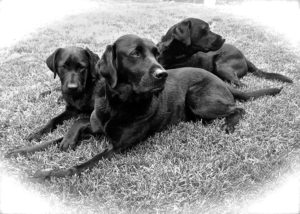
By Susan Wroble, photo by Carol-Ann Mullin

A graduate level conference for social workers, focusing on human-animal interaction, was the last place I expected to find a recommendation on the practice of writing. But there it was, a gem of information, right in the midst of sessions about addressing trauma through the use of therapy animals.

NellaHathawayGalena

Like all writers I know, I wear a lot of different hats. I always hesitate when people ask what I do. My usual answer is that “I volunteer a lot.” The dozen or so organizations where I give my time center around three areas: science, education, and dogs. That meant that the “Animals on the Brain” conference, hosted by the University of Denver’s Institute for Human Animal Connection (HAIC), was right up my alley.


Much of the conference focused on brain chemistry – specifically, the hormones oxytocin, which promotes trust and bonding, and cortisol, which is released in response to stress. Working with animals tends to release oxytocin in the human brain. As a result, social workers are increasingly incorporating animals into their practice with individuals who are autistic or who have experienced trauma.

Nina Ekholm Fry, Director of Equine Programs at HAIC, was in the midst of a talk on the Social Neurobiology of Equine-Assisted Work when she made the observation that changed my writing practice. “Your state of mind can be changed, it can be affected. Your state of mind goes to sensations and thoughts.” She continued, “I have input in that. I can change what I feel.” Before working on a difficult task, Fry said that she reads through a list of compliments her students have sent her. This, she explained, changes her brain chemistry and thus her mindset.


My writing sessions have all too often started with the mundane – and the depressing. Filing a rejection. Figuring out where to send something next. Wondering whether or not I should follow up on an article sent months ago, given no response from the editor. And that, I realized while listening to Fry, is completely wrong.


As a result of the conference, I’m separating the filing, the rejections, the “what’s next” questions out from my writing sessions. Starting with a dash of anxiety-inducing cortisol is not the way for me to be productive. Instead, I’m collecting a file of kind words and published articles and rave reviews (okay, those may all be from my writing group!). I’ll review those before starting my writing. And, of course, spend a whole lot more time petting the dogs.


Leave a Comment

Filed under Susan Wroble

Revising On The Wall

Long long ago at one of my first SCBWI conferences, I remember a speaker talking about revision and recommending, “Tape your manuscript on the wall…lay it all out…” It appealed to me because it sounded like a lot of fun, bnotebook-paper-25738068ut, I was no where near revising. For me, it was out there in a land far far away. The thought of revising was so intimidating. After all, I was working on a rough draft and had just learned the meaning of PB, MG, and YA.

Today, if you entered my studio, you would see sheets of paper on the walls. They greet me daily; they challenge big time. I’d like to report that I carefully planned this, but well, it just happened.

Here’s how: I couldn’t find a chapter (an organizational consultant would keel over at the sight of my Word files!) and was feeling overwhelmed and confused about my plot. I resorted to pen and notebook which always clears my cobwebs. I started writing on individual pages, “Chapter Number/POV/Year,” then below that, I wrote a tight one-sentence chapter summary. I ripped out (love that sound!) one sheet at a time and it hit me – Get tape! Put these on the wall! I taped each piece of paper in a horizontal line traveling across a wall. I couldn’t stop. If I was unsure about a summary, I left space on the wall and kept going. After I reached the corner of one wall, I moved to the next and the next, until I taped up the summary of the last chapter.

I stopped. I was a kid in front of a huge drawing board. I glanced over the first wall. Suddenly, I spotted a connection between two chapters (that are some hundred pages apart). I had no idea, had never thought about it. Then, it hit me – Get yarn and thumbtacks. I used the yarn to “draw” and tack a line between the connection. Then, I saw more connections, a possible plot twist, an ah-ha about what motivates a secondary character, a what-if… This went on for days, weeks; it’s still going on.

Putting my YA on the wall gave me a chance to stop (and stare at my walls!), be quiet, and interact with my writing. Ah, a perfect fit for my short attention span and very visual and tactile learning style. There’s only one problem: I may run out of walls! I love moving papers, and even wadding them up. I’m amazed and humbled by how much of my writing doesn’t show up in the words on my computer screen. As Natalie Goldberg says, “Behind writing, behind words, is no words. We need to know about that place. It gives us a larger perspective from which to handle language. Silence can be the door to listening, which is one of the great cornerstones to writing.”

Leave a Comment

Filed under Uncategorized

The Joy of Writing

IMG_5064

By Rondi Sokoloff Frieder

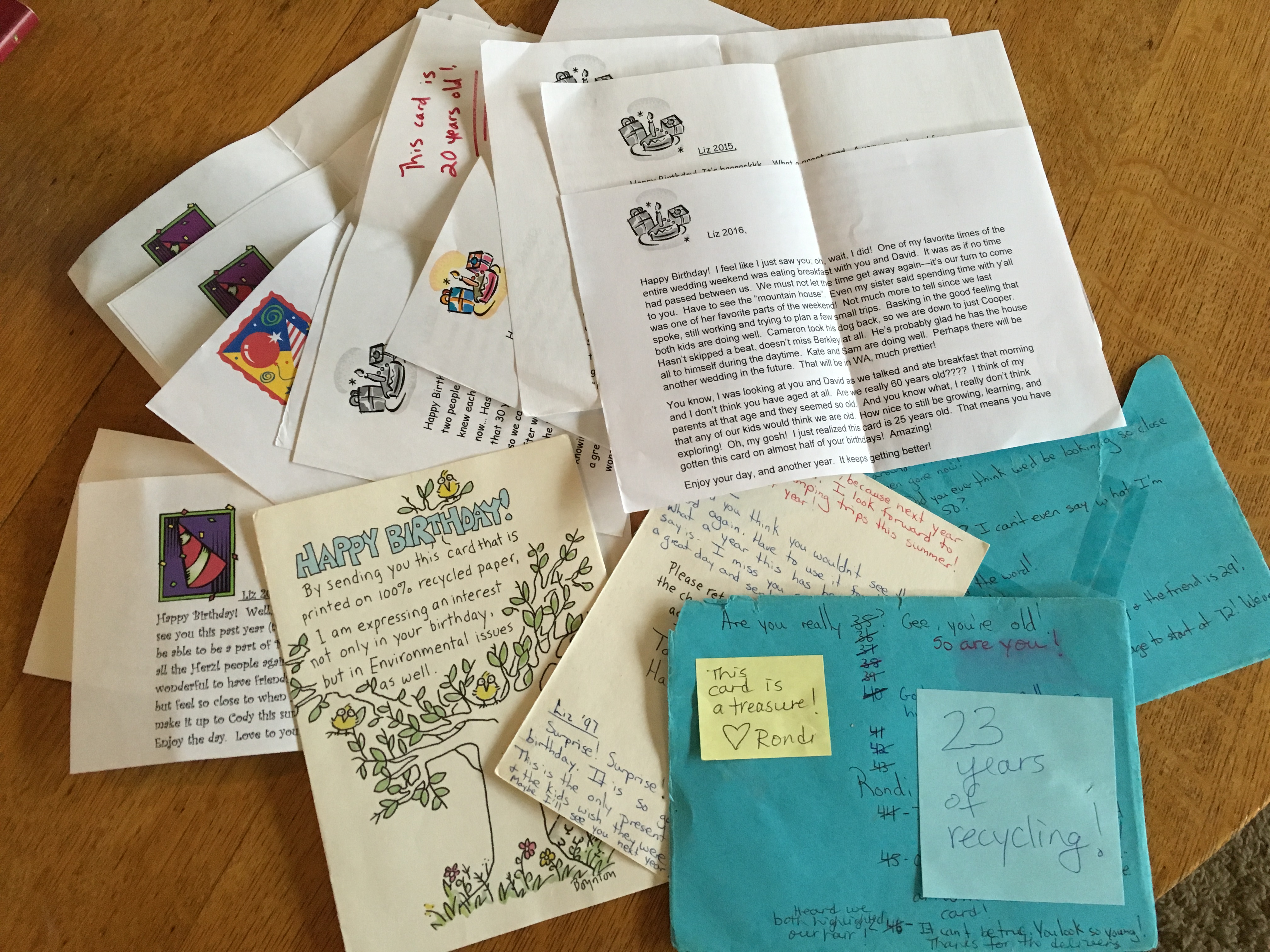
Twenty-five years ago, my co-teacher Liz gave me a birthday card that said, “This card is printed on recycled paper. Please return it to me when you get the chance so I can send it to you again next year.” I smiled and dutifully handed the card back to her, totally forgetting about it in a few weeks. But when March rolled around the following year, there it was on my desk, complete with a new note inside: “Here it is again! Have a great day! Soon you’ll have someone else around to share a birthday.” My second son was about to born. I returned the card to Liz and you can probably guess what happened next. The back and forth of the card became a yearly tradition. Little did we know it would continue for at least a quarter of a century.

Five years after I first received the card, Liz and her family moved to Texas. This meant we would need to use the United States Postal Service to transport the card back and forth between Denver and Dallas. We developed a system. Liz sent the card to me in March, and I sent it back to her in October, along with a new card for her own birthday.

After ten years, every inch of possible writing space on the card was filled with Liz’s newsy greetings, meticulously dated. So by year eleven, she began typing her messages on the computer. She added a birthday graphic on top, printed the note, and tucked it inside the original card before mailing it to me.

By year fifteen, the spine of the original card was beginning to fray. Its blue envelope was also split into two pieces. I’m not sure why, but neither one of us felt the need to tape it back together. We just stuffed the entire pile of paper into a manila envelope, stuck two Forever stamps onto the top right-hand corner, and dropped it into a nearby mailbox. It was around this time that Liz’s notes were becoming longer and more literary. Maybe it was the large, blank space on the computer screen, aching to be filled. Or perhaps she (and I) had reached an age that made us prone to nostalgic ramblings. One thing was for sure. In a world of abbreviated texts, flashing Emojis, endless emails, and Facebook photo postings, Liz’s notes had become full-fledged letters. Letters that chronicled our lives with meaningful reflections and joy. Great-big-smiley-joy.

Next week, I will be throwing a huge party for my dad’s 90th birthday. After sending out a slew of invitations, the RSVP’s began to pour in. Our guests had the choice of calling me or sending an email. Although most of the respondents are in their 80s, many chose the email option. I was amazed at the touching words that flooded my “in” box. “With happiness in our hearts, we look forward to joining you and your family in celebrating Harold at this momentous time. 90 years is special – how appropriate for such a special friend!” And this one: “We can’t wait to celebrate this occasion with our friend Harold whom we love.” Also: Judy and I are delighted to accept the invitation to this milestone event!” The people who called me were more matter-of-fact in their responses. It was either “we’ll be there” or “we can’t make it.” But the writers – the writers were filled with joy.

Writing enables us to express ourselves deeply. We often write what we cannot say out loud. So when you open your journal or turn on your computer to compose, edit, revise, cut, rework, or scream… take a minute to remember why you are doing this in the first place. It brings you joy. Really, it does.


Leave a Comment

Filed under Uncategorized

Writing Goals

It was my second flight solo-parenting my four-year-old twins. <Bear with me, this will be about my writing process.> We got to the airport in plenty of time – one and a half hours before our domestic flight. But it took a long time to check bags. And make a trip to the bathroom. And get through security. And ride the airport train to the last stop. And walk all the way to the farthest gate (the moving walkway was under construction). And they had started to board early. So for the first time in my adult life, I was the last person on the plane. Not necessarily a problem, but it was a Southwest flight. Which means open seating. Which meant there was no row available for me and my little boys.


The flight attendant made an announcement, offering drinks and such. Nobody moved. I walked to the middle of the plane, saw rows with empty middle seats, and no way for me and my four-year-old kids to sit together. I promptly burst in to tears.


Back to writing. My goal for 2016: “Get an agent who reps and sells in my genre.” Now, I’ve done a lot of goal-setting in my personal and professional life. Make that goal a SMART goal (specific, measurable, achievable/action-oriented, realistic/relevant, time bound). Make it aggressive, but attainable. Make it within your sphere of control.


My goal is fairly SMART – “Get an agent who reps and sells in my genre in 2016.” It’s specific. Measurable. Action-oriented. Relevant. Time board. Achievable? Realistic? Up for debate. And that’s the crux.


Other writers have suggested I adjust my goal to “Query ten agents in 2016.” Because querying is within my control. I can finish and revise my manuscript and then submit a tight query letter to the right agents. I could definitely achieve this goal.


But back to my traumatic flight. My goal was to make it to the airport at least an hour before my flight. But as I stood crying in the aisle, I realized my *real* goal – be ready to board when it was my turn so I could sit with my kids. Similarly, querying ten agents isn’t my goal. It’s a milestone. It’s a step to make my true goal. But it’s not the goal itself. The goal itself is get an agent. If I met a kick-ass agent at a bar who had an amazing track record in my genre who asked to see my manuscript and offered me representation without my ‘technically’ querying  her – I would take it. I wouldn’t say, “Wait – let me send you (and nine other agents) my query letter.”


It’s scary to set a goal I can’t control. But there are things I can control. I can revise my manuscript multiple times, getting feedback from other writers and readers in my genre. I can research agents to make sure I’m not sending my query out to people who don’t rep what I have to sell. I can polish and polish. And I can cross my fingers.


But I have to be honest with myself. While sending out x number of query letters will definitely make me feel like I’ve accomplished something, it won’t be accomplishing “the” thing. So I’m putting it out there. Even if it means I won’t make it, I’m shooting for the stars.


And I’ll get to the airport earlier next time, too.

1 Comment

Filed under Coral Jenrette

“Dear Author…” Advice to Middle Grade Writers from 5th Grade Students

04b6989eb2113beb1449373af2a2f16b

What advice do you have for authors who write books for you? I posed this question to my gifted and high ability 5th graders- and was not at all surprised that they were eager to offer guidance and insight to middle grade authors.

I have had the opportunity to teach this group of students for the past five years, meeting them when they were sweet 1st graders, wide-eyed at the prospect of all that school offered. Now, sophisticated and school savvy, they have developed into thoughtful, passionate learners and readers. Here are some highlights of their responses.

Dear Author….

• Put lots of emotion and love into your books. I want deep meaning in a book. -Kylah

• I like to read about what happens in the real world. My world. -Kylah

• Give me action and horror! –Tyler

• Don’t force your creativity. Just write what you love and we’ll feel your love and love it too. -Nicolas

• I love descriptive language—I want you to make me feel like I am right there. -Nicolas

• Have the book teach me life lessons like “don’t give up” or “you can overcome evil” or “be nice to your family.” -Nicolas

• I read novels so that I can have a doorway into stories and situations that are extraordinary. -Bennett

• I want to be sucked into the story as soon as possible. When I’m done, I want the book to be so good that I feel sad when I am finished. -Bennett

• Write about other cultures. We need people to understand each other better. -Ella

• Fill your book with emotion. The best part of a book is the emotion. Whatever you write… realistic fiction, historical fiction, fantasy or something else, it’s the emotion that makes it a good book. -Ella

• I want to be able to put myself in the story and to imagine the characters as my friends. I like a book where you get attached to the characters and wonder what you would do in the same situation. –Quinn

• I like complicated books; books that make you understand something totally new. A book can teach me that there are different people in the world and many different ways to live and solve problems. -Talile

• Make some characters bad and some good and some a little of both, but have at least one character that everyone loves. -Elly

• I want a book to be so descriptive that it makes a movie in my head. I want to get sucked in… -Elly

• Make the book really, really, really, really long. -Ezekiel

• I like books about people who are not like me. I want to understand other people and books help me to do that. -Ezekiel

• It doesn’t matter if the book is set in the past, present or the future. What is important is how the characters figure out what is around them and what they have to deal with. -Ezekiel

• Don’t make the books for older kids so much harder to read than the books for younger kids. Just make the situations more complicated and interesting. -Ben

• Do NOT start your book slow. Don’t be dull. Don’t make the book too long. Long isn’t necessarily better-Ben

• Write a series. Then I’ll read your books for a long, long time and never want them to end. -Ben

• I want you to write books that tell about others and life all around the world. I want to read about characters that are kind, helpful, hopeful and who never give up. -Ximena

• I read to learn about how I can improve myself and become a better person. A good character is a better teacher than a long lecture. -Ximena

• Don’t write to me like I am a kid. Write to me like I am a person. -Marcos

• I like to read novels because I like to get lost in adventure and action and EXPLOSIONS. I want emotion, destruction and suspense. Make your books exciting. -Tai

• I hate “happily ever after endings because they are extremely cliché. Make it real. -Tai

• I like very long books because I want to feel like the book will never end. -Tai

• One word: Magic. Fill your book with magic. All kinds of magic. -Sasha

• I read so I can enter and explore a world other than my own. I like to learn about history through books, so I can imagine what it was really like in the past. -Henry

• I read to escape the world. Make me imagine a whole new world. -Rowan

• Don’t make the characters stupid. -Rowan

• I know you don’t want to hear this, but graphic novels are the best. -Ahmed

Leave a Comment

Filed under Uncategorized

A Garden of Books

IMG_5190Volunteering at my local middle school library has revolved around un-shelving books. It’s a lot like gardening. According to the librarian, kids stop checking out books when they’re overwhelmed by sheer numbers to select from, so we’ve been carefully weeding out titles, starting with fiction.

Assignment number one: judge books by their covers. Seriously. Kids rarely choose “ugly” ones. To remain impartial-ish, I was given parameters regarding what ugly entailed, but was also allowed to turn a blind eye on uglies that hid good stories. The librarian and her many student assistants had the final say on what titles got axed. Once in the groove, I began to notice stylistic patterns in ugly cover trends as the decades progressed, especially in contemporary works. The breakdown:


60’s – 70’s: BIG TITLES, plain backgrounds. Occasional psychedelic illustrations.

80’s: realistic scene illustrations. Perms! Mullets!

90’s: Fewer scene depictions, more photography.

00’s: Anything goes. Cartoon-y illustrations. Inanimate subject matter. Close-ups of body parts (hands/legs/faces). I kept expecting to find a nostril shot.

10’s: Crisp and minimal. Blacks, dark purples, dashes of red. And vampires. LOTS of vampires.


If ever I’m in charge of cover design, I’m going to my local school library to study which titles have withstood the winds of time before making a decision. There were well over 500 books I pulled off those shelves, all of them unsuspecting victims of the uglies … and even still, the purge wasn’t complete.

Assignment number two: With ugly covers off the shelf, it was time to roll up my sleeves and dig deeper. Titles published before 2000 that hadn’t been checked out at least once over the last five years were to be added to the doomsday pile. Nearly 400 books are on that list. It’s been depressing clearing off some of my favorite authors and titles—Avi, Judy Blume, Chris Crutcher … I even pulled five Newbery and Newbery Honor books, and this was just through the C’s!

Realizing what limited shelf life most books have—even ones whose check-out cards are filled with date stamps from yesteryear’s adoring fans—has been eye-opening. Libraries sometimes leave me feeling downhearted when I see all the books that aren’t mine cramming their shelves, but now that I understand the truth about a book’s life span, this also means that my stories are still in the seed stage, with time to mature before being born into the world, swaddled in some absolutely fabulous cover. Their clocks haven’t started ticking.

Assignment number three: Cuddle up with an ugly cover, even if the novel is gasping its last breath. During October, the librarian made a graveyard display with doomed books and RIP signs. For November, she had “blind dates with (ugly) books.” In December, uglies were disguised as presents. By January, several compost-bound books had been “re-potted” on the shelves, with brand new checkout dates to keep them rooted for a few more years.

The school library-garden still has weeding to be done (I’m only through the F’s), but if it means more kids are checking out books, I’m willing to dirty my knees. And while I thin out old growth to make room for other books to bloom, I’ll be dreaming up ideas for new novels, hoping that someday they, too, will be planted here, ready to be plucked off the shelf.

1 Comment

Filed under Carrie Seidel

Nutty for Newberys

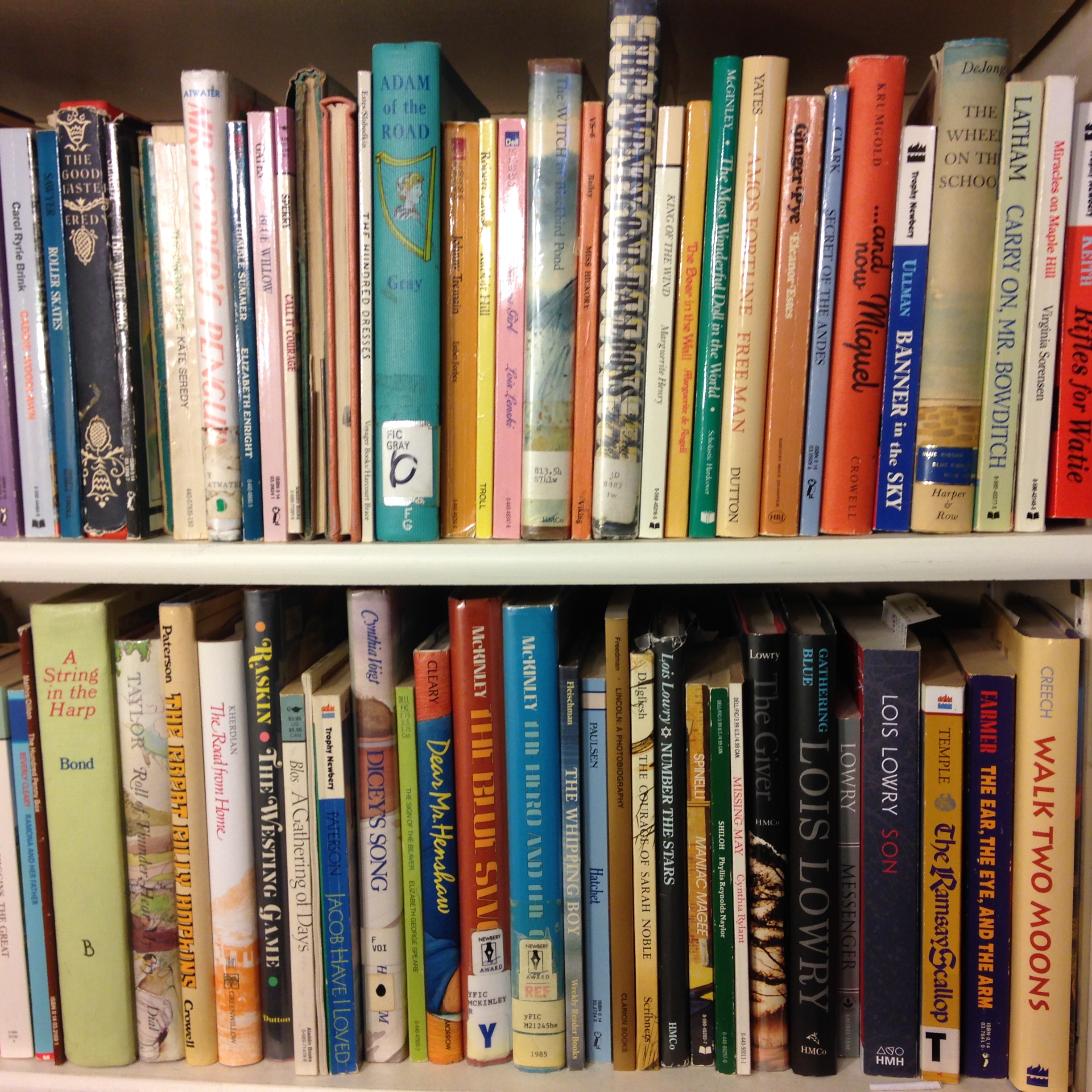
NewberyShelves

By Susan Wroble

My January tradition isn’t getting into shape, losing weight, or becoming organized. Instead, I watch for the American Library Association announcements, and get my hands on the latest Newbery Award winning book as fast as I can.

I’ve loved the Newberys since I was old enough to read them. This award, given to “the most distinguished contribution to children’s literature,” began in 1922. I started collecting them in the early 1990s, then got serious a few years ago about tracking down those last few missing books.

Carrie Seidel and I have more in common than membership in this wonderful writing group. She also collects the Newberys. Carrie’s shelves are full of hardbacks, and she especially loves the old library hardback editions with their clear plastic coating and cards with lists of names inside the cover. In contrast, my collection began at thrift stores, so has a lot of paperbacks. And if I really love a Newbery Honor book, it gets shelf space right next to the award winner for that year.

This year’s winner, Last Stop on Market Street, by Matt de la Peña, was a shock. It’s a picture book. I have to admit that I was annoyed. A picture book winning the Newbery? Then I took the time to read it, and re-read it, and think about the award. The writing is tight and elegant and lyrical; the story is timeless. It’s a gem of a book.

With our youngest in college this year, I once again have the time and energy to devote to writing. I have plenty of picture book ideas that were started and filed in those two decades devoted to active parenting. And so this year, I’m eagerly awaiting March, with the ReFoReMo (Reading for Research Month) Challenge offered by Carrie Charley Brown. The idea behind ReFoReMo is to use the month to delve into and study picture books—an average of five a day—and use them as mentor texts for our own stories.

Who knows? Perhaps one day there will be another Newbery Award winning picture book, this time with my name on the cover. Not likely, but it sure is fun to dream!

2 Comments

Filed under Susan Wroble

To Conference, To Conference

By Denise Schurr

SCBWIOne of my favorite activities at a writing conference is learning about the recently released books. As a teacher, I’m looking for books to add to my classroom library. As a parent I’m looking for books to capture my kids’ interests. As a reader/writer, I’m looking for something inspiring. The last conference I attended, SCBWI Letters and Lines in September 2015, did not disappoint.

I picked up Todd Tuell’s picture book, Ninja, Ninja, Never Stop! I have two pint-sized ninjas at home who I knew would love it! I think they picked up some cool moves after reading. And it’s one I can share with my school kids too. The ninja topic paired with the rhythmic rhyme is a homerun for both sets of kids!

Another treasured find was Sean Ferrell’s picture book, I Don’t Like Koala. While you think you know the whole story, when you get to the end, there is a fun twist. It’s humorous for kids and adults.

And little did I know at the beginning of the school year, when I read The Kissing Hand to my kindergarten class, I would be picking up my very own copy at the conference. Only this one was signed by the very talented illustrator, Ruth E. Harper. When I took it to school my class was in awe. It was inspiring for them to see something autographed from the person who makes stories come to life through illustration.

Finally, I was disappointed when I was unable to pick up my own copy of Tara Dairman’s middle grade novel, All Four Stars because it was all sold out. Lucky for me, one of my critique group member snagged a copy and let me borrow it. Tara has a feel for the flow of a story and I was swept up from the beginning. For the record, that read wasn’t for my school kids or for my own kids, it was a perfect fit for me.

What about you? What is your favorite find from attending conferences?

2 Comments

Filed under Uncategorized