
Tag Archives: Revising

Auditioning: Putting My Pages Out There

The timer went off. I had just finished a productive 50-minute revising session. But then… my break turned into being online too long. I disappeared into the SCBWI website, reading all about upcoming webinars. Yes, I was procrastinating. Yes, I was hoping a super power would finish editing a chunk of my young adult novel. It was due to my young adult novel exchange partner in five days.

Just as I was about to close the website, one webinar jumped out at me. It cheered, “Sign up. Now! Don’t think. Do it.” The webinar featured an agent giving live feedback on the first 10 pages. Ten pages? Wow! Rare, I thought. And curious. One seat was left. It was mid-day. The pages were due at 5pm the next day.

“Nope, too late,” I thought. “Besides, my manuscript isn’t query ready.” Meanwhile, my neuro divergent brain was full speed ahead, doing a jig and high on a possible challenge. I quickly googled the agent’s website and Manuscript Wish List. I got goosebumps. She was seeking the themes steeped in my YA novel.

Minutes later, I was registered. Plus, I paid extra ($25) for the agent’s post webinar detailed critique of my first 50 pages. What an adrenalin rush! What a perfect way to put my pages out there. An audition of sorts.

The spontaneity was energizing. This wasn’t the first time that I had jumped and registered last minute for a pitch or contest. Perhaps, the stars simply align that way for me.

Unfortunately, in this instance, there was one problem. A big problem. I had not looked at the first five chapters of my YA novel in months. Many months. I had been hyper focused on cutting, editing and polishing the last act. Yikes!

I immediately hunkered into my editing cave. The good news, it was easy to cut and edit, because I had moved parts from the beginning to the second and third acts. The bad news, it was very challenging to re-figure the first chapter. It no longer fit, as a result of my final revision. I felt stuck and overwhelmed. If only it made sense to start with chapter two. But, I needed a set up. Ugh.

I re-read the Beat Sheets (from SAVE THE CAT! BEAT SHEET WORKBOOK by Jamie Nash) that I had done and re-done for this novel. I re-read the first act. I handwrote notes; did free writes of possible first pages. Geesh. Was I really going back to the drawing board? Insane! I couldn’t delay; couldn’t stop. I had a deadline.

Fast forward. The webinar was an incredible experience. Each attendee’s first five pages appeared on screen, while the facilitator read them aloud. The agent devoted six minutes to each work, giving succinct, insightful, thought-provoking feedback aloud that she had prepared in advance. Everyone listened. No interactions, discussions, questions. I loved the meditative, deep thinking mood – and generous quiet time to soak up the sound of our prose and a professional’s reaction.

Of course, I was nervous and full of “I should have changed this, cut that…” But it was too late. It was un-polished. It didn’t matter. My work was out there. The curtains were wide open. An audition.

Lesson learned: Put my pages out there before I’m ready to query. The webinar pushed me outside the “I have to” box. I have to have a full manuscript ready before I…  Ever since, it has felt liberating and reassuring to keep entering pages in a contest, online sessions, etc. Intimidating? You bet! But these auditions keep me moving forward and believing in my novel. Best of all, they give me a reality check.

By the way, the agent’s detailed ($25) feedback was a huge perk. Pages of positives, keen insightful suggestions, along with discerning questions. I have added her to my To Query spreadsheet.

Here’s to auditioning your work in progress! Why wait? Give these opportunities a try and look for more. Congratulate yourself on putting your pages out there.

Webinars: SCBWI Regional Virtual Events https://www.scbwi.org/regional-virtual-events

March contests for YA novel excerpts: (Winners are assigned to an editor or mentor that coaches you to a polished manuscript.)

#RevPit 2024 Annual Contest  https://reviseresub.com/annual-contest

First Page Prize   https://www.firstpagesprize.com/

Gutsy Great Novelist  https://gutsygreatnovelist.com/chapter-one-prize/

Uncharted Novel Excerpt Contest  https://www.unchartedmag.com/uncharted-magazine-novel-excerpt-prize-judged-by-keshe-chow/


There’s no time like the present. –MG and YA acclaimed author, Victoria Hanley



2 Comments

Filed under 2023, Agents, craft advice, critique, Karen McChesney, Literacy Program, Main character, Middle Grade, Motivation, Persistence, Revision process, RMC-SCBWI, Upcoming

ODE TO REVISION

Revision.

You make me crazy!

“Explain,” you say.

You’re akin to blisters, pests, chores, and petty necessaries.

I have sweat and steamed over you,

rehashing plots, revamping chapters, recasting characters.

“Your point?” you ask.

Now, I am a fanatical, fervored writer

glued to my written mess.

Revision,

others warned

you would be a storm, thorns, and bricks on my brain!

“Why stay?” you say.

For those spectacular moments

when my story flows smooth as syrup

and sparks fill me,

singing “you can do this!”

And suddenly,

I’m a dancer, a bird, a shooting star, a perfect snowflake…

“Follow your characters,” you declare.

Exciting when I let them get into grand muck,

but then, I’m stuck in another written mess.

I breathe, cuss,

resume re-doing:

reorganizing scenes,

recalibrating action,

reconditioning description and dialogue.

Again.

Repeat.

Again.

Insane.

But my hope is refueled.

Alas, my main character has a new coat of conviction and chutzpah.

I can’t let her down.

Revision,

you’re a wild renovation that I can’t fully resolve.

“Congrats!” you say. “Resolving is for readers.”

Revision,

you wake me to characters in chaos,

off stowing secrets and lies.

Please give me a shortcut!

“Butt in chair,” you remind.

Revision,

my thick-skinned constant,

you make me crazy,

but I’ll keep my seat on your train,

wrecks and all.

Thank you.

Much obliged.

Appreciate you.


5 Comments

Filed under craft advice, critique, Karen McChesney, Main character, Motivation, Picture Books, Revision process, RMC-SCBWI

Revising OUT LOUD!

By Rondi Sokoloff Frieder

Ever since I made the decision to become a serious writer, members of my family have asked me to edit their writing projects. I have said yes to college essays, business presentations, and even a Master’s thesis. But before I ever agree to do this, I always require the writer use one important self-editing tool – they must read their work out loud! They can read it alone in a quiet room or give a dramatic performance for the dog. It doesn’t matter, as long as they do it. This may sound like a common revision strategy to those of you who have been writing for a long time. But believe me, many people skip this step.

You can begin by reading whatever you have written out loud to yourself. It’s amazing how helpful this is, particularly for creating snappy dialogue and getting rid of repetitive words. You should also record yourself using the Voice Memo app on your phone and then listen back. I use this for first pages and sections with high tension. If you are writing a picture book, listening to yourself read the manuscript  will give you a good sense of rhythm, flow, and word choice.

It is also helpful to have someone from your critique group read your story out loud to you. This will help you hear how easily the book can be read by a parent, teacher, or child. But if you are writing something longer, you may want to have your computer read to you.

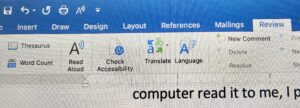
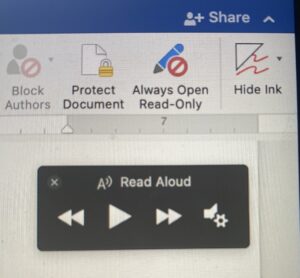
That’s right, your computer can read!  If you use “Microsoft Word,” this tool can be found in the “Review” section. Just click on “Review” and look for the “Read Aloud” icon in the top menu bar. Most versions allow you to adjust the speed and gender of the voice. I must warn you though, the voice of this reader is quite flat. There will be no emotion expressed, except for a slight shift when the computer comes to a question mark. If this monotone voice annoys you, there are other programs that have more versatility. My son recently bought one called Speechify. Speechify gives you the choice of a variety of voices and accents and has a much more human tone.

Despite its lack of intonation, I find the Microsoft Word “Read Aloud” feature surprisingly helpful. My middle grade novels range from 40,000 to 60,000 words. It would be almost impossible to have another person read an entire book out loud to me. And when you read to yourself, you miss things. Your brain is ahead of your voice and you are much more focused on plot, rather than word choice and repetition. I just finished having my computer read my latest WIP  before sending the manuscript out to my critique group.


Here’s what happened:

  1. I eliminated 4,000 words. Seriously, 4,000!!!! Many were words I used too much throughout the manuscript, or used too many times on a page. The biggest culprits were: I mean, that, you know, today, right, around, about, on, up, down, back, really, but, pull, nod, smile.
  2. I got rid of unnecessary sentences. One of my worst habits is saying something is going to happen and then have it happen. The actual action is almost always enough.
  3. I got rid of entire paragraphs that DID NOT move the story forward. These were often over-descriptions of a setting or character, or a conversation that went on for too long.
  4. I omitted adjectives, especially colors, sizes of things, and over-descriptions of food.
  5. I tightened up punctuation,  eliminating and adding commas, and getting rid of exclamation points!!!!

I also added things:

  1. I enhanced emotional reactions to action, but made sure they were not overly physical.
  2. I added details that clarified information for the reader. Sometimes, these things were in my mind, but not on the page.
  3. I made sure that changes to the story were consistent throughout the manuscript, especially when I eliminated characters.
  4. I added small words that I had accidentally left out, particularly a, the, in, on, to.
  5. This story used to be in past tense, but I switched it to present. When the computer read it to me, I picked up on places I missed making the changes!

As you probably know, this is not the final version of my book. I will be getting another round of feedback from my critique partners in early July.  And after I review their comments, and input the suggestions that resonate, the dog and I will settle back into my studio and have that Microsoft Word lady read the book to me again . OUT LOUD, OF COURSE!

Authors note: I used the “Read Aloud” feature for this blog!

9 Comments

Filed under 2022, Computer tricks, craft advice, critique, Revision process, Rondi Frieder, WORD NERD

Why you should invest in coaching as a writer or illustrator

Bill Gates said in 2020 — “Everyone needs a coach. It doesn’t matter whether you’re a basketball player, a tennis player, a gymnast, or a bridge player.” But let’s finish that sentence.

It doesn’t matter whether you’re a writer. Or an illustrator. Or both.

Everyone needs a coach.

If you don’t immediately agree with me (or Bill) here are some benefits for you to consider. And if you do already agree with me, and are a member of the RMC-SCBWI, head right on over to read specifically about the Michelle Begley Mentor Program, a six month program that offers great value for investment, which I am thrilled to co-coordinate this year with Laura Perdew. The application is open until November 9, 2021 and this year we are offering a scholarship courtesy of the Writing Roosters and two grants!


Ongoing Critique and Feedback

I am part of two wonderful critique groups that meet regularly, yet working with a mentor is still a unique experience because *your work* and *your craft* are the entire focus of the conversation. Together you discuss your vision and over the course of multiple months, you bring that vision to light.


Improve your current work in progress

First and foremost, your mentor will work with you on a manuscript (or illustration portfolio) that you’ve been working on. As established professionals, they bring their expertise to your work and will help you develop it to be as strong as it can be. In my own mentorship with Anna-Maria Crum as my mentor, she helped me rework my plot and character motivation – my inciting incident was buried way down deep in my manuscript, and this reorganization immediately made my work stronger.


Improve your craft going forward

There will be countless elements of what your mentor points out in your work that you will be able to carry forward for years to come. Two personal examples — I learned about some of the weaknesses in my plot (build stronger motivation for action – no coincidences!) as well as in my dialogue (make sure my characters react to what is said as opposed to making unrealistic leaps in the conversation because the lines sound cool). It opened up my eyes not only to what I could improve in the novel we were discussing, but what I could carry over to every scene I’ve crafted since.


Coaches can help you set realistic goals

Our mentors have been there, done that, but the fact is that every artistic creator is different. A mentor can talk through your process and experience and help you set goals for your work – goals that are within your control and that you will meet during the course of the six months. Which leads us right to…


Having a coach is motivating

Coaches give you deadlines. They are there, waiting and expecting for you to work with them. They are looking forward to seeing your progress. And having that built in accountability can do wonders.


***

There are many other reasons to have a coach, and many personal experiences about successful mentor/mentee relationships. Read testimonials here about what others have gotten out of the Michelle Begley Mentor program, and share in the comments some of the benefits you have experienced in working with a mentor (or being a mentor!).

And consider securing a mentor of your own through the Michelle Begley Mentor Program. The application is open until November 9, 2021.


**Reading this after 11/9/21? Join us next time – the application period for the Michelle Begley Mentor Program is typically October through November 1.

2 Comments

Filed under Coral Jenrette, craft advice, critique, Revision process, RMC-SCBWI

Receiving Feedback

Critiquing is a critical part of the writing process – getting feedback from others gives us guidance and can shed a light on where we might focus in revision. There is so much we can’t see as the writer of our own work and getting other people’s responses to what we’ve written is truly illuminating.
 

But receiving feedback – literally sitting there while someone tells us what they think about our work –can be hard. Sometimes it can be really hard. It’s great when people say, “I love what you’ve done!” but it can be hard to listen to people say, “Here are the things I think you need to fix.”  It can even be hard when they say, “I love what you’ve done but here are some things to fix.” Someone can love your piece, and it can still need work.

The fact is, even if it it’s combined with positive feedback, receiving critical feedback can be challenging.

Here are a few recommendations for how to handle the moments when your piece is getting critiqued.

  • If your group is reading the piece for the first time while together, allow someone else to read your piece aloud. Hearing where they read smoothly and where they stumble can give great insight as to where you might want to revise at the sentence and word level.
    • No critique partners? Critique partners read everything in advance? Your piece is longer than a picture book or a few pages? Use a Read Aloud function, like you can find in Word – Google docs also seems to have a text to read function
  • Try to take feedback in and listen without getting upset.  It’s very natural to have a knee-jerk reaction to critical feedback. “But that’s not what I meant” or “you’re not understanding” – if they didn’t understand, it might not be on the page the way it is on your head. Try to take in critical feedback without being defensive.
    • If you’re too defensive or upset receiving critical feedback, it may hurt people’s ability to be honest with you in the future.
    • The exception — respond to any kind of clarifying question that will help someone provide feedback from a place of understanding
    • Sometimes one critiquer will say something is missing on the page (a motivation, for example, or an emotion), while another critiquer will have gotten exactly what you were trying to say. In this instance, consider whether what you are trying to get across is obvious enough. It may be. It may not.
  • Relish the positive things people have to say. You need to learn what works in your work. Even if a line is cut or a scene doesn’t make it, if people loved it, find out why so you can replicate.
    • Some people are great at this. For others, it can be really hard to take in the positive. Some people want to skip right over the positive and get to the critical because that’s where the work is, but make notes about what people love, so you can keep those things in your writing, and celebrate those things as the critical feedback comes rolling in.


What other recommendations do you have else for those moments during a critique while people are actively giving you feedback?


**Image by Gerd Altmann from Pixabay

4 Comments

Filed under Coral Jenrette, craft advice, critique, Revision process

Deep Dive into Your Target Word Count

As you develop your story, there are so many components to consider and perfect: a strong character arc, varied pacing, stellar dialogue, beautiful descriptions… the list goes on and on. But one factor you must always consider is word count.

If your novel is too short, it might not be considered ‘meaty’ enough for the age group. If your novel is too long, agents and publishers might worry that it has a ‘saggy middle’ or is filled with fluff. And for picture books, the current trend is definitely shorter over longer, but that can look very different depending on the age of the targeted audience and whether the book is fiction or non-fiction.

So what do you do?

First, because this can change over time, research the current trends for word length for the type of book you are writing (type something like “word length for picture books” in the search engine and see what you get). Here’s an article from Writer’s Digest to get you started.

Second, find comparison (comps) and/or mentor texts. Story Spinner Susan Wroble wrote a great post on how to do this.

Third, use a fantastic resource like Accelerated Reader Bookfinder (www.arbookfind.com) to see how those comp and mentor texts measure up when it comes to word count.

When you search for a book, AR Bookfinder will give you a lot of information (short blurb, ATOS book level, interest level, rating, whether it is fiction or non-fiction, subtopics, etc.), but most importantly (for this post) it will give you the specific word count for the book.

This is critical because page length can vary – just think about the difference between a story submitted in 11 point font, single spaced, with ½ inch margins vs. a double spaced, 14 point font, with 2-inch margins. This is why the industry is so specific about the formatting that you use when submitting materials – it gives some consistency about what ‘5 pages’ really means. But when you’re publishing a book, you have no such limitations. The pages can differ in size of the book itself, in margins, in fonts and font size… the list goes on and on. While, in general, more pages means more words, two books that are 250 physical pages can have very different word lengths. Nowhere can you see that more than in picture books.

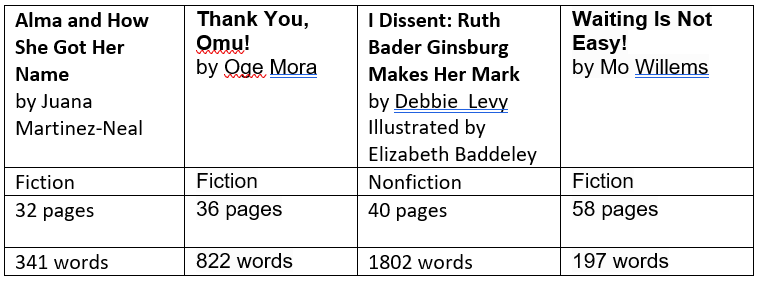
Here are four examples:

** If you have trouble seeing the table, the information is written at the end of the blog post


These are four wonderful books, all targeted to the K-3 reader, but they couldn’t be more different. And that is reflected not only in the way the books are written (prose vs. dialogue, for example) but in the word length. For these four books, the book with the most pages has the smallest number of words. Seeing how your book stacks up in word length to a book similar to yours can give you a good sense as to whether you are hitting the mark.


If your picture book is 700 words, and your comp titles all range from 400-500, your book may be too long for your target audience.  If your mentor texts are 45,000  – 50,000 words, and your novel is 17,000 words, again — potential problem. Your book lengths don’t need to be an exact match, but hitting market expectations is important in securing an agent and/or a publisher, or in getting readers if you decide to indie publish.


And … don’t use a single text to decide if you are hitting this mark because, just like rules for ‘i before e’ there are exceptions out there. Could your book be double (or half) the expected length and still sell? Of course it could! But make sure when you decide that your final manuscript is really final, you know how your book measures up.

***

If you couldn’t read the table, here is the information on the four picture books:

Alma and How She Got Her Name by Juana Martinez-Neal

Fiction, 32 pages, 341 words

Thank You, Omu! by Oge Mora

Fiction, 36 pages, 822 words

I Dissent: Ruth Bader Ginsburg Makes Her Mark by Debbie  Levy, Illustrated by Elizabeth Baddeley

Nonfiction, 40 pages, 1802 words

 Waiting Is Not Easy! by Mo Willems

Fiction, 58 pages, 197 words

9 Comments

Filed under Coral Jenrette, craft advice, Revision process

SOWING STORY SEEDS FOR KIDS

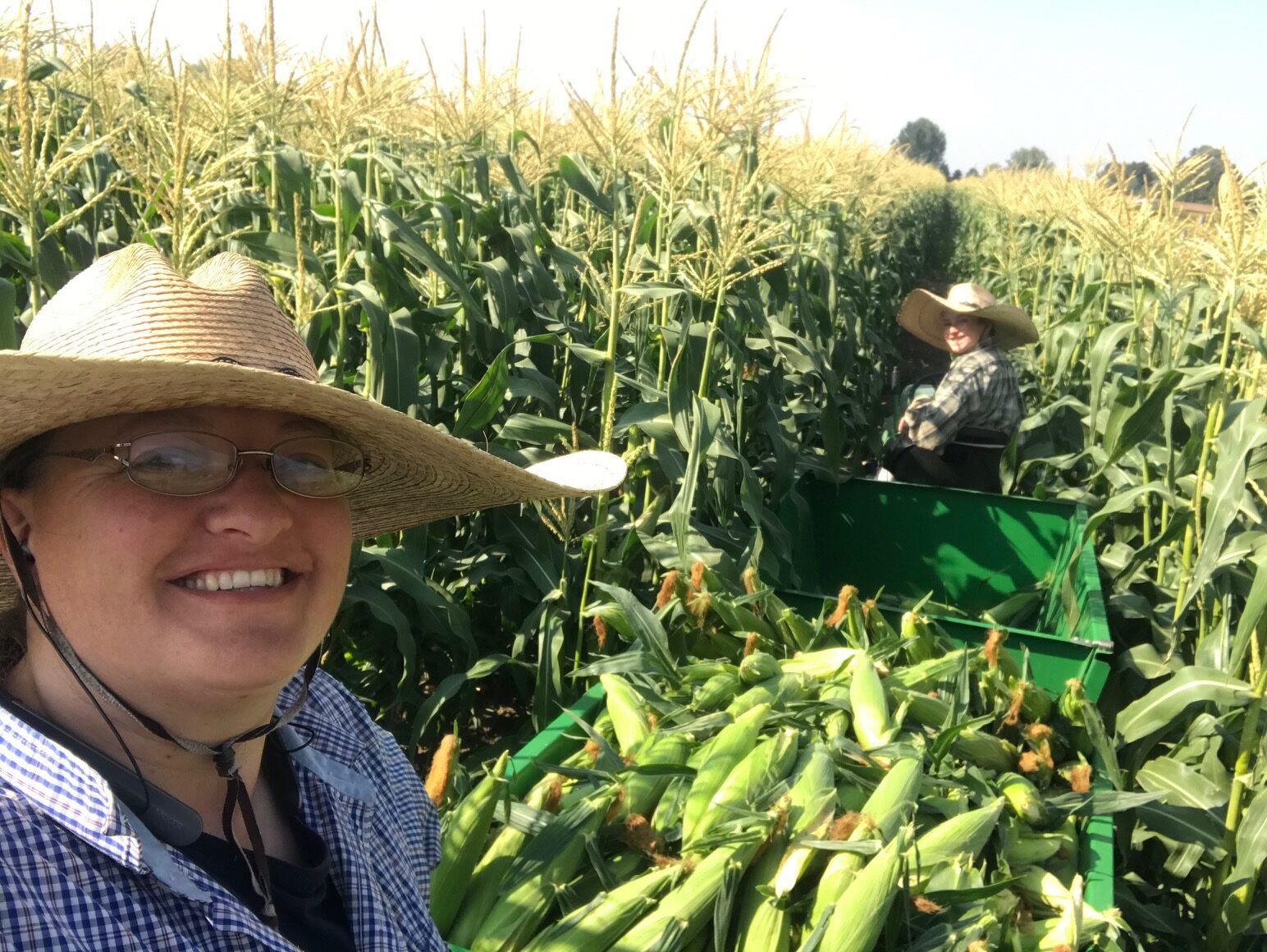
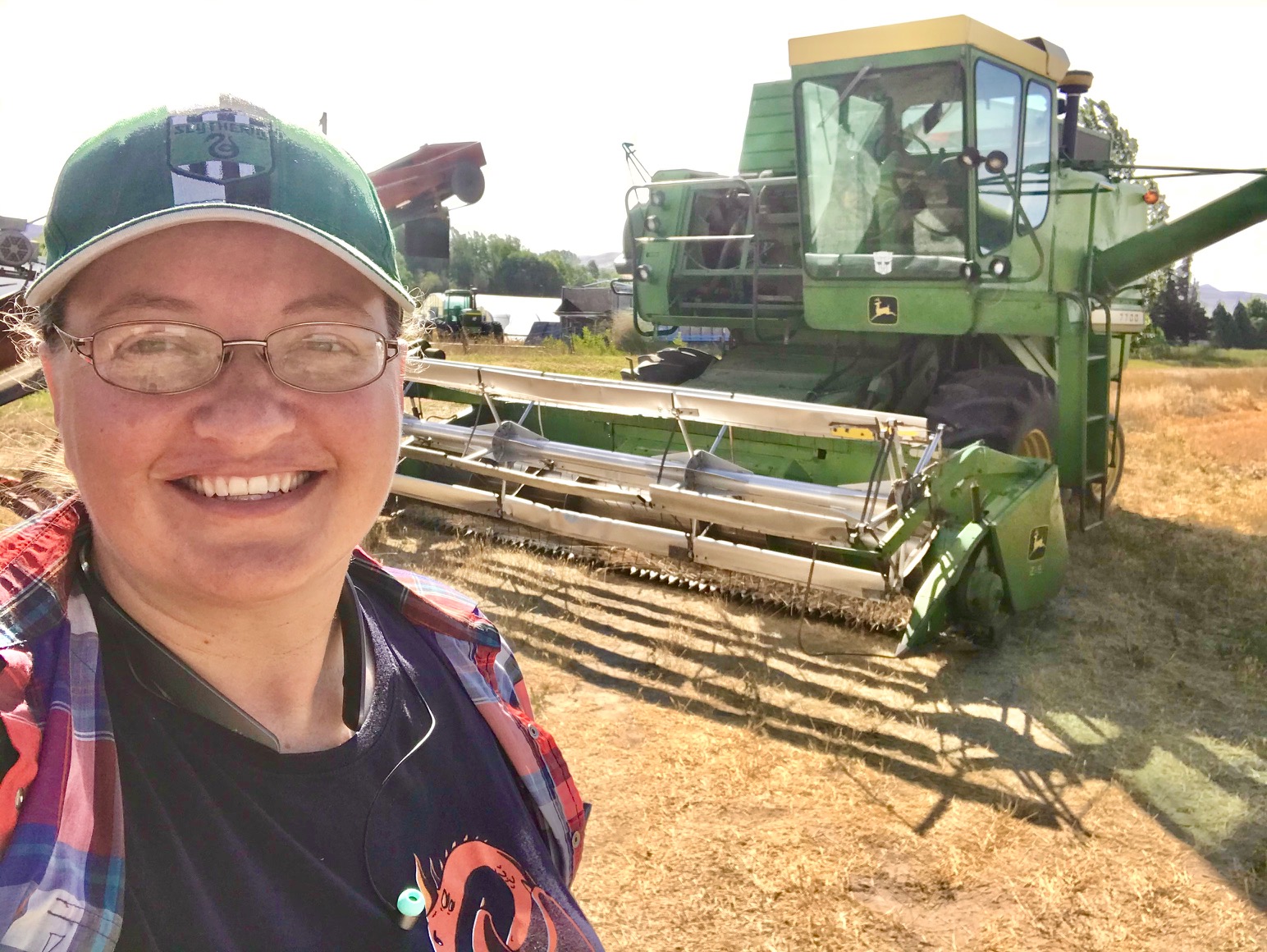
Her smile is as wide and natural as the 103-acre farm in the background. Clad in a flannel shirt, the woman tells viewers, “Alright, well, we’re inside the tractor now.” After she introduces the two cats watching from outside, she holds up her book cover, THE WISH AND THE PEACOCK; she opens it and announces, “Chapter one, hide-and-seek…” pauses, then reads, Finding lost things on the farm is the world’s hardest game of hide-and-seek. I’ve been searching for Dad’s favorite shovel for weeks.

Meet farmer and children’s book author, Wendy Swore. For the next 15 minutes, Swore reads the chapter, acting out sentences with gestures and animated faces, and changing her voice for each character. Viewers get acquainted with 12-year-old Paige, who lost her father and wants to save her family farm, located on an Idaho reservation. Swore knows her setting. For the past 20 years, she has lived and farmed on the Sho-Ban Reservation, where her husband and five children were born and raised.

Sponsored by her publisher, Shadow Mountain Publishing, Swore’s online read-aloud isn’t just for kids. “They’re for everyone stuck in quarantine!” says Swore. I recently interviewed her about her books and how she juggles farming and writing.

Was farming part of your childhood?

My dad was a crop duster and we moved all around. I got to sit on his lap while he flew his crop duster plane. That was my introduction to agriculture.

What is your first memory of writing?

In elementary school, I had a teacher who was extraordinary. She used to tell us things like, start writing about the color brown without using the color brown. As a fourth grader, that was really mind-blowing! She told me, ‘you’re really good, you should really write more’. I wrote about a Hunter Cheetah. My teacher made me feel like it was as amazing as I thought it was.

When did you start writing professionally?

About 15 years ago, my husband said, ‘you should write a story about the farm’. I sat down and wrote a 90,000 word young adult (YA) novel about this farm thing. He said, ‘no, I meant a little flier-coloring book thing to hand to kids.’ I said, ‘too late’, and I’ve been writing ever since! No one will ever see the 90,000. It was just for fun.

You kept writing. What motivated you?

I went to a writer’s conference and suddenly, my world opened. On a farm, I’m totally by myself, especially during off-season. And…when I started writing A MONSTER LIKE ME, my youngest was 10 years old. He would come home from school and ask, ‘do you have the next chapter ready’? He liked finding typos and wanted to see the screen.

Describe your writing rituals or habits.

I write while sitting on a ball and plug in earbuds, because I have narcolepsy. I don’t struggle with it while farming, but as soon as I stop moving. The ball lets me move around and helps me stay awake while writing; and, I listen to movie soundtracks without words.

Did the Covid pandemic affect your writing in any way?

My son who has Asperger’s wasn’t able to do his schoolwork, unless I was with him all the time. My writing time went out the window and pushed the writing of my new novel into farming seasion, so I was trying to write and farm at the same time. We do 12-hour farming days. When I only had one hour, I needed to get into the zone fast. I used music to pull me into that (mental) place that I need to be to write.

Five kids, plus farming, organizing a popular pumpkin patch and farmers markets… Egads, how do you make time to write?

I call winter my writing season. I average a minimum of half-hour a day and a couple weekends a month. If I only write in winter, then I’m having to re-learn it. So, I do a little in summer. But, my days are very full, so it is difficult to write for long periods. Early in the season is easier, because I can go out and water, then go home and write for several hours. If there is a day when I am not wiped out from farming, I go next door to my best friend’s house on Friday afternoon and we might write till one in the morning. Next door for us means half-a-mile away! We sit next to each other, so we’re totally absorbed in our imaginary world; we stop and brainstorm. It’s fun.

Do you think about your characters and plot while farming?

It’s a creative outlet that can go with me into the field. If I am farming with my children, I’ll say, ‘what do you think about a character who is like this. Then I ask, what do you think is the worst thing that could happen to this character. If I am thinking of a certain part of my story, I’ll say, so this is the situation, this is the character, how do you think this character can get from point A to B’.

You have published two middle grade (MG) novels. Do you have a favorite?

Each one satisfies a different need. A MONSTER LIKE ME was me as a child, a kid with hemangioma (a golf ball-sized protrusion on my face) who was bullied by kids and adults. I like to ask what-if questions when I write. A MONSTER LIKE ME was born because I wondered, what if I believed the people who called me a monster? THE WITCH AND THE PEACOCK was meaningful, because it captures what our life is  like now. Most farms around us have gone to houses. I needed a happy ending.

Congratulations on your new MG coming out in May. How is it different from your others?

STRONG LIKE THE SEA is my first contemporary MG; it’s not directly based on my world. The main character likes codes and figuring things out. That’s the furthest from me right now.

Any advice for writers?

Writing is hard! You have to love the things you’re writing about. I’m interested in people you might think are broken, but you get to know them and there’s more to them. I want kids to learn to love themselves. Even when you don’t have time to write, you can write stories in your head for when you do have the time.

Note: Original prose and photos were printed with the permission of Wendy Swore.


1 Comment

Filed under Karen McChesney, RMC-SCBWI

I WRITE, BECAUSE…

I write because it’s my

rock,

church,

wrinkles,

pain,

loudest laugh,

amid deep doubt

on mornings when I’m convinced the birds are singing,

“scrap it, stick with vacuuming.”

Second chance,

even when revision and I aren’t getting along.

Need for risks,

such fun to throw terrible twists at my characters.

Addiction to curiousity

and what, where, when, why,

by the way, how the heck did my research lead to the story of the chef who made the world’s largest dumpling,

and then on to 10 synonyms for said

that I’ll delight in using way too many times.

Decisions,

as complex as Colorado weather

and a one word sentence.

Seeing through lotsa lenses,

each a chance to make metaphors,

as like

and like as.

One what if after what if,

navigating the creative mess I’ve made.

Commitment to writing The End.

Reminder to trust

and hope,

oh, please, may my 10 years of revising

90,000 words make some sense!

I admit, it’s often my desperate attempt to whittle, whittle away at a chunk of wood

seeking the perfect knot

that I want to sand, buff, stain,

repeat;

and often, it’s a return to my rebellious teen,

sneaking up the stairs after curfew

with secrets of my doings deep in my Levi’s pocket;

and often, it’s my science lab,

experimenting with wit,

but, ending up with the same result,

me laughing at my same corny ideas.

Raw truth,

much, much better than any mirror.

Every wee fear,

including those I haven’t met.

Pillow and blanket,

especially when I want to hide from characters that I can’t bear to inform:

“I don’t know if you would laugh or cry over this matter.”

Giddy childhood,

when my four brothers and I wrapped towels around our necks

and raced our bikes two miles to the public pool,

competing all day for the biggest cannon ball splash

and finding enough coins on the concrete to buy Baby Ruth’s and lemon drops.

Freedom,

flying down a mountain on my bicycle at 40 mph,

hearing only air,

only!

Tuner,

honing in on how-to’s,

like my character’s nervous habit,

or, whether she should whine, sigh or snicker.

Adrenaline rush,

when rarely, oh so rarely,

six sentences in a row,

flow,

flow,

as if my character is in charge.

Admission

to the humbling fact,

yes, my characters will lead,

if you would listen,

they’d love to whisper:

“Get your ego out of the way, god damnit!”

Shower,

making sure I scrub deep, bid farewell to the filth and start all over.

Challenge

that wakes, sparks and jests me,

like when I hide dark chocolate in the freezer,

yet, keep avoiding, avoiding

till I must have a bite,

and then, you know what happens next,

I eat the whole bar!

Shovel,

reminding me: dig up, dig up, dig up the muck,

more,

more,

because, beneath is the real stuff, THE story,

arriving at an unexpected reality sign:

“welcome to the story you never knew you were telling!”

My rescue crew,

always ready with a

hug,

wisdom,

feedback,

nudge,

prayer,

a plethora of ideas,

edits,

commas,

periods.

Fresh baked paper

just out of the oven,

ready for my pen to

dabble,

let go,

forgive,

say hello,

how are ya,

goodbye

to mom, dad, brothers, best buds.

Stories

I write,

because,

I always have.

Leave a Comment

Filed under Karen McChesney, Main character, Revision process, Uncategorized, WORD NERD