Tag Archives: accountability

Finding The YA in Learning


Murder. Secrets. Drugs. Gossip. Lies. Sexuality. Romance. Magic. Identity. Rumors. Breakups.

Hang out with a group of YA writers and you’ll likely hear these words, along with more provocative, dark, odd, edgy, far-out, intense, hilarious, eccentric, juicy, shocking topics. We love teens. We love big drama and conjuring a mess for our teen characters in current time or mystical worlds.

Other kid-lit writers often say we’re nuts for writing over 75,000 words. But we can’t get enough. We want to hold on to every word. No wonder our revisions can take years and years as we cut, trim, tighten hundreds of pages.

Thanks to my critique group, Story Spinners, I unexpectedly joined the YA writer “club” years ago after they nudged me to turn my coming-of-age short story into a YA novel. I was clueless and intimidated, but I couldn’t stop writing. I’m incredibly fortunate to be part of the SCBWI-Rocky Mountain Chapter’s YA community. And I’m in awe of how everyone cheers each other on at book launches and events by and for YA writers.

My fellow YA’ers and I adamantly long to be with our peers and find YA-only classes. No offense, picture book and middle grade writers. We adore you and your books! Just like our teen characters, we long to be belong; we want to be in a YA cluster. But, we’ll be the first to admit, we often feel like the misfits in writer land. Afterall, YA novels are a far cry from Middle Grade.

Perhaps that’s why our search for YA-only learning is constant and fierce. The past few months, for instance, several YA writers and I started researching YA-only workshops, courses, and other ways to amp up our learning.

Here’s what we have found so far:

Workshops/Courses:

Wordsmith Workshops https://www.wordsmithworkshops.com/

Vermont College of Fine Arts https://vcfa.edu/writing-novels-for-young-people-retreat/

Hugo House https://hugohouse.org/product/young-adult-fiction-workshop/

Writer’s Digest University https://www.writersonlineworkshops.com/courses/writing-the-young-adult-novel

UCLA Extension https://www.uclaextension.edu/writing-journalism/creative-writing/course/young-adult-novel-i-writing-x-4451

Tin House https://tinhouse.com/workshop/

From SCBWI:

YA Connect and Other Connects https://www.scbwi.org/regions/rmc/events

YA Connect is free and offered every other month by and for YA writers of all levels to learn and meet fellow YA writers. Most YA Connects are both in-person & Zoom.

Michelle Begley Mentorship – Due Oct. 31, 2023 https://www.scbwi.org/regions/rmc/RMC-mentorship-program

Weekly Podcast https://www.scbwi.org/podcasts

Most recent one featured Deborah Halverson, award-winning YA author, including Writing Young Adult Fiction For Dummies and Honk If You Hate Me

Monthly Virtual Events, hosted by chapters across the U.S. https://www.scbwi.org/regional-virtual-events

Coming soon:

Lighthouse Writers Workshop, Denver – YA workshops, gatherings https://lighthousewriters.org/

Of course, there are a lot more YA-only opportunities out there. Share your findings in the comments, please. Meanwhile, YA writers: Keep reaching out to find other YA’ers. And remember, teens can’t wait to read your stories – and drama!

2 Comments

Filed under 2023, Agents, craft advice, critique, Graphic Novels, Karen McChesney, Main character, Middle Grade, Motivation, Persistence, Revision process, RMC-SCBWI, Upcoming, What I am doing now

Go Writers, Go!

It was a writer’s dream. That’s how I felt at the recent grand opening of Lighthouse Writers Workshop new building. I was with over 500 other writers in the stunning, custom-built, cozy three-story building designed just for writers. Just for writers!

“We want this to be your home,” said Co-Founder and Director Michael Henry. And, we want it to be a place where writers of all ages, levels, backgrounds, genres come “hang out and write,” added Andrea Dupree, Co-Founder and Program Director.

What could be better? That night, when I left this writer’s paradise, I was riding high. High on great gratitude.

Gratitude for:

-living in a city that has invested in Lighthouse and writers

-living in a state with an incredibly supportive kid-lit writer community

-getting to teach youth at Lighthouse

-my awesome writer critique group, Story Spinners

-SCBWI-RMC

-my writing groups: Young Adult writers, NaNo writers

-my Monday accountability group

-my super supportive husband and friends

-my manuscript exchange partners

-my two late aunts who modeled creative follow-your-dreams living

Wow, I have been incredibly fortunate to have many, many cheerleaders on this crazy journey of querying picture books and revising young adult novels. At the grand opening, one author-speaker reminded, “writers need other writers, create your community.” I am immensely proud that I have created my writer community. And it keeps growing! I have great cheerleaders. Best of all, they have shown me how to be a cheerleader; they have inspired me to make time and show up for other writers.

In that spirit, I decided to share some of my favorite cheers from other writers. I keep them in a notebook and glance at them often, especially when I get a bad case of imposter syndrome. These words give me courage; remind me to have fun; renew my “I can do this.”

May these comments cheer you on, too.

For imposter syndrome: Before writing, take a few minutes to jot down what you’re thinking. Your doubts, your insecurities. Spit ‘em out! Then, write your goal for your session, such as word count, number of pages. At the end of your session, write down what you did.

 Congrats on doing the hard work on your YA. It’ll pay off. Sometimes you just have to plough through the hard stuff.

What an achievement! I am so proud and inspired by your achievement of finishing another revision.

Did you sign on yet for film rights for your book?!!!! I can picture it as a movie.

You hooked me with your pitch. I want to read it!

You sound very clear on your intentions for your YA. Get your story out there!

Hip, hip hooray! I know you’re passionate about this story and I applaud you for sticking with it. This is very hard work!

Aim to send 100 queries. I got my agent on query 101.

It doesn’t matter how long it takes you to finish. What’s most important is that you are staying with the hard work.

Here’s to being cheerleaders and having cheerleaders. Go writers, go!

Lighthouse Writers Workshop is the largest literary center in the Rocky Mountain West. They offer writing instruction, workshops, events, and support for writers of kid-lit, fiction, nonfiction, poetry, and many other genres. New location: 3844 York St., Denver CO 80205. For more information: Lighthouse Writers Workshop |


4 Comments

Filed under 2023, Agents, craft advice, critique, Karen McChesney, Literacy Program, Motivation, PBParty, Persistence, Picture Books, Revision process, RMC-SCBWI

Change of Scene (and genre)

It’s been a tough writing year for me. And by tough writing, I mean no writing.


Which isn’t actually true.


While my work on my middle grade fantasy novels stalled (basically completely) which makes me feel like I am not writing at all, I did start co-writing a series with one of my amazing critique partners, Samantha Cohoe. We’ve written two novels so far, including setting aside time, limiting distractions, and writing 30,000 words combined in only three days.


So my no writing, looks very much like being quite productive after all.


What are some of the not-so-secret secrets to our success?

  • Meeting genre-expectations: We’re writing mysteries with a light romance touch to it. That gives us a structure and a framework. We need a body. Someone to have actually done the deed. Other suspects who could have reasonably murdered our dearly departed character. A hot person of interest who our main character wants to get close to but something is keeping them apart. Knowing things we have to include to meet the expectations of reader in this genre give us a bunch of scene and character ideas. Which leads me to…
  • Bookends: We usually know roughly where the book will start but importantly, we know how it ends. We know the climax scene and the basics of how our main character will discover the true killer. But what to write?
  • A runway: Rather than calling it an outline, we start laying out the scenes of the book and developing a ‘runway’ – and once we have enough runway, just like at your local airport, we take off! Calling it a runway vs. an outline feels lighter, and also removes some of the pressure. And takes us out of a singularly linear approach. Because we runway…
  • Front to back and back to front: Our runway starts at the beginning-ish – and then usually somewhere around the middle, we hop around to our end scene (which as I said, we already know), and then we work back toward the middle again. Layering in, fleshing out, leading us to our destination, tightening and weaving as we go. But what’s the most important syllable in that sentence?
  • Collaboration: WE are writing a book. WE are brainstorming together. WE are counting on each other to get the thing done. Whichever one of us has the most energy helps motivate the other, and WE go back and forth on who is cheerleading who. And we have a built-in audience and readership – each other! Which also means we have more than one opinion to take into consideration, so it’s important that we decided…
  • We will not be too precious: We made an explicit agreement that we’re not going to be rigid in our thinking or in our demands. If something isn’t really crucially critically important to us, and the other person has a different opinion… we bend. We move on. We find a third option we can both dig. Something like that. There is basically no hill that we’re going to die on. And when the other person has a way to make a scene funnier, a line tighter – we take it. Take the edit. Make it better. Two heads are better than one.


This experiment/experience has been a real game changer for me. Having someone else count on my productivity keeps me to deadlines. Writing in a completely different genre has opened a brand new well of creativity.


Have you switched it up? What changes have you made that have inspired you and worked well for your writing?


6 Comments

Filed under Coral Jenrette

ODE TO REVISION

Revision.

You make me crazy!

“Explain,” you say.

You’re akin to blisters, pests, chores, and petty necessaries.

I have sweat and steamed over you,

rehashing plots, revamping chapters, recasting characters.

“Your point?” you ask.

Now, I am a fanatical, fervored writer

glued to my written mess.

Revision,

others warned

you would be a storm, thorns, and bricks on my brain!

“Why stay?” you say.

For those spectacular moments

when my story flows smooth as syrup

and sparks fill me,

singing “you can do this!”

And suddenly,

I’m a dancer, a bird, a shooting star, a perfect snowflake…

“Follow your characters,” you declare.

Exciting when I let them get into grand muck,

but then, I’m stuck in another written mess.

I breathe, cuss,

resume re-doing:

reorganizing scenes,

recalibrating action,

reconditioning description and dialogue.

Again.

Repeat.

Again.

Insane.

But my hope is refueled.

Alas, my main character has a new coat of conviction and chutzpah.

I can’t let her down.

Revision,

you’re a wild renovation that I can’t fully resolve.

“Congrats!” you say. “Resolving is for readers.”

Revision,

you wake me to characters in chaos,

off stowing secrets and lies.

Please give me a shortcut!

“Butt in chair,” you remind.

Revision,

my thick-skinned constant,

you make me crazy,

but I’ll keep my seat on your train,

wrecks and all.

Thank you.

Much obliged.

Appreciate you.


5 Comments

Filed under craft advice, critique, Karen McChesney, Main character, Motivation, Picture Books, Revision process, RMC-SCBWI

Why you should invest in coaching as a writer or illustrator

Bill Gates said in 2020 — “Everyone needs a coach. It doesn’t matter whether you’re a basketball player, a tennis player, a gymnast, or a bridge player.” But let’s finish that sentence.
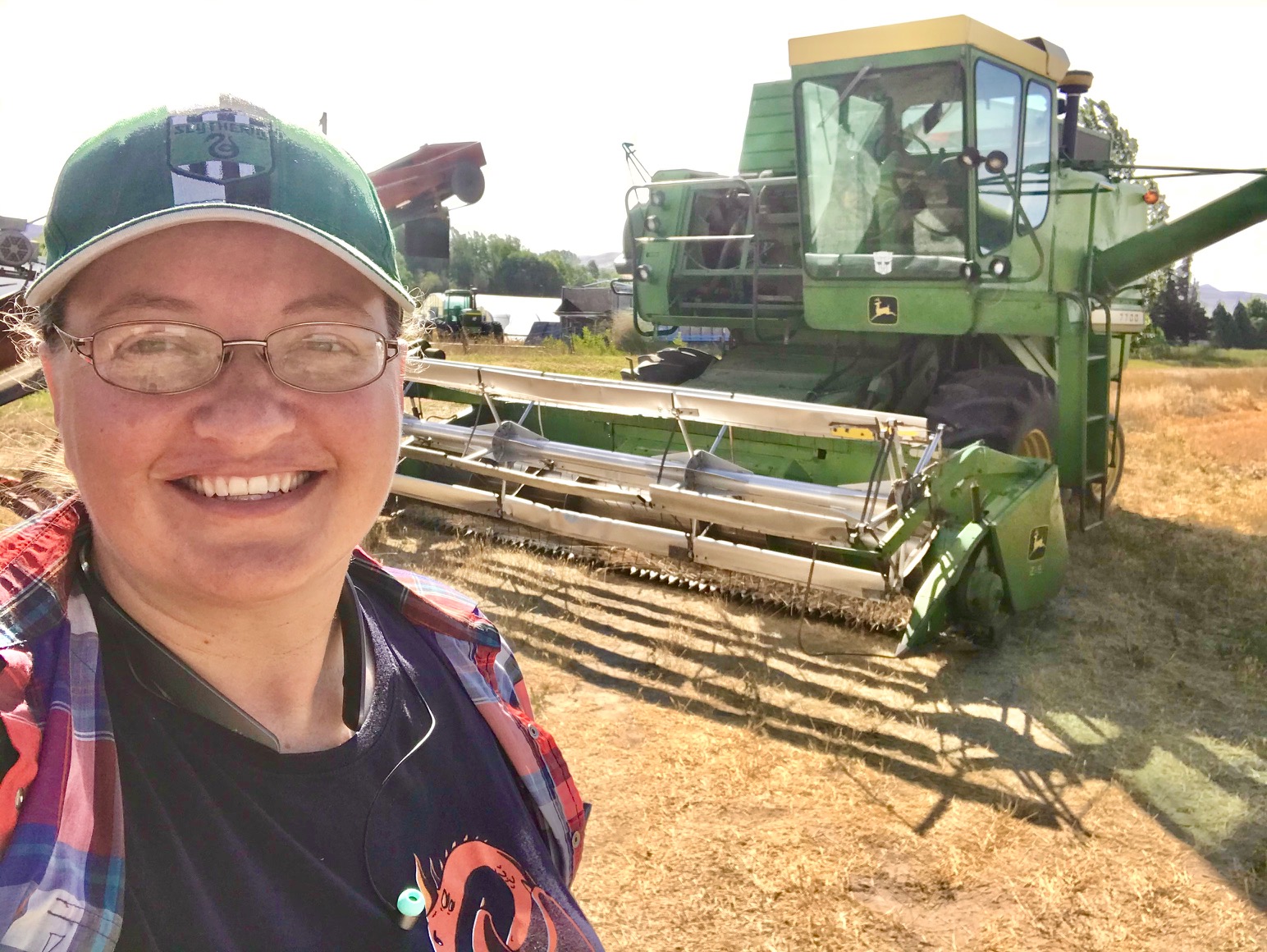
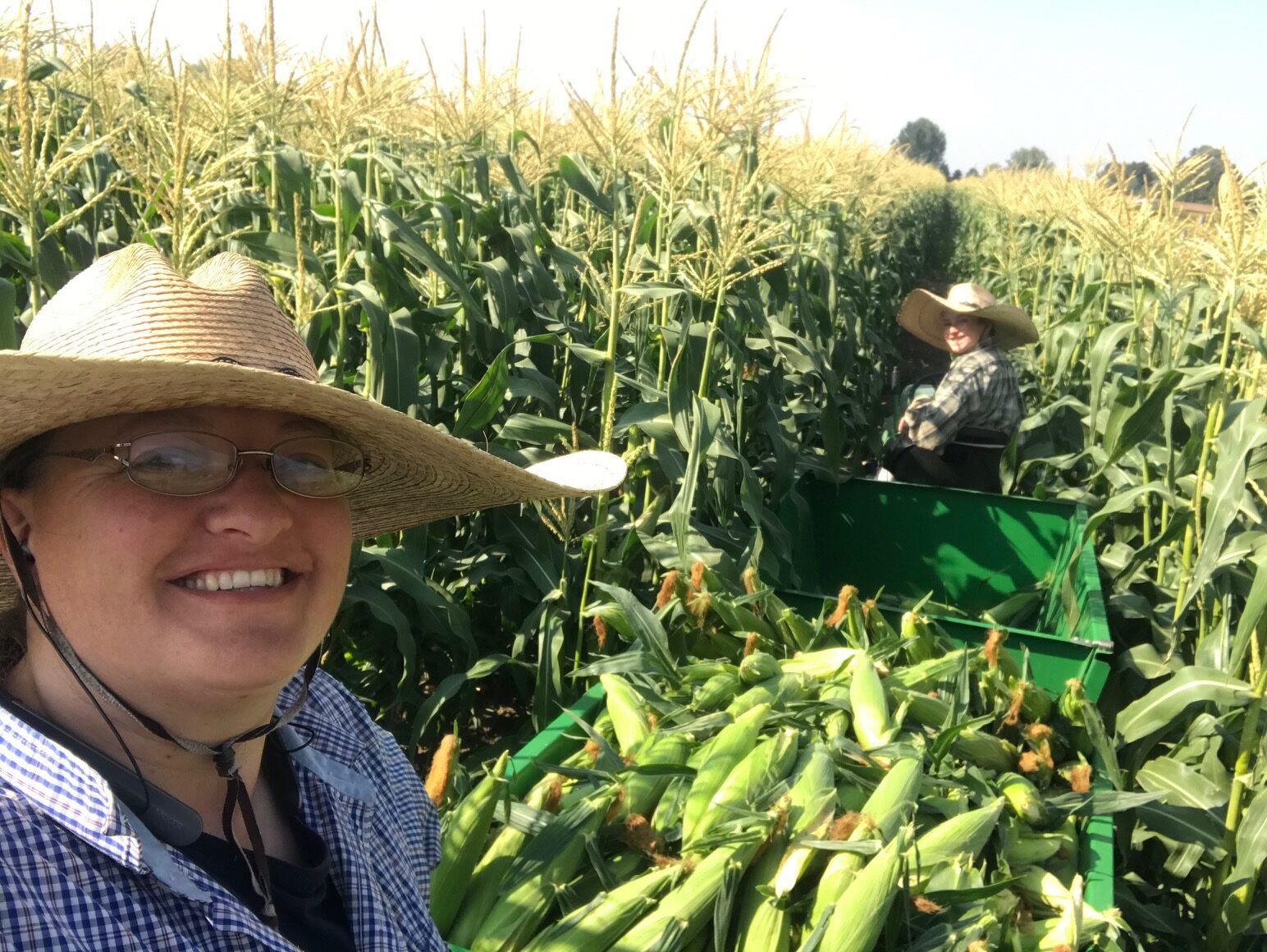
It doesn’t matter whether you’re a writer. Or an illustrator. Or both.

Everyone needs a coach.

If you don’t immediately agree with me (or Bill) here are some benefits for you to consider. And if you do already agree with me, and are a member of the RMC-SCBWI, head right on over to read specifically about the Michelle Begley Mentor Program, a six month program that offers great value for investment, which I am thrilled to co-coordinate this year with Laura Perdew. The application is open until November 9, 2021 and this year we are offering a scholarship courtesy of the Writing Roosters and two grants!


Ongoing Critique and Feedback

I am part of two wonderful critique groups that meet regularly, yet working with a mentor is still a unique experience because *your work* and *your craft* are the entire focus of the conversation. Together you discuss your vision and over the course of multiple months, you bring that vision to light.


Improve your current work in progress

First and foremost, your mentor will work with you on a manuscript (or illustration portfolio) that you’ve been working on. As established professionals, they bring their expertise to your work and will help you develop it to be as strong as it can be. In my own mentorship with Anna-Maria Crum as my mentor, she helped me rework my plot and character motivation – my inciting incident was buried way down deep in my manuscript, and this reorganization immediately made my work stronger.


Improve your craft going forward

There will be countless elements of what your mentor points out in your work that you will be able to carry forward for years to come. Two personal examples — I learned about some of the weaknesses in my plot (build stronger motivation for action – no coincidences!) as well as in my dialogue (make sure my characters react to what is said as opposed to making unrealistic leaps in the conversation because the lines sound cool). It opened up my eyes not only to what I could improve in the novel we were discussing, but what I could carry over to every scene I’ve crafted since.


Coaches can help you set realistic goals

Our mentors have been there, done that, but the fact is that every artistic creator is different. A mentor can talk through your process and experience and help you set goals for your work – goals that are within your control and that you will meet during the course of the six months. Which leads us right to…


Having a coach is motivating

Coaches give you deadlines. They are there, waiting and expecting for you to work with them. They are looking forward to seeing your progress. And having that built in accountability can do wonders.


***

There are many other reasons to have a coach, and many personal experiences about successful mentor/mentee relationships. Read testimonials here about what others have gotten out of the Michelle Begley Mentor program, and share in the comments some of the benefits you have experienced in working with a mentor (or being a mentor!).

And consider securing a mentor of your own through the Michelle Begley Mentor Program. The application is open until November 9, 2021.


**Reading this after 11/9/21? Join us next time – the application period for the Michelle Begley Mentor Program is typically October through November 1.

2 Comments

Filed under Coral Jenrette, craft advice, critique, Revision process, RMC-SCBWI

SOWING STORY SEEDS FOR KIDS

Her smile is as wide and natural as the 103-acre farm in the background. Clad in a flannel shirt, the woman tells viewers, “Alright, well, we’re inside the tractor now.” After she introduces the two cats watching from outside, she holds up her book cover, THE WISH AND THE PEACOCK; she opens it and announces, “Chapter one, hide-and-seek…” pauses, then reads, Finding lost things on the farm is the world’s hardest game of hide-and-seek. I’ve been searching for Dad’s favorite shovel for weeks.

Meet farmer and children’s book author, Wendy Swore. For the next 15 minutes, Swore reads the chapter, acting out sentences with gestures and animated faces, and changing her voice for each character. Viewers get acquainted with 12-year-old Paige, who lost her father and wants to save her family farm, located on an Idaho reservation. Swore knows her setting. For the past 20 years, she has lived and farmed on the Sho-Ban Reservation, where her husband and five children were born and raised.

Sponsored by her publisher, Shadow Mountain Publishing, Swore’s online read-aloud isn’t just for kids. “They’re for everyone stuck in quarantine!” says Swore. I recently interviewed her about her books and how she juggles farming and writing.

Was farming part of your childhood?

My dad was a crop duster and we moved all around. I got to sit on his lap while he flew his crop duster plane. That was my introduction to agriculture.

What is your first memory of writing?

In elementary school, I had a teacher who was extraordinary. She used to tell us things like, start writing about the color brown without using the color brown. As a fourth grader, that was really mind-blowing! She told me, ‘you’re really good, you should really write more’. I wrote about a Hunter Cheetah. My teacher made me feel like it was as amazing as I thought it was.

When did you start writing professionally?

About 15 years ago, my husband said, ‘you should write a story about the farm’. I sat down and wrote a 90,000 word young adult (YA) novel about this farm thing. He said, ‘no, I meant a little flier-coloring book thing to hand to kids.’ I said, ‘too late’, and I’ve been writing ever since! No one will ever see the 90,000. It was just for fun.

You kept writing. What motivated you?

I went to a writer’s conference and suddenly, my world opened. On a farm, I’m totally by myself, especially during off-season. And…when I started writing A MONSTER LIKE ME, my youngest was 10 years old. He would come home from school and ask, ‘do you have the next chapter ready’? He liked finding typos and wanted to see the screen.

Describe your writing rituals or habits.

I write while sitting on a ball and plug in earbuds, because I have narcolepsy. I don’t struggle with it while farming, but as soon as I stop moving. The ball lets me move around and helps me stay awake while writing; and, I listen to movie soundtracks without words.

Did the Covid pandemic affect your writing in any way?

My son who has Asperger’s wasn’t able to do his schoolwork, unless I was with him all the time. My writing time went out the window and pushed the writing of my new novel into farming seasion, so I was trying to write and farm at the same time. We do 12-hour farming days. When I only had one hour, I needed to get into the zone fast. I used music to pull me into that (mental) place that I need to be to write.

Five kids, plus farming, organizing a popular pumpkin patch and farmers markets… Egads, how do you make time to write?

I call winter my writing season. I average a minimum of half-hour a day and a couple weekends a month. If I only write in winter, then I’m having to re-learn it. So, I do a little in summer. But, my days are very full, so it is difficult to write for long periods. Early in the season is easier, because I can go out and water, then go home and write for several hours. If there is a day when I am not wiped out from farming, I go next door to my best friend’s house on Friday afternoon and we might write till one in the morning. Next door for us means half-a-mile away! We sit next to each other, so we’re totally absorbed in our imaginary world; we stop and brainstorm. It’s fun.

Do you think about your characters and plot while farming?

It’s a creative outlet that can go with me into the field. If I am farming with my children, I’ll say, ‘what do you think about a character who is like this. Then I ask, what do you think is the worst thing that could happen to this character. If I am thinking of a certain part of my story, I’ll say, so this is the situation, this is the character, how do you think this character can get from point A to B’.

You have published two middle grade (MG) novels. Do you have a favorite?

Each one satisfies a different need. A MONSTER LIKE ME was me as a child, a kid with hemangioma (a golf ball-sized protrusion on my face) who was bullied by kids and adults. I like to ask what-if questions when I write. A MONSTER LIKE ME was born because I wondered, what if I believed the people who called me a monster? THE WITCH AND THE PEACOCK was meaningful, because it captures what our life is  like now. Most farms around us have gone to houses. I needed a happy ending.

Congratulations on your new MG coming out in May. How is it different from your others?

STRONG LIKE THE SEA is my first contemporary MG; it’s not directly based on my world. The main character likes codes and figuring things out. That’s the furthest from me right now.

Any advice for writers?

Writing is hard! You have to love the things you’re writing about. I’m interested in people you might think are broken, but you get to know them and there’s more to them. I want kids to learn to love themselves. Even when you don’t have time to write, you can write stories in your head for when you do have the time.

Note: Original prose and photos were printed with the permission of Wendy Swore.


1 Comment

Filed under Karen McChesney, RMC-SCBWI

ACCOUNTABILITY: A WRITER’S BEST FRIEND

“I have to get back to work. Goodbye.”

That’s what I say if I’m talking to someone, and it’s time to show up in my studio and write. The time is blocked out on my calendar, like any meeting or appointment. I got the idea from a writer friend while sharing our routines – and how we show up to our writer job.

Oh, the tricks I play on myself! But, they work. Well, okay, not always – especially during this pandemic, when my teaching and personal schedule are topsy-turvy, and my self-motivation is wavering. But, I keep trying. While sipping morning coffee, I turn on my studio light and open the curtains, so my office shouts, “I’m ready and waiting”. I set my alarm for writing sessions. I put my cell phone in another room, so I can’t hear the buzz of incoming texts or calls (which are perfect distractions when I’m stuck on a scene that I’ve re-written a dozen times!).

Unfortunately, the demons of distraction and procrastination still like to hang out in my office. Ugh! Good news is, I know my own worst enemies really well. Gradually, I’m learning to negotiate with them, so, my favorite co-worker, accountability, can kick them out and pull up a chair!

Here’s what accountability and I have been up to – and what’s really working:

Setting a timer. I try to follow a rigid routine during my scheduled writing time: For writing, I set a timer for one hour, take a 10-15 minute break, repeat. For research, I set a timer for a maximum of 30 minutes.

Monday accountability group. Every Monday, I do an email check-in with a group of kid-lit writers. We submit our goals for the week and report briefly on progress made the previous week. Wow! Keeps me honest and realistic! In our brief format, we manage to celebrate, challenge, and remind each other to keep plugging away, and that it’s okay to take a break.

Text-writing. Once a week, I have a writing “date” with another children’s writer. We text a few minutes before our start time to share what we’re working on or what we want to accomplish. Usually, we do two 45-minute rounds. Then, we briefly check in. We’re always amazed at how much we get accomplished in such a short time.

SCBWI Rocky Mountain Chapter critique group. Once a month, my SCBWI critique group meets in person. We’re the Story Spinners and we’ve been meeting monthly for 20 years. We email our work in advance, then, when we meet, each writer has 20 minutes for their work to be critiqued. When members don’t submit work, they can use their time to update the group on projects, invite brainstorming or advice on a project, share notes from workshops/classes, or etc. They’ve helped me think through SO many critical bits and pieces, such as how to end a pb or write a hook for a YA synopsis, a book title, an angle for a nonfiction article, and the list goes on. We hold separate meetings, as needed, to critique a member’s full manuscript.

Story Spinners are my rocks! Without their passion, drive, support, professionalism, desire to learn, confidence, nudges, wisdom and wit, I would have given up on my projects a long time ago.

SCBWI British Isles North East critique group. While living short term in England (twice), I met weekly with the same critique group. Through email, we continue to: exchange same genre manuscripts for overall feedback, check in bimonthly on current projects. We’re considering holding FaceTime meetings, as needed. They, too, are my rocks, my support group!

Oops! My alarm is going off. I have to get back to work on revising my YA. Goodbye!


Writing is hard, hard, messy work. Going out and doing talks and signing books is all wonderful, but a writer has to return home and go back to work.   

Julia Alvarez, author of AFTERLIFE, BEFORE WE WERE FREE, ALREADY A BUTTERFLY


Leave a Comment

Filed under critique, Karen McChesney, Revision process, Uncategorized