
Climate change is on the minds of everyone, including our children. Ellen Herbst, a UCSF psychiatrist and mother of two, suggests that the climate crisis is impacting the mental health of children and adolescents. She explains that children are, appropriately, being educated about climate change in many schools and learning about it in the news. But they are not necessarily given the coping skills to handle the devastating and anxiety-producing information. https://magazine.ucsf.edu/helping-kids-cope-with-climate-change-anxiety
There is a new trend in middle-grade fiction in which thoughtful, well-written novels for children address the climate crisis. The books vary widely, sometimes set in the future and detailing the effects of climate change on the characters’ lives or set in the present day and focusing on real climate change situations that children face. But all the novels offer students hope that they can face a challenge and make a difference. Most importantly, they all highlight that the values of family, friendship, and working together will always endure.
Fiction allows people to imagine themselves in different situations and these books allow children to see themselves making a contribution. Instead of feeling hopeless and that the situation is out of their control, these books can help ease anxiety as students read how the creative, thoughtful, and brave characters work to solve problems and change the world.
One Small Hop by Madelyn Rosenberg (Scholastic Press, 2021) This novel finds a balance of humor, adventure, and a glimpse into the future and the effects of global warming. It is set in the not-so-distant future when global warming has made the world a very different place. Ahab and his friends risk the polluted waters of the ocean, which is now devoid of life, and go to an off-limits island and find a real, live bullfrog. It is possibly one of the last bullfrogs alive.
After an internet search, Ahab convinces the rest of his friends to embark on a bicycle journey to unite their frog with another frog. Their adventure is hilarious, exciting, and alarming. It teaches the kids that hope is alive and that they can make a difference. Author Madelyn Rosenberg builds an all-too-imaginable future ravaged by climate change but also one where a kid can still lean on his friends and work toward a better tomorrow.
Hello from Renn Lake by Michele Weber Hurwitz (Wendy Lamb/Random House, 2020.) 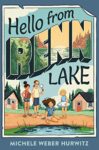 Annalise Oliver is the adopted daughter of a family that has owned lakeside cabins in Renn Lake, Wisconsin for generations. The story, told from the perspective of Annalise, the Lake, and a nearby stream, reinforces the complexity of how climate change affects communities and ecosystems. Annalise’s special relationship with the lake lets her sense what Renn Lake thinks and feels.
A harmful algae bloom emerges and begins to cover the lake and Annalise can no longer hear the voice of the lake. The lake is closed to human activity, which threatens the livelihoods of her family and the town. Annalise and her friends use research, ingenuity, and community organization to take action and save the lake. As the community supports the children’s work, everyone learns important lessons about working together and listening to nature.
The First Rule of Climate Club by Carrie Firestone (G.P. Putnam, 2022) 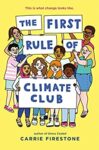 In this novel, Mary Kate Murphy participates in a unique science program focused on climate change. The class opens her eyes to many things she had never noticed before about her small suburban town: Kids throw away tons of food at school, adults drive ozone-depleting vehicles, people buy clothes they don’t need, and the birds in the local preserve seem distressed. Complicating the situation, her best friend is plagued with a mysterious illness.
The class tries to bring their concerns to the mayor who isn’t willing to listen to new ideas for addressing any of the pressing issues. Frustrated and fired up, Mary Kate and her classmates take matters into their own hands and work to bring lasting change to their community and beyond.
Haven Jacobs Saves the Planet by Barbara Dee (Aladdin/Simon and Shuster, 2022.) 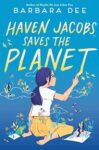 Haven Jacobs is a twelve-year-old girl who is unable to stop thinking about the climate crisis. Her anxiety about the state of the planet begins to interfere with her schoolwork, friendships, and even her sleep. She can’t stop worrying about why adults aren’t trying to solve the problems.
Haven’s social studies teacher challenges students to find a specific way to address environmental issues and she focuses on the annual science class project at the local river. Her brother tells her about the frogs he loved when he did the project several years before. But when Haven and her classmates get to the river, there’s no sign of the frogs —but there is evidence of pollution. The only thing that has changed near the river is the opening of a new factory. Haven is challenged to work with her community to make changes that benefit everyone.
Global Warning by Steven B. Frank (Clarion/HarperCollins, 2023) A group of 12-year-old friends concerned about climate change propose a new way to save the earth– crafting a new amendment to the United States Constitution. Their project sends them on a journey through America and Norway as they take steps to save the planet. Sixth grader Sam Warren and his friends think that climate change is too pressing to ignore. Adults don’t seem to be up to the challenge of real change, but the kids know their futures depend on action now.
With a little help from some enlightened adults, the friends draft an amendment to the Constitution that protects the plane, passes it in Congress, and changes the hearts and minds across the country to get it ratified! Although the scenario in the book is very unlikely, the book challenges students to think big to make their voices heard.
A wonderful resource for book lists of middle-grade novels is a blog written by Afoma called https://readingmiddlegrade.com/blog/ For even more suggestions, check it out!
Middle-Grade Novels that Address Climate Change
Filed under Uncategorized
Not to be Missed Nonfiction
By Susan Wroble
The Rocky Mountain Chapter of SCBWI is one of those truly great organizations, filled with people who willingly share their knowledge to support others. It was the reason I stepped in to volunteer for the chapter’s leadership team—I wanted to keep this organization going. In the nearly two years since then, one of the accomplishments I am happiest about is that we have created some Connect Groups to meet the specific needs of some of our members.
One of those newly created Connect Groups is specifically for nonfiction. The chapter has a strong and growing group of nonfiction creators, and this past year marked the birth of some noteworthy nonfiction that I wanted to bring to your attention. Not only are these great books for the kids in your life, but many should make it to your keeper shelves as both beloved treasures and mentor texts. 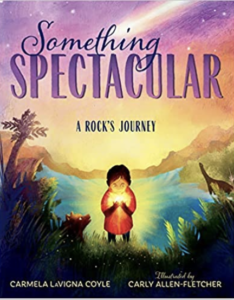
For many kids and adults, Carmela LaVigna Coyle is a rock star for her 20-year series PRINCESSES (starting with DO PRINCESSES WEAR HIKING BOOTS). But my personal favorite is her latest, SOMETHING SPECTACULAR: A ROCK’S JOURNEY (Muddy Boots, illustrated by Carly Allen-Fletcher). Structured as a timeline from about 272 million years to today, this story traces the geological journey of a rock through time, from the sediment on the bottom of a forgotten sea to a sandstone heart found and treasured by a young girl. Layered and lyrical, filled with onomatopoeia and alliteration, this book is a stunning read-aloud. And I’ve marveled at the way Carmela kept the young girl, who does not appear until the last page, central to the story. This book lives up to its name—it is truly spectacular!
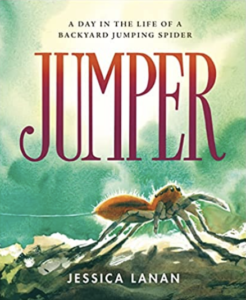 One of the favorite and most influential books of my childhood was BE NICE TO SPIDERS by Margaret Bloy Graham. When I saw RMC author and illustrator Jessica Lanan’s book, I knew it would be a book I would treasure. JUMPER: A DAY IN THE LIFE OF A BACKYARD JUMPING SPIDER (Roaring Book Press, 2023) draws readers in from the very first spread reaching out to ask them to imagine: “What if you were very small? Smaller than a cat or a dog, a bar of soap or a bottle cap. As small as a bean. What would your world be like?” The pages of backmatter are exceptional and include not only a glossary and life cycle and anatomy, but sections on how jumping spiders hear and see and feel—and walk on walls! Jessica’s illustrations, done in ink, watercolor, and gouache, shift back and forth from the perspective of Jumper to the perspective of a child. Both her text and her artwork invite comparisons.
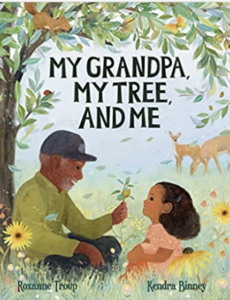 Roxanne Troup lives in Colorado now, but growing up in Missouri, her family (like everyone around) had a pecan tree in their yard. Roxanne’s book MY GRANDPA, MY TREE AND ME (Yeehoo Press, 2022; illustrated by Kendra Binney) flows between the care of a girl’s pecan tree and those in her grandfather’s pecan orchard. Set over the course of a year, the story is so quietly beautiful that it was only on the second reading that I realized it was one of the best examples of a compare and contrast book that I had seen. It’s now one of my favorite mentor texts for that structure. Teachers could use both MY GRANDPA, MY TREE AND ME and JUMPER for a fabulous lesson on two very different and very effective ways to contrast subjects.
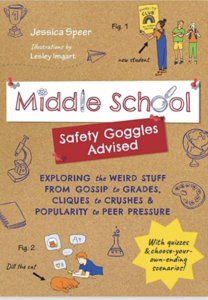 With a master’s degree in social sciences, author Jessica Speer has carved out a niche for her books that blends science and activities with true stories. In researching her latest book, MIDDLE SCHOOL: SAFETY GOGGLES ADVISED (Familius, illustrated by Lesley Imgart), Jessica spent time in conversation with a hundred middle schoolers, asking them what their greatest challenges were, and those top concerns became the chapters in her book. Coming out in August, Jessica has a book that most families with kids will need: THE PHONE BOOK: STAY SAFE, BE SMART AND MAKE THE WORLD BETTER WITH THE POWERFUL DEVICE IN YOUR HAND. For authors, her books are fabulous mentor texts, not only for engaging and interactive books, but for activities that can be included as resources either within a book or on websites.
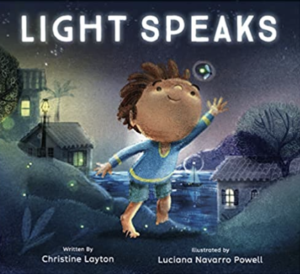 Christine Layton’s picture book LIGHT SPEAKS (Tilbury House, illustrated by Luciana Navarro Powell) is so gorgeous that it brought me near tears. Using spare, poetic text, she introduces the physical properties of light to very young listeners. As a former volunteer in the space section of Denver’s Museum of Nature and Science, I especially loved this spread: “Light tells the space between stars. It echoes off planets and moons—doppled, glowing and brilliant.” Christine’s brilliant backmatter takes each of those properties and explains them each in more detail.
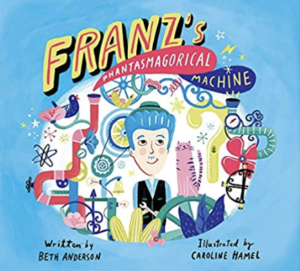 Beth Anderson had not one but THREE (!!!) books come out this past year. Beth is a master at picture book biographies and in finding the heart layer, that lens or angle or viewpoint that makes her subject matter and her book stand out. Her biography FRANZ’S PHANTASMOGORICAL MACHINE (Kids Can Press, Illustrated by Caroline Hamel), about the self-taught inventor Franz Gsellmann, celebrates the drive to build and create and invent—just for the sake of invention—and to not give up. Beth’s books are all so well-crafted that I find myself turning to them again and again for insights on language choice, structure, and most of all, heart.
I hope that you too find yourself drawn to this incredible list—for reading, for gifting, for learning the craft of nonfiction writing. Enjoy!
Filed under 2023, Nonfiction, RMC-SCBWI, Susan Wroble
Let’s hear it for audio books!
See what I did there?
I have a long commute to work. LONG. Sometimes my trip home takes an hour. So I joke that I get a lot of reading done in the car – via audio books!
Now, if anyone’s ever told you listening to audio books isn’t REAL reading they are 1000% WRONG. The story might be entering your consciousness via your ears instead of your eyes, but the picture it paints for you is the same. The impact can be the same. And if the book is read by a REALLY GOOD voice artist, then it can be even more impactful. Also, this article points out why continuing to question whether or not it’s “real” reading is ableist.
Anyhoo, here are a few middle grade books I’ve read (via audiobook) recently and LOVED:
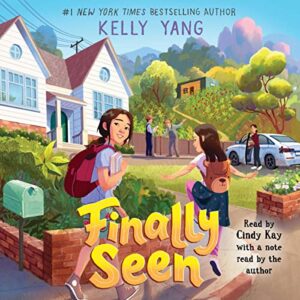
Finally Seen by Kelly Yang; audiobook read by Cindy Kay
I ADORE Kelly Yang’s Front Desk series. This book, a standalone, may outshine that series for me. When Lina arrives in the United States after being apart from her parents and younger sister for five years, she is surprised to find that life is nothing like what she imagined – or what her mother told her in letters. Her family is barely getting by, and, after an embarrassing moment in class, Lina decides to never speak at school again. But with the help of a friendly librarian, an understanding friend, and a book that reflects her own experience back to her, she finds the courage to use her voice.
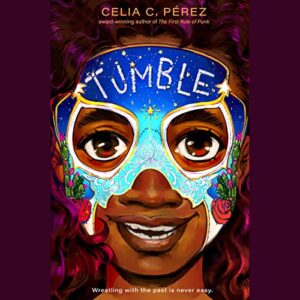 Tumble by Celia C. Pérez; audiobook read by Victoria Villarreal
When Addie Ramirez’s stepfather proposes adopting her, she decides that it’s time she learned more about her biological father – whom she knows very little about. Her hunt leads her to the famous family of luchadores, the Bravos. As Addie gets to know her relatives and learn more about her father, she finds that bringing the two halves of her family together is going to be much harder than she imagined. This is a warm, poignant, funny read.
 The Last Mapmaker by Christina Soontornvat; audiobook read by Sura Siu
This is a magical fantasy set on the high seas! Twelve-year-old Sai wants nothing more than to leave her low-born status behind – but to do that, she must hide her ancestry and pretend to be high-class. Her work as an assistant to the country’s most celebrated mapmaker might be her best chance to alter her future. And when he is offered the chance to go on a once-in-a-lifetime journey to map the furthest reaches of the world, and decides to take Sai along, she’s guaranteed a celebrated future. That is – unless anyone finds out her truth.
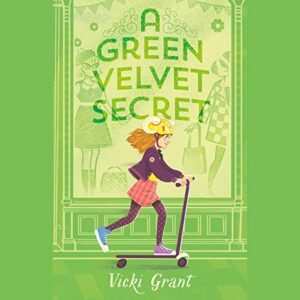 A Green Velvet Secret by Vicky Grant; audiobook read by Gabi Epstein
Yardley’s best friend, Gidge, is dying of cancer. Gidge also happens to be Yardley’s grandmother, who has decided to use all of her last moments to “fix” her karma by writing letters to everyone she decides she needs to make amends with. Yardley is devastated when Gidge is gone, and remembers her as she helps out in a vintage clothing store Gidge introduced her to not long before passing away. Yardley’s not sure she believes in reincarnation, but when a woman arrives at the shop to pick up a package left for her, and it contains a green velvet dress that once belonged to Gidge, she’s convinced that the woman is Gidge, returned to her. This is a moving story of how we handle grief and remembrance, as well as a twisty mystery. CW: includes assisted suicide.
 Cold-Blooded Myrtle by Elizabeth C. Bunce; audiobook read by Bethan Rose Young
If I had to choose ANY genre as my favorite middle grade, I would say it’s “plucky victorian girls solving mysteries and defying gender norms.” The Myrtle Hardcastle series fits that bill – and every book in the series has been delightful. This is the third, and in this outing, Myrtle and her governess set out to find the person who murdered a shopkeeper in his shop on the day he’s to unveil his annual Christmas window display. Twists and turns lead us to the local college belltower, and a ceremony that took place there many years before – and included Myrtle’s own mother.
 Witchlings by Claribel Ortega; audiobook read by Cyrina Fiallo
I remember finishing this book and then sitting in my car marveling at how much I loved it. It’s just wonderful, and I CAN’T WAIT for #2 in the series. Seven Salazar knows she’s a witch – she lives in a town of witches and every child at 12 years old participates in a ceremony to be sorted into a coven which will determine what kind of magic they will master. But when the ceremony takes place, Seven is distraught to learn that she is a “spare” – a witch not sorted into any coven who will be treated as an outcast and be stuck in a life of servitude. Seven is determined NOT to accept this fate, so she invokes the “impossible task.” If she and her fellow spares can complete this task they will have a second chance at becoming their own coven and coming into their full powers. But the impossible task is called that for a reason…
What are you listening to and enjoying? Please share!
Filed under Audiobooks, Book Review, Mary Kuehner, Middle Grade
QUERY, REVISE, REPEAT
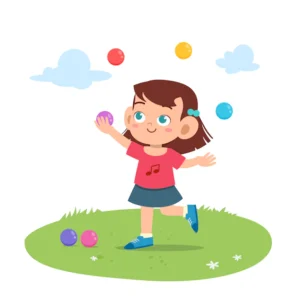 If you glanced at my weekly calendar, you would see time blocks for Research Agents & Query and for Revise. In my weekly goals, I note the number of queries along with the number of pages that I plan to revise. Time blocking makes me show up. Of course, life gets in the way (and I let it!), but I’m proud to report that I have had better-than-ever attendance the past four months. I suspect it’s because sending out queries while deep in the messiness of revising keeps me on my creative toes. Doing both reminds me: I am a writer, I can do this.
Every time I send off a query for my picture book, I feel a loud “YES!” in my writer bones. Yay, my story is out there. And so is my sweat. Each word contains years and years of being turned upside down and inside out. Eventually, I may have to revise my manuscript again. Ugh! I don’t think about that though. I’d rather celebrate that it’s done. For now, it feels great to finally send off 500 words that I care the world about.
Every time I finish revising pages of my YA novel, I feel a huge “I did it!” When a whimper of “I wish I got further” creeps in, I give myself a “you got this!” Yay, my revising is getting there, as I cut, re-arrange, rewrite and enjoy an occasional epiphany when I carve out a new scene or one sentence flows smooth and crisp. It feels great to be close to the finish line of 80,000 words that I think about day and night.
Querying and revising balance my writer mojo. They are yoga. Querying is me following my teacher’s specific instructions. Revising is me slowly sinking into the pose, adjusting my feet, tweaking the shape of my hand, remembering to breathe, and challenging myself to stretch longer, further till gradually, my body does something I never knew possible. Just like my characters do when I follow them. Just like my story flows when I remember to breathe!
Undoubtedly, querying is a refreshing change of pace and motivates me to stay in the revising trenches.
-It’s concrete and point-blank – a healthy break from the land of fiction.
-Researching agents keeps me tuned in to this crazy industry.
-Learning. Helps me update my package for my YA novel (logline, pitch, synopsis, etc.).
-Gives me a sense of completion amid day-after-day plowing through revision.
-Amps up my writer confidence.
Querying is baking. The don’t-deviate exactness of baking pushes me to diligently concentrate, the same way that I follow submission guidelines to a tee. I go to hyper focus mode to get everything right. Recently, for example, an agent’s instructions said to attach picture book manuscripts. I re-read that line several times. Because? All other agents have stated, NO attachments. I do the same when I bake. I re-read each step to make sure I use a teaspoon vs a tablespoon, baking soda vs baking powder, whisk in vs stir in… Like querying, reading baking instructions works my brain muscles. But, what a thrill to pull my cake out of the oven. It’s done. I feel that way after I send off another query. It’s done. Yes, a rejection is a cake gone wrong. It burns me. But, I get to bake another. I get to send out another query. Afterall, I must reach my goal.
Revising is cooking. I prefer cooking, because I get to invent, combine, add another spice and research (what’s a Lepiota mushroom?). I love revising recipes – cutting, adding, switching spices and ingredients… Just like revising my YA. Letting myself play and experiment keeps me energized. For instance, I’ve relied on freewriting dialogue to take my secondary characters from flat cardboard to three-dimensional humans. I’ve resorted to longhand to rewrite highly emotional scenes. My pen makes me slow down the rolling-boil action and grant my character a chance to sit on simmer. What a joy to sit with my characters! I feel that way when I finish cooking, especially a soup that’s simmered all day. Yes, some soups have no zing, just like so many of my sentences. But, I always return to my writing recipe – Beat Sheets, notes and my synopsis – to stay on track. Then, it’s back to the keyboard. Afterall, I must reach my goal.
Juggling querying and revising doesn’t make this whole writing thing any easier. It’s such hard, hard work. Juggling feeds my creative longing and insatiable curiosity – and by gosh, it gives me hope!
Over time, juggling would come to seem slower. You are doing it. –Heather Wolf, juggler and author, Birding at The Bridge: In Search of Every Bird on the Brooklyn Waterfont
Finding the Heart of Your Story
I had the opportunity to spend a lovely day attending an inspiring workshop called “Creating the Hearts and Bones of Your Next Nonfiction Picture Book.” Sponsored by the Rocky Mountain Chapter of SCBWI, the presenters were Colorado powerhouse writers Beth Anderson, Laura Perdew, and Julie Danneberg. These three women, who are prolific nonfiction picture book authors, are also former teachers. They were eager and willing to share their expertise with attendees.*
I needed help getting started on drafting my next picture book biography. I had done hours and hours of research and had filled two spiral notebooks with fascinating information about my person. I found everything about her interesting, important, and worthy. I would look at my research and try to imagine fitting her story into 1000 words– and I was paralyzed.
What I needed to do was to find the “heart” of the story. But how?
Fortunately, Beth Anderson’s presentation was just what I needed to hear. Beth’s books pulse with heart and every sentence in her books contributes to her identified heart. Everything else is left on the cutting room floor or salvaged for the back matter.
Heart, she explains, isn’t the theme, the hook, the nugget, or the emotional arc. Instead, the heart is more elusive and more important. Sometimes called the “so what?” or take-away, it is the vital idea that lingers in the reader’s heart.
The key to finding the heart of your story is to focus on your connection to the story. Beth suggests you think about why you love your topic. Ask yourself repeatedly why you want to tell this story. Why does this story matter? What is the story REALLY about?
Through this idea of heart, an author will find the way to make their story stand out. At its essence, this vital idea will allow children to connect with the story and feel part of it. She suggests digging deeper and deeper until you find that one extraordinary and meaningful idea.
When researching, Beth gathers ideas in a list at the front of her research, recording insights that might be or contribute to the heart of her story. She looks for a key idea or a question that could guide the story. This should be a fresh take that pushes thinking or a personal angle that resonates.
Beth has been focused on how heart matters since she started writing. In her blog series, “Mining for Heart,” she reviews published picture books through the lens of that one idea that drives the book. Her insights and recommendations were helpful to me as I explored the concept related to my own work. You can access her blog here. https://bethandersonwriter.com/category/mining-for-heart/
After the workshop, I went back through my research, riffling through the information with new eyes. I started analyzing and began to identify where my passion for my subject started and what would resonate with readers. It’s been fun to explore ideas and tangents. The different perspectives are helping me wrestle the story I want to tell into a meaningful book.
Thanks Beth, for a wonderful presentation and your dedication to helping other writers tell their stories!
*As an extra bonus, the workshop was held at the incomparable Penrose House of the El Pomar Foundation in Colorado Springs. The sprawling, historic, Italianate mansion next to the Broadmoor Hotel was built in 1910. The foundation is dedicated to serving non-profit organizations and is available free of charge to groups like ours. The beautiful setting added to the day.
Filed under Uncategorized
Get Ready To Submit Your Novel!
By Rondi Sokoloff Frieder
As I get ready to submit my latest middle grade novel to agents, I am filled with a mishmash of emotions. I’m excited, nervous, anxious, and dare I say it… petrified! I have been working on this book, on and off, for over ten years. It has been written, critiqued, revised, workshopped, re-imagined, edited, and rewritten. This is my seventh draft. And although it is way better than when I started, I am still filled with a case of the jitters as I get ready to set it out into the world.
I love this book. And I’m hoping agents and editors will, too.
If you are also getting ready to submit your novel to agents, please keep the following in mind:
- You must truly believe that you have done everything possible to make this book the best it can be.
- Your critique partners should agree and cheer you on.
- Write a query letter. Make sure it is tightly written with a unique hook. Have your critique partners give you feedback and rewrite it.
- Draft a synopsis. And get feedback on that, too. This is one of the hardest things to write. Especially if you are limited to one page for a 50,000 word book. Use a template and polish it until it shines.
- Create a short bio. Many agents are asking for this, especially if you are submitting to them on Query Tracker – querytracker.net .
- Research agents who are looking for what you have written. You can start with Manuscript Wish List – manuscriptwishlist.com , but make sure to visit the agent’s website to make sure they are still with the same agency. Development editor Susan Chang (www.susanchangeditorialcom) also recommends becoming familiar with Publishers Marketplace and reading the acknowledgement pages of comp books to identify the type of agent who would be interested in your genre. Check social media platforms like Twitter, TicTok, Instagram, and Post.news to see what agents are currently looking for. Go through your conference/webinar notes and identify agents who might be a good fit. Even if the conference was a while ago, mention you attended and went to their sessions. Agents know writing a book takes a very long time.
- Make a spreadsheet to keep track of your submissions. Some people do this on Query Tracker. I do it on Excel and use six columns: Name of Agent, Name of Agency, Date Submitted, Why I am Submitting to this Agent (met at a conference or watched a webinar where they presented), Response Time (if stated), Response Date, Comments.
- Tailor your query letter to each specific agent. Tell them how you found them and why your book is right for them.
- Send your queries out in batches. I would start with ten–twenty. However, Susan Chang says you can go as high fifty! The industry is glutted right now and agents are busy. She recommends casting a wide net.
- If your responses are mostly form letters (or no response at all which is THE WORST!), you probably need to rework the query letter or look at your first ten pages. Perhaps you can improve the writing or amp up the pacing. If you are getting personalized rejection letters, you are on the right track. Send out another batch. If you get requests for partials or fulls, CELEBRATE!!!! You are getting close.
- It may take months to hear from an agent. To keep from getting totally stressed out, start working on your next project. All agents want clients who are building a career. Outline your next novel, take a class, storyboard a picture book, and don’t forget to READ!
- Congratulate yourself for completing the process. You had an idea, you developed it, you got feedback, and you put it out there.
I am in the middle of doing all of the above. Like you, I am thrilled to finally be sending this story out into the world. But I am also nervous about the responses I will get (or never get!). And while I wait and obsessively check my email in-box, I will work on my next project. I have the idea, an outline, three chapters, and a new notebook for journaling. I have signed up for an accountability class and am hoping to workshop this book later in the year. I am pushing on. Because I am a writer. And this is what writers do.
Filed under 2023, Agents, craft advice, critique, Middle Grade, Motivation, Rondi Frieder, Susan Chang
The Secret of Children’s Book Publishing
By Susan Wroble, February 2023
Psssst… Want to know the secret of children’s book publishing? At the Rocky Mountain Chapter of SCBWI’s panel at the CCIRA literacy conference in February, authors and illustrators shared some of the stories behind their stories. The answer? It’s simple and painful, both.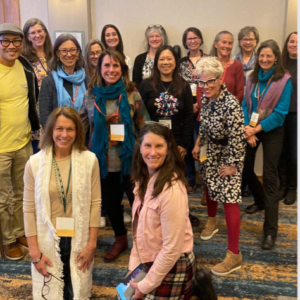
Persistence.
For some, persistence has meant staying focused over time. Author/Illustrator Kaz Windness is truly on fire, with seven book deals this year! But getting to this point? That took twenty years. And learning the industry also meant learning when a book would be best illustrated by someone else. Kaz wrote A BOOK IS A FRIEND (fall 2024) with illustrator Heather Brockman-Lee’s artwork in mind
Author Jennifer Chambliss Bertman joined SCBWI back in 2000. She worked on writing picture books for years, getting nowhere. She was ready to give up when she decided to try writing for an older audience, and began work on her highly successful middle-grade books instead. After 23 years, Jennifer’s debut picture book, A GOOD DEED CAN GROW, was released last month.
Bianca Schultz’s passion is literacy and growing readers. She founded The Children’s Book Review in 2008 with the goal of helping kids and their parents, caregivers and librarians find great books. The first of her popular “Dragon” series was published in 2020.
Persistence can come in other forms. For Laura Perdew, it meant being willing to write about lots of topics. She found one of the short-cuts into publishing—the work-for-hire market. WFH books are typically found in school libraries. The publisher, not the writer, determines the specifications. Laura now has more than fifty WFH books, along with her debut traditionally published picture book, THE FORT.
Author/Illustrator Gregory Barrington had published his first picture book with Harper Collins, but the editor wasn’t at all excited about Greg’s new manuscript. Greg was asked to write a fractured fairy tale instead. He wrote five completely different stories featuring Goldilocks and the Three Bears. He picked his favorite—and was too nervous to submit it. It didn’t come across the way he wanted on the page. Greg decided the solution was NOT to send it. He asked for a virtual meeting, then he read the manuscript aloud. GOLDILOCKS AND THE THREE KNOCKS was released in November.
Albert Whitman had published Jenny Goebel’s book ADELITA, about a sea turtle, when they asked her to write one on insects. No problem, she thought. The catch? They wanted a book on insects as food. By release date, Jenny still hadn’t managed to eat an insect. Imposter syndrome hit hard. The Butterfly Pavilion was all out of edible insects, so Jenny spent the day in search of a bug to eat. Unfortunately, success came in the form of jalapeno-flavored fried crickets. She’s since discovered more easily purchased (and eaten!) “gateway bugs.” And just like her book, they are CHOCOLATE CHIRP COOKIES.
Both Julie Danneberg and Natasha Wing have had incredibly successful series—Julie with the JITTERS series and Natasha with THE NIGHT BEFORE series. And both have worked not only to keep those series going, but to publish in other areas, from nonfiction to jokes.
Sometimes persistence means a lot of research. Author Jessica Speer knew she wanted to focus on problems kids face in middle school. But she wasn’t exactly sure what the biggest challenges were. So she went to schools and listened. She surveyed students. Her book MIDDLE SCHOOL: SAFETY GOOGLES ADVISED focuses on the top ten problems identified by kids.
For authors Andrea Wang and Beth Anderson, persistence has entailed digging deep—sometimes into hard places emotionally—to find the heart of the story. For others, it has been work to find the words. Lynn Becker was hooked by the idea of a sea shanty. Finding just the right words for MONSTERS IN THE BRINY meant literally walking it out, pounding out the beat with her feet. With her novel-in-verse ALONE, author Megan E. Freeman struggled to find the best ways in each poem to convey the story in the fewest possible words, leaving the rest up to the reader.
Author/illustrator Julie Rowan-Zoch was faced with an unusual request—illustrating for a celebrity author. Saturday Night Live’s actor Bobby Moynihan had submitted sample illustrations with his manuscript NOT ALL SHEEP ARE BORING, but the publisher reached out to Julie instead. Many of her initial sketches were turned down before Julie hit the type of compositions the publishers felt comfortable with for this book that they knew would have a huge circulation run.
COVID in the family kept author Kellye Crocker from the CCIRA conference, but PAL Liaison Rondi Frieder told teachers about her book. What Rondi didn’t tell them was that DAD’S GIRLFRIEND AND OTHER ANXIETIES had been hit by supply chain problems, and the publication date had been delayed by months. Then the books didn’t even arrive on time for the rescheduled publication date. Kellye refused to give up, and held a launch party with advance reader copies of the book!
Sometimes, it is the characters who are persistent. Heather Mateus Sappenfield was an adult and YA author. When a fully-formed 12-year-old character named Rill hit her mind, Heather wasn’t remotely interested in writing middle grade. It took Heather and Rill more than a year together before Heather realized that Rill was just the right person to tell an important story. As a teacher, Heather had sometimes walked into her school to find clusters of children, crying. Their parents had been deported the night before. After her book was published, Heather almost threw away an envelope from the Colorado statehouse, assuming it was junk. Instead, it was a treasure—the Colorado General Assembly acknowledged her book’s importance in the state.
Whatever the form it may take for you, the secret is clear. Stick with it. Persist.
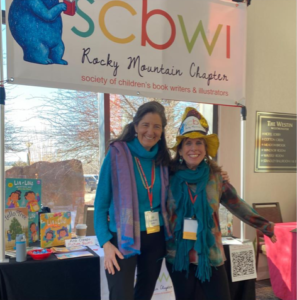
Filed under 2023, CCIRA, Persistence, RMC-SCBWI, Susan Wroble
Change of Scene (and genre)
It’s been a tough writing year for me. And by tough writing, I mean no writing.
Which isn’t actually true.
While my work on my middle grade fantasy novels stalled (basically completely) which makes me feel like I am not writing at all, I did start co-writing a series with one of my amazing critique partners, Samantha Cohoe. We’ve written two novels so far, including setting aside time, limiting distractions, and writing 30,000 words combined in only three days.
So my no writing, looks very much like being quite productive after all.
What are some of the not-so-secret secrets to our success?
- Meeting genre-expectations: We’re writing mysteries with a light romance touch to it. That gives us a structure and a framework. We need a body. Someone to have actually done the deed. Other suspects who could have reasonably murdered our dearly departed character. A hot person of interest who our main character wants to get close to but something is keeping them apart. Knowing things we have to include to meet the expectations of reader in this genre give us a bunch of scene and character ideas. Which leads me to…
- Bookends: We usually know roughly where the book will start but importantly, we know how it ends. We know the climax scene and the basics of how our main character will discover the true killer. But what to write?
- A runway: Rather than calling it an outline, we start laying out the scenes of the book and developing a ‘runway’ – and once we have enough runway, just like at your local airport, we take off! Calling it a runway vs. an outline feels lighter, and also removes some of the pressure. And takes us out of a singularly linear approach. Because we runway…
- Front to back and back to front: Our runway starts at the beginning-ish – and then usually somewhere around the middle, we hop around to our end scene (which as I said, we already know), and then we work back toward the middle again. Layering in, fleshing out, leading us to our destination, tightening and weaving as we go. But what’s the most important syllable in that sentence?
- Collaboration: WE are writing a book. WE are brainstorming together. WE are counting on each other to get the thing done. Whichever one of us has the most energy helps motivate the other, and WE go back and forth on who is cheerleading who. And we have a built-in audience and readership – each other! Which also means we have more than one opinion to take into consideration, so it’s important that we decided…
- We will not be too precious: We made an explicit agreement that we’re not going to be rigid in our thinking or in our demands. If something isn’t really crucially critically important to us, and the other person has a different opinion… we bend. We move on. We find a third option we can both dig. Something like that. There is basically no hill that we’re going to die on. And when the other person has a way to make a scene funnier, a line tighter – we take it. Take the edit. Make it better. Two heads are better than one.
This experiment/experience has been a real game changer for me. Having someone else count on my productivity keeps me to deadlines. Writing in a completely different genre has opened a brand new well of creativity.
Have you switched it up? What changes have you made that have inspired you and worked well for your writing?
Filed under Coral Jenrette
My Best of 2022-ish.
Hello friends! Last year I put together a post of some of the picture books I was looking forward to in 2022. There were a LOT of them. Well, now that the year has ended, I thought I’d follow through with some of my favorites of the year… and a half. Yes, some of these came out in 2021 but most were 2022, and I read them all in 2022. Since I read PBs AND other books for kids, I thought I’d include some of my fave early readers, graphic novels and middle grade books as well. This list is by no means exhaustive – while I WANT to read everything on my TBR or every new PB that comes out, I miss A LOT. Time, friends, is fleeting.
PICTURE BOOKS:
Anzu the Great Kaiju by Benson Shum. Are you familiar with Kaiju? Think Godzilla. But this little guy, rather than being scary, is quite sweet.
Bathe the Cat by Alice B, McGinty and David Roberts. A family, some chores, and a naughty cat with access to the refrigerator alphabet magnets.
 Big and Small and In-Between by Carter Higgins and Daniel Miyares. I could spend hours with this book. So much to ponder, and gorgeous illustrations. Would make a great writing prompt book!
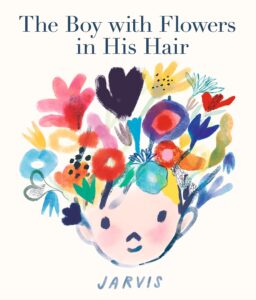
The Boy With Flowers in his Hair by Jarvis. Simple, quiet, and loving. A boy with (really) flowers in his hair begins to lose them. His best friend comes up with a solution to support him until they grow back.
Color the Sky by David Elliot and Evan Turk. Birds, rhyme, and flowing color.
Don’t Eat Bees: Life Lessons from Chip the Dog by Dev Petty and Mike Boldt. Chip the Dog knows what’s up. This is hilarious and will resonate with dog owners everywhere.
Dress-Up Day by Blanca Gomez. Gomez’s illustrations remind me of Christian Robinson so I therefore love them. A little girl misses dress-up day in her classroom so decides to wear her costume the following day – with surprising results.
 Everybody in the Red Brick Building by Anne Wynter and Oge Mora. Everyone is awakened by a series of noises in the red brick building.
A Grand Day by Jean Reidy and Samantha Cotterill. An ode to a day with the grandparents.
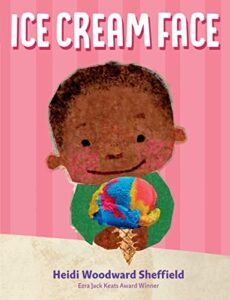
Ice Cream Face by Heidi Woodward Sheffield. A boy experiences many emotions while waiting in line to get ice cream.
I’m Hungry!/¡Tengo Hambre! by Angela Dominguez. Dominguez writes THE BEST simple, toddler-friendly bilingual stories. A Spanish-speaking tiny dino communicates with an English-speaking bird in order to get something to eat.
It’s So Quiet: A Not Quite Going-to-Bed Book by Sherri Duskey Rinker and Tony Fucile. Mouse can’t sleep because it’s TOO quiet. Well, not for long!
Like by Annie Barrows and Leo Espinoza. We are more alike (and still different) than we think.
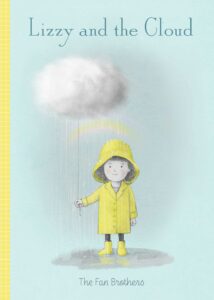
Lizzy and the Cloud by the Fan Brothers. A little girl buys a pet cloud in the park – the have lots of fun, until the cloud outgrows her.
Miguel’s Community Garden by JaNay Brown-Wood and Samara Hardy. Book 2 in the garden series! Great for building background knowledge. Help Miguel find the sunflowers in his garden by comparing what we know about sunflowers to the things that we find growing!
Read Island by Nicole Magistro and Alice Feagan. Take a magical trip to the land of stories!
Swim, Jim by Kaz Windness. Jim is an alligator, so he should not be afraid to swim, right? Well, he’s NOT afraid of swimming. He’s afraid of SINKING. Will he find a way to overcome his fear?
Where is Bina Bear? by Mike Curato. This warmed my introvert’s heart. Bina Bear wants to be at the party to support her friend, but also… she doesn’t want to be there.
Wonder Walkers by Micha Archer. Take a walk and wonder about the world around.
EARLY READER: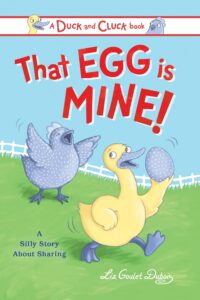
Duck and Cluck: This Egg is Mine! by Liz Goulet Dubois. Sadly, Goulet Dubois passed away this year, not long after her debut early reader was released. This is a fun, sweet story about two friends fighting over an egg they find. Perfect for those just finding their reading feet. Is that a thing?
GRAPHIC NOVELS:
The Aquanaut by Dan Santat. A girl who lost her father at sea is visited by a mysterious… creature? Are they bringing her a message from her dad?
Garlic and the Vampire by Bree Paulsen. An anthropomorphized garlic, who lives in a vegetable town overseen by a witch, makes a dangerous trek to visit a vampire who has moved into a nearby castle. No, it’s not scary at all – it’s sweet.
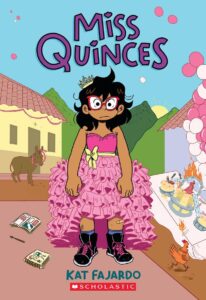
Miss Quinces by Kat Fajardo. Sue would rather spend the summer at comics camp with her friends than have a quinceañera party. But her mom has different ideas – she will be spending the summer in Honduras visiting extended family and yes, she WILL have a quinceañera. Can Sue and her mom compromise?
The Tryout by Christina Soontornvat and Joanna Cacao. Can Christina make it on to the cheerleading squad – and survive her first year in middle school? Based on the author’s experience.
MIDDLE GRADE:
[It became clear to me as I put together this list that I mostly gravitate toward stories with adventure, magic, mystery and kids finding out they are not who they thought they were. Plus school stories.]
Amari and the Great Game by B. B. Alston. The second in the series. Not quite as good, but only because I loved the worldbuilding of the first and of course that didn’t need to happen this time. But still excellent, fun, and suspenseful.
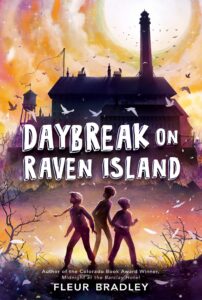 Daybreak on Raven Island by Fleur Bradley. If you want a suspenseful, atmospheric, spooky story this is for you! Three kids get stuck on an island overnight – an island that just happens to be home to a long-abandoned prison that harbors a LOT of secrets.
A Duet for Home by Karina Yan Glaser. A girl, her mother and her sister move into an apartment in a shelter for houseless families. There she meets other kids like her, some who are new and some who’ve lived there for years. What will they do when the city decides to shut the shelter down?
Falling Short by Ernesto Cisneros. Isaac and Marco couldn’t be more different – one is tall and athletic, the other short and academic. This year, though, they each want to achieve what the other has, for different reasons. Luckily, they have each other.
Hana Hsu and the Ghost Crab Nation by Sylvia Liu. Hana loves to build bots and can’t wait to join Start Up and be connected to the whole world through a neural net. But when her classmates begin to get sick, she finds out being connected to everything might not be the dream she thought it was.
Hide and Geek by T. P. Jagger. Four friends try and solve the final puzzle of a local toymaker in order to save their town.
Hither and Nigh by Ellen Potter. A missing brother and a mysterious magic teacher. Are they connected? Nell’s going to find out.
Jennifer Chan is Not Alone by Tae Keller. One of the most compelling school stories I’ve ever read – about bullying and when it’s time NOT tofollow the crowd.
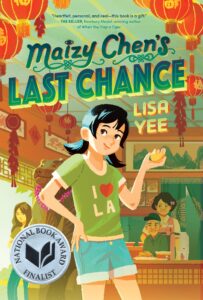
Maizy Chen’s Last Chance by Lisa Yee. Maizy and her mom spend the summer helping her grandparents out at the Minnesota restaurant they’ve had for years. Through an act of racist vandalism, Maizy begins to learn about her family’s history and secrets.
Onyeka and the Academy of the Sun by Tolá Okagwu. Onyeka’s hair is magical! That leads her to be enrolled in the Academy of the Sun where she discovers things are NOT as they seem.
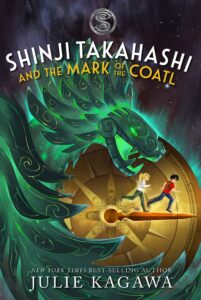 Shinji Takahasi and the Mark of the Coatl by Julie Kagawa. This reads like an Indiana Jones adventure – but with kids as the heroes.
Sisterhood of Sleuths by Jennifer Chambliss Bertman. For fans of Nancy Drew! While trying to uncover the truth about a photograph she finds, Maizy learns her grandmother might have been connected with the original author(s) of the series.
Sofia Acosta Makes a Scene by Emma Otheguy. Sofia’s family is all about ballet, and Sofia wants to be, too, but her real talent lies somewhere else.
Team Chu and the Battle of Blackwood Arena by Julie C. Dao. Two siblings are competitive about everything, especially laser tag. But when they discover a ghost within the game at the new arena, they have to work together to figure out what’s going on!
Those Kids from Fawn Creek by Erin Entrada Kelly. I will read anything and everything Entrada Kelly writes. This is, in my opinion, one of her best. It will surprise you.
 Undercover Latina by Aya De Leon. Andrea comes from a family of spies, and is tasked with going undercover to befriend the son of a suspected white supremacist terrorist.
Valentina Salazar is Not a Monster Hunter by Zoraida Córdova. Valentina’s family gave up monster protecting (NOT hunting) when her father was killed. But now Valentina must convince them to join her on a quest to protect a magical egg that could wreak havoc on the whole world.
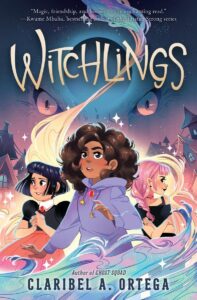
Witchlings by Claribel Ortega. Seven Salazar can’t wait to be placed in the coven of her dreams (with her best friend) and begin learning magic. When she’s not placed in a coven, and instead becomes a “spare,” she must take on an impossible task to prove herself worthy.
Happy reading, friends!
Filed under Best Books, Book Review, Early Readers, Graphic Novels, Mary Kuehner, Middle Grade, Picture Books
ODE TO REVISION
 Revision.
You make me crazy!
“Explain,” you say.
You’re akin to blisters, pests, chores, and petty necessaries.
I have sweat and steamed over you,
rehashing plots, revamping chapters, recasting characters.
“Your point?” you ask.
Now, I am a fanatical, fervored writer
glued to my written mess.
Revision,
others warned
you would be a storm, thorns, and bricks on my brain!
“Why stay?” you say.
For those spectacular moments
when my story flows smooth as syrup
and sparks fill me,
singing “you can do this!”
And suddenly,
I’m a dancer, a bird, a shooting star, a perfect snowflake…
“Follow your characters,” you declare.
Exciting when I let them get into grand muck,
but then, I’m stuck in another written mess.
I breathe, cuss,
resume re-doing:
reorganizing scenes,
recalibrating action,
reconditioning description and dialogue.
Again.
Repeat.
Again.
Insane.
But my hope is refueled.
Alas, my main character has a new coat of conviction and chutzpah.
I can’t let her down.
Revision,
you’re a wild renovation that I can’t fully resolve.
“Congrats!” you say. “Resolving is for readers.”
Revision,
you wake me to characters in chaos,
off stowing secrets and lies.
Please give me a shortcut!
“Butt in chair,” you remind.
Revision,
my thick-skinned constant,
you make me crazy,
but I’ll keep my seat on your train,
wrecks and all.
Thank you.
Much obliged.
Appreciate you.
Filed under craft advice, critique, Karen McChesney, Main character, Motivation, Picture Books, Revision process, RMC-SCBWI