
Tag Archives: YA

RESEARCHING AGENTS: LEARNING AND MORE LEARNING!

Research, research, research. I have been doing lots lately. I’m in search of agents to query. This isn’t my first time. But yay me! After years of practice, I have become a quick-study combing through online resources: Manuscript Wish List (MSWL), QueryTracker, PublishersMarketplace, AgentQuery, Reedsy Marketplace, agent websites, interviews with agents, etc. Researching agents is being a detective – double-checking information; sleuthing for key words and phrases to find ones that fit the theme, plot, voice and vibe of my picture book and young adult novel; and running through agent’s social media posts.

One thing has stayed the same. It’s very tedious work. Very!! And there is no short cut. But I am always learning, especially when I see unfamiliar words and phrases on MSWL Some I need to know; others pique my curiosity. So, I thought I would share my latest “glossary.”

AYKB – Stands for “As you know, Bob…,” a technique writers often use to reveal important background information without taking readers out of the story.

BAME – Stands for Black, Asian, Minority Ethnic (writers).

Complex dynamics – Can mean complex characters or dynamic relationships between characters. When creating “complex dynamics,” here are tips for creating your characters: Find out what matters to them. Free write, play with characters to understand their complexities. Explore their backstory. Use characters’ surroundings to develop them.

Dark academia – Set in an elite school with old, crumbling gothic architecture, a dark library, eerie common rooms. Students wear uniforms and enjoy discussing art, literature, philosophy. Typically, there is one group of students that set themselves apart – by choice or through prejudice. Recommend: THE RAVENS (series) by Kass Morgan.

Dead genres – In the words of an agent, “I want the genres everyone says are dead. There is absolutely still room for ‘dead’ genres.”

DEAI – Stands for Diversity, Equity, Accessibility, and Inclusion.

Epistolary novel – Fiction written in the form of letters or other documents, such as emails, journal entries, texts, etc. Recommend: YOURS FROM THE TOWER by Sally Nicholls

Escapism – Stories with big characters, high stakes, and ideally, a happy ending. Recommend: DRAGONFRUIT by Makiia Lucier.

Fabulism –Stories that have fantastical elements entwined with the everyday perfectly ordinary – and don’t explain why. Recommend: THE ASTONISHING COLOR OF EVER AFTER by Emily X.R. Pan.

HEA – Stands for Happily Ever After.

Head hopping – When a writer hops between different characters’ perspectives (“heads”) within the same scene.

Intersectionality – Describes the way people’s social identities can overlap. Coined by Columbia law professor Kimberle Crenshaw: “It’s basically a lens, a prism, for seeing the way in which various forms of inequality often operate together and exacerbate each other.”

LitRPG – Stands for Literary Role-Playing Games, a genre combining the conventions of computer role-playing games with science fiction and fantasy novels. Recommend: Clan Dominance: The Sleepless Ones 1 by Dem Mikhailov.

Lower YA – category of young adult fiction aimed at ages 11-13. Typical elements: 1) Likeable protagonist with hints of heavy family topics/issues. 2) Mostly happy, resolution filled ending. 3) High school setting and first love type romance. Recommend: LUCKY IN LOVE by Kasie West.

Middle YA – category of YA aimed at ages 14-16. Typical elements: 1) Traumatic protagonist backstory. 2) Protagonists have a clear identity outside of their family. 3) More diverse, dynamic supporting characters. 4) Romantic relationships with more intimacy and meaning. Recommend: THE NAMES THEY GAVE US by Emery Lord.

Upper YA – category of YA aimed at ages 17+. Typical elements: 1) Protagonist out of high school or close to graduating; navigating post high school life; could be living on own. 2) Deeper introspection of protagonist’s flaws, strengths, wants. 3) Higher stakes and consequences for protagonist’s actions, decisions. 3) Romantic relationships with physical intimacy and/or focusing on long term. Recommend: THE REAPPEARNCE OF RACHEL PRICE by Holly Jackson.

Message novels – The author has a specific agenda – a message. Written to specifically promote an idea or concept.

Mirrors, windows and sliding glass doors – Dr. Rudine Sims Bishop, known for her groundbreaking research and advocacy for diversity and representation in children’s books, pioneered the concept that all readers must experience “seeing” themselves (mirrors), different perspectives (windows) and “stepping into” the experiences of others (sliding glass doors).

Selkies – Mythological creatures from Scottish folklore. They shapeshift between seal and human forms by removing or putting on their seal skin. Recommend: TIDES by Betsy Cornwell, SEVEN TEARS INTO THE SEA by Terri Farley.


Mind-boggling? Sure is. Every phase of writing is mind-boggling. But I keep soaking up support, like the recent advice from one of my author-mentors: “Work hard, work harder. What comes will come.”


5 Comments

Filed under Agents, Karen McChesney, Main character, Marketing, Motivation, Persistence, Picture Books

Finding The YA in Learning


Murder. Secrets. Drugs. Gossip. Lies. Sexuality. Romance. Magic. Identity. Rumors. Breakups.

Hang out with a group of YA writers and you’ll likely hear these words, along with more provocative, dark, odd, edgy, far-out, intense, hilarious, eccentric, juicy, shocking topics. We love teens. We love big drama and conjuring a mess for our teen characters in current time or mystical worlds.

Other kid-lit writers often say we’re nuts for writing over 75,000 words. But we can’t get enough. We want to hold on to every word. No wonder our revisions can take years and years as we cut, trim, tighten hundreds of pages.

Thanks to my critique group, Story Spinners, I unexpectedly joined the YA writer “club” years ago after they nudged me to turn my coming-of-age short story into a YA novel. I was clueless and intimidated, but I couldn’t stop writing. I’m incredibly fortunate to be part of the SCBWI-Rocky Mountain Chapter’s YA community. And I’m in awe of how everyone cheers each other on at book launches and events by and for YA writers.

My fellow YA’ers and I adamantly long to be with our peers and find YA-only classes. No offense, picture book and middle grade writers. We adore you and your books! Just like our teen characters, we long to be belong; we want to be in a YA cluster. But, we’ll be the first to admit, we often feel like the misfits in writer land. Afterall, YA novels are a far cry from Middle Grade.

Perhaps that’s why our search for YA-only learning is constant and fierce. The past few months, for instance, several YA writers and I started researching YA-only workshops, courses, and other ways to amp up our learning.

Here’s what we have found so far:

Workshops/Courses:

Wordsmith Workshops https://www.wordsmithworkshops.com/

Vermont College of Fine Arts https://vcfa.edu/writing-novels-for-young-people-retreat/

Hugo House https://hugohouse.org/product/young-adult-fiction-workshop/

Writer’s Digest University https://www.writersonlineworkshops.com/courses/writing-the-young-adult-novel

UCLA Extension https://www.uclaextension.edu/writing-journalism/creative-writing/course/young-adult-novel-i-writing-x-4451

Tin House https://tinhouse.com/workshop/

From SCBWI:

YA Connect and Other Connects https://www.scbwi.org/regions/rmc/events

YA Connect is free and offered every other month by and for YA writers of all levels to learn and meet fellow YA writers. Most YA Connects are both in-person & Zoom.

Michelle Begley Mentorship – Due Oct. 31, 2023 https://www.scbwi.org/regions/rmc/RMC-mentorship-program

Weekly Podcast https://www.scbwi.org/podcasts

Most recent one featured Deborah Halverson, award-winning YA author, including Writing Young Adult Fiction For Dummies and Honk If You Hate Me

Monthly Virtual Events, hosted by chapters across the U.S. https://www.scbwi.org/regional-virtual-events

Coming soon:

Lighthouse Writers Workshop, Denver – YA workshops, gatherings https://lighthousewriters.org/

Of course, there are a lot more YA-only opportunities out there. Share your findings in the comments, please. Meanwhile, YA writers: Keep reaching out to find other YA’ers. And remember, teens can’t wait to read your stories – and drama!

2 Comments

Filed under 2023, Agents, craft advice, critique, Graphic Novels, Karen McChesney, Main character, Middle Grade, Motivation, Persistence, Revision process, RMC-SCBWI, Upcoming, What I am doing now

Go Writers, Go!

It was a writer’s dream. That’s how I felt at the recent grand opening of Lighthouse Writers Workshop new building. I was with over 500 other writers in the stunning, custom-built, cozy three-story building designed just for writers. Just for writers!
“We want this to be your home,” said Co-Founder and Director Michael Henry. And, we want it to be a place where writers of all ages, levels, backgrounds, genres come “hang out and write,” added Andrea Dupree, Co-Founder and Program Director.

What could be better? That night, when I left this writer’s paradise, I was riding high. High on great gratitude.

Gratitude for:

-living in a city that has invested in Lighthouse and writers

-living in a state with an incredibly supportive kid-lit writer community

-getting to teach youth at Lighthouse

-my awesome writer critique group, Story Spinners

-SCBWI-RMC

-my writing groups: Young Adult writers, NaNo writers

-my Monday accountability group

-my super supportive husband and friends

-my manuscript exchange partners

-my two late aunts who modeled creative follow-your-dreams living

Wow, I have been incredibly fortunate to have many, many cheerleaders on this crazy journey of querying picture books and revising young adult novels. At the grand opening, one author-speaker reminded, “writers need other writers, create your community.” I am immensely proud that I have created my writer community. And it keeps growing! I have great cheerleaders. Best of all, they have shown me how to be a cheerleader; they have inspired me to make time and show up for other writers.

In that spirit, I decided to share some of my favorite cheers from other writers. I keep them in a notebook and glance at them often, especially when I get a bad case of imposter syndrome. These words give me courage; remind me to have fun; renew my “I can do this.”

May these comments cheer you on, too.

For imposter syndrome: Before writing, take a few minutes to jot down what you’re thinking. Your doubts, your insecurities. Spit ‘em out! Then, write your goal for your session, such as word count, number of pages. At the end of your session, write down what you did.

 Congrats on doing the hard work on your YA. It’ll pay off. Sometimes you just have to plough through the hard stuff.

What an achievement! I am so proud and inspired by your achievement of finishing another revision.

Did you sign on yet for film rights for your book?!!!! I can picture it as a movie.

You hooked me with your pitch. I want to read it!

You sound very clear on your intentions for your YA. Get your story out there!

Hip, hip hooray! I know you’re passionate about this story and I applaud you for sticking with it. This is very hard work!

Aim to send 100 queries. I got my agent on query 101.

It doesn’t matter how long it takes you to finish. What’s most important is that you are staying with the hard work.

Here’s to being cheerleaders and having cheerleaders. Go writers, go!

Lighthouse Writers Workshop is the largest literary center in the Rocky Mountain West. They offer writing instruction, workshops, events, and support for writers of kid-lit, fiction, nonfiction, poetry, and many other genres. New location: 3844 York St., Denver CO 80205. For more information: Lighthouse Writers Workshop |


4 Comments

Filed under 2023, Agents, craft advice, critique, Karen McChesney, Literacy Program, Motivation, PBParty, Persistence, Picture Books, Revision process, RMC-SCBWI

SOWING STORY SEEDS FOR KIDS

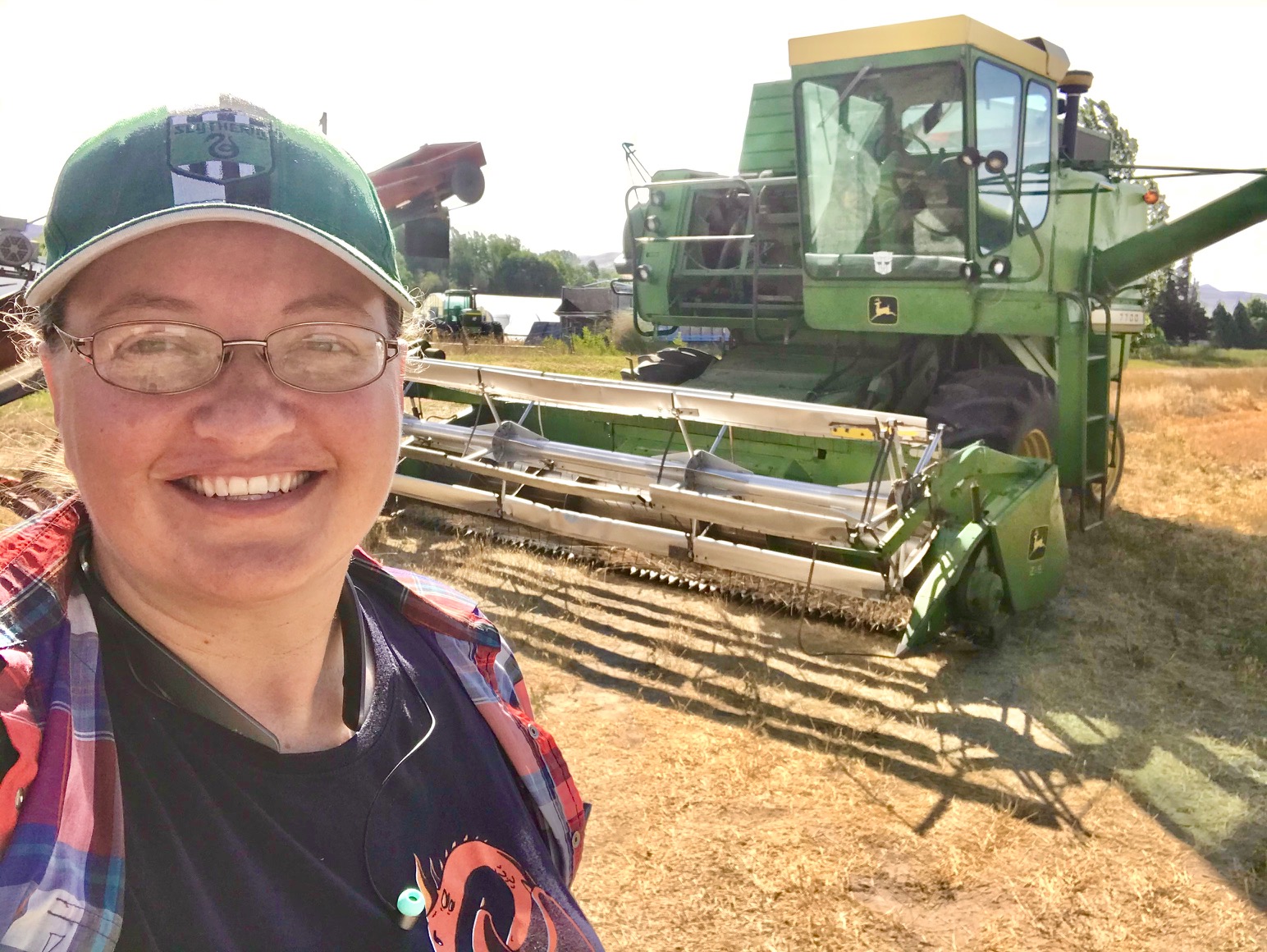
Her smile is as wide and natural as the 103-acre farm in the background. Clad in a flannel shirt, the woman tells viewers, “Alright, well, we’re inside the tractor now.” After she introduces the two cats watching from outside, she holds up her book cover, THE WISH AND THE PEACOCK; she opens it and announces, “Chapter one, hide-and-seek…” pauses, then reads, Finding lost things on the farm is the world’s hardest game of hide-and-seek. I’ve been searching for Dad’s favorite shovel for weeks.

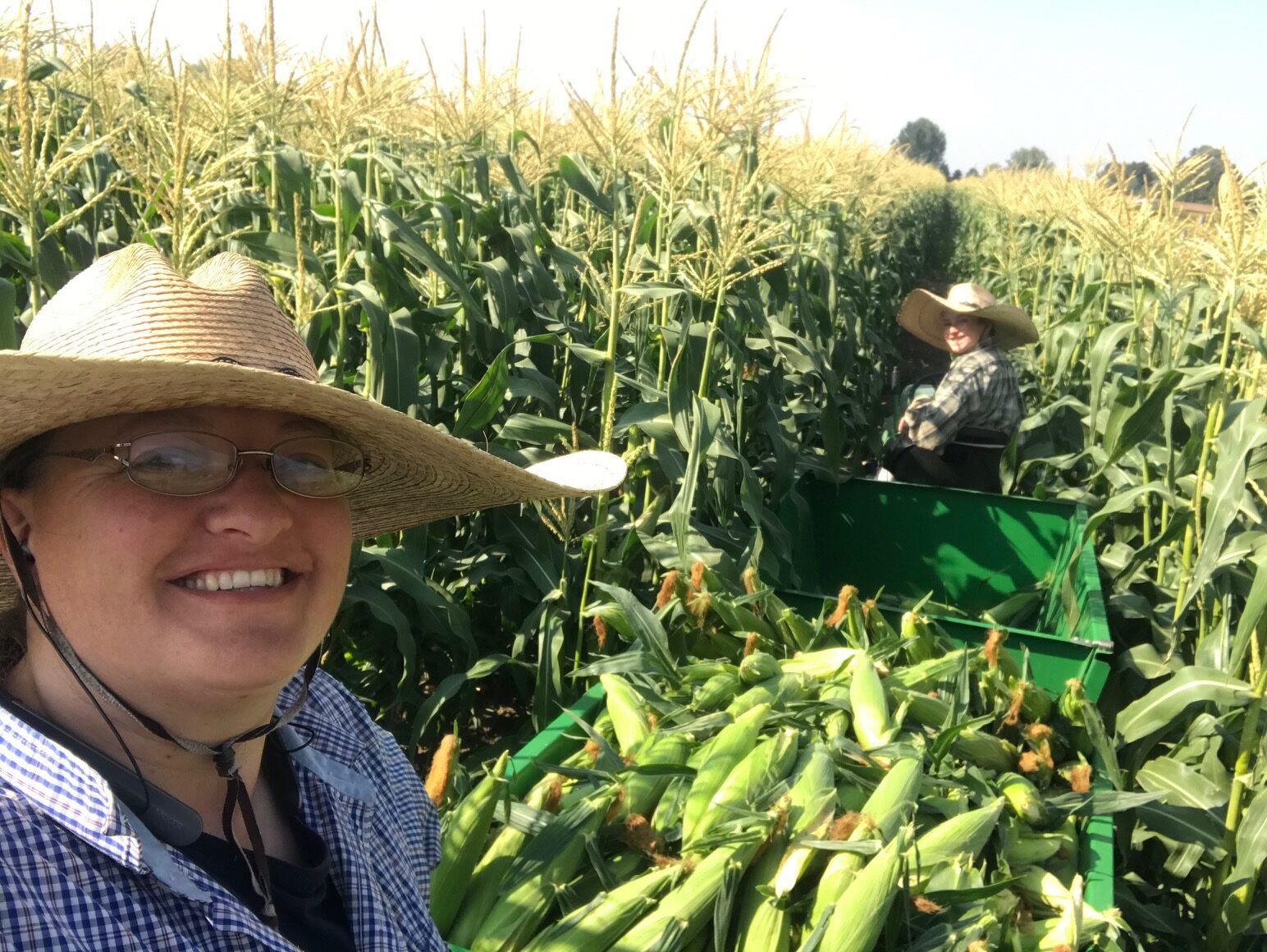
Meet farmer and children’s book author, Wendy Swore. For the next 15 minutes, Swore reads the chapter, acting out sentences with gestures and animated faces, and changing her voice for each character. Viewers get acquainted with 12-year-old Paige, who lost her father and wants to save her family farm, located on an Idaho reservation. Swore knows her setting. For the past 20 years, she has lived and farmed on the Sho-Ban Reservation, where her husband and five children were born and raised.

Sponsored by her publisher, Shadow Mountain Publishing, Swore’s online read-aloud isn’t just for kids. “They’re for everyone stuck in quarantine!” says Swore. I recently interviewed her about her books and how she juggles farming and writing.

Was farming part of your childhood?

My dad was a crop duster and we moved all around. I got to sit on his lap while he flew his crop duster plane. That was my introduction to agriculture.

What is your first memory of writing?

In elementary school, I had a teacher who was extraordinary. She used to tell us things like, start writing about the color brown without using the color brown. As a fourth grader, that was really mind-blowing! She told me, ‘you’re really good, you should really write more’. I wrote about a Hunter Cheetah. My teacher made me feel like it was as amazing as I thought it was.

When did you start writing professionally?

About 15 years ago, my husband said, ‘you should write a story about the farm’. I sat down and wrote a 90,000 word young adult (YA) novel about this farm thing. He said, ‘no, I meant a little flier-coloring book thing to hand to kids.’ I said, ‘too late’, and I’ve been writing ever since! No one will ever see the 90,000. It was just for fun.

You kept writing. What motivated you?

I went to a writer’s conference and suddenly, my world opened. On a farm, I’m totally by myself, especially during off-season. And…when I started writing A MONSTER LIKE ME, my youngest was 10 years old. He would come home from school and ask, ‘do you have the next chapter ready’? He liked finding typos and wanted to see the screen.

Describe your writing rituals or habits.

I write while sitting on a ball and plug in earbuds, because I have narcolepsy. I don’t struggle with it while farming, but as soon as I stop moving. The ball lets me move around and helps me stay awake while writing; and, I listen to movie soundtracks without words.

Did the Covid pandemic affect your writing in any way?

My son who has Asperger’s wasn’t able to do his schoolwork, unless I was with him all the time. My writing time went out the window and pushed the writing of my new novel into farming seasion, so I was trying to write and farm at the same time. We do 12-hour farming days. When I only had one hour, I needed to get into the zone fast. I used music to pull me into that (mental) place that I need to be to write.

Five kids, plus farming, organizing a popular pumpkin patch and farmers markets… Egads, how do you make time to write?

I call winter my writing season. I average a minimum of half-hour a day and a couple weekends a month. If I only write in winter, then I’m having to re-learn it. So, I do a little in summer. But, my days are very full, so it is difficult to write for long periods. Early in the season is easier, because I can go out and water, then go home and write for several hours. If there is a day when I am not wiped out from farming, I go next door to my best friend’s house on Friday afternoon and we might write till one in the morning. Next door for us means half-a-mile away! We sit next to each other, so we’re totally absorbed in our imaginary world; we stop and brainstorm. It’s fun.

Do you think about your characters and plot while farming?

It’s a creative outlet that can go with me into the field. If I am farming with my children, I’ll say, ‘what do you think about a character who is like this. Then I ask, what do you think is the worst thing that could happen to this character. If I am thinking of a certain part of my story, I’ll say, so this is the situation, this is the character, how do you think this character can get from point A to B’.

You have published two middle grade (MG) novels. Do you have a favorite?

Each one satisfies a different need. A MONSTER LIKE ME was me as a child, a kid with hemangioma (a golf ball-sized protrusion on my face) who was bullied by kids and adults. I like to ask what-if questions when I write. A MONSTER LIKE ME was born because I wondered, what if I believed the people who called me a monster? THE WITCH AND THE PEACOCK was meaningful, because it captures what our life is  like now. Most farms around us have gone to houses. I needed a happy ending.

Congratulations on your new MG coming out in May. How is it different from your others?

STRONG LIKE THE SEA is my first contemporary MG; it’s not directly based on my world. The main character likes codes and figuring things out. That’s the furthest from me right now.

Any advice for writers?

Writing is hard! You have to love the things you’re writing about. I’m interested in people you might think are broken, but you get to know them and there’s more to them. I want kids to learn to love themselves. Even when you don’t have time to write, you can write stories in your head for when you do have the time.

Note: Original prose and photos were printed with the permission of Wendy Swore.


1 Comment

Filed under Karen McChesney, RMC-SCBWI