 If you glanced at my weekly calendar, you would see time blocks for Research Agents & Query and for Revise. In my weekly goals, I note the number of queries along with the number of pages that I plan to revise. Time blocking makes me show up. Of course, life gets in the way (and I let it!), but I’m proud to report that I have had better-than-ever attendance the past four months. I suspect it’s because sending out queries while deep in the messiness of revising keeps me on my creative toes. Doing both reminds me: I am a writer, I can do this.
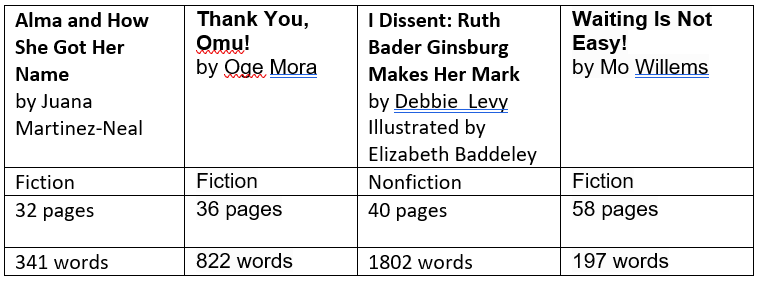
Every time I send off a query for my picture book, I feel a loud “YES!” in my writer bones. Yay, my story is out there. And so is my sweat. Each word contains years and years of being turned upside down and inside out. Eventually, I may have to revise my manuscript again. Ugh! I don’t think about that though. I’d rather celebrate that it’s done. For now, it feels great to finally send off 500 words that I care the world about.
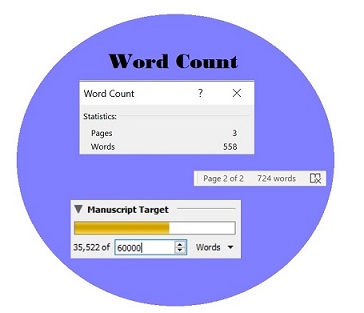
Every time I finish revising pages of my YA novel, I feel a huge “I did it!” When a whimper of “I wish I got further” creeps in, I give myself a “you got this!” Yay, my revising is getting there, as I cut, re-arrange, rewrite and enjoy an occasional epiphany when I carve out a new scene or one sentence flows smooth and crisp. It feels great to be close to the finish line of 80,000 words that I think about day and night.
Querying and revising balance my writer mojo. They are yoga. Querying is me following my teacher’s specific instructions. Revising is me slowly sinking into the pose, adjusting my feet, tweaking the shape of my hand, remembering to breathe, and challenging myself to stretch longer, further till gradually, my body does something I never knew possible. Just like my characters do when I follow them. Just like my story flows when I remember to breathe!
Undoubtedly, querying is a refreshing change of pace and motivates me to stay in the revising trenches.
-It’s concrete and point-blank – a healthy break from the land of fiction.
-Researching agents keeps me tuned in to this crazy industry.
-Learning. Helps me update my package for my YA novel (logline, pitch, synopsis, etc.).
-Gives me a sense of completion amid day-after-day plowing through revision.
-Amps up my writer confidence.
Querying is baking. The don’t-deviate exactness of baking pushes me to diligently concentrate, the same way that I follow submission guidelines to a tee. I go to hyper focus mode to get everything right. Recently, for example, an agent’s instructions said to attach picture book manuscripts. I re-read that line several times. Because? All other agents have stated, NO attachments. I do the same when I bake. I re-read each step to make sure I use a teaspoon vs a tablespoon, baking soda vs baking powder, whisk in vs stir in… Like querying, reading baking instructions works my brain muscles. But, what a thrill to pull my cake out of the oven. It’s done. I feel that way after I send off another query. It’s done. Yes, a rejection is a cake gone wrong. It burns me. But, I get to bake another. I get to send out another query. Afterall, I must reach my goal.
Revising is cooking. I prefer cooking, because I get to invent, combine, add another spice and research (what’s a Lepiota mushroom?). I love revising recipes – cutting, adding, switching spices and ingredients… Just like revising my YA. Letting myself play and experiment keeps me energized. For instance, I’ve relied on freewriting dialogue to take my secondary characters from flat cardboard to three-dimensional humans. I’ve resorted to longhand to rewrite highly emotional scenes. My pen makes me slow down the rolling-boil action and grant my character a chance to sit on simmer. What a joy to sit with my characters! I feel that way when I finish cooking, especially a soup that’s simmered all day. Yes, some soups have no zing, just like so many of my sentences. But, I always return to my writing recipe – Beat Sheets, notes and my synopsis – to stay on track. Then, it’s back to the keyboard. Afterall, I must reach my goal.
Juggling querying and revising doesn’t make this whole writing thing any easier. It’s such hard, hard work. Juggling feeds my creative longing and insatiable curiosity – and by gosh, it gives me hope!
Over time, juggling would come to seem slower. You are doing it. –Heather Wolf, juggler and author, Birding at The Bridge: In Search of Every Bird on the Brooklyn Waterfont