 By Rondi Sokoloff Frieder
At this year’s RMC-SCBWI Letters and Lines Conference, I attended an afternoon intensive entitled “Generating Ideas From Your Own Experience.” It was led by the multi-award-winning-Colorado-rock star-author, Andrea Wang https://andreaywang.com/, and was filled with useful tips and strategies. The goal of this workshop was to uncover important moments in our lives that could inspire the development of our next story, while also enhancing our current projects. For me, it did both!
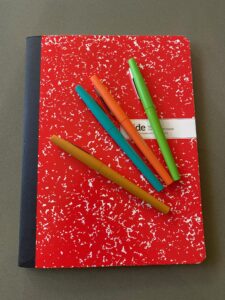
We began with lots of writing exercises. They were quick – less than five minutes for each prompt – and hand-written in notebooks. (I also brought a set of thin colored markers to make the writing more fun.) Apparently, this fast-paced format was crucial to unlocking the most visceral of memories; experiences that had a dynamic emotional impact on our lives and lurked just below the surface. I was amazed at what I remembered. Detailed anecdotes that had been buried inside me for years, even decades, were waiting to burst forth.
Many of the prompts Andrea used in the workshop came from the New York Times writing list “650 Prompts for Narrative and Personal Writing”: https://static01.nyt.com/images/blogs/learning/pdf/2016/650promptsnarrativewritingLearningNetwork.pdf. This list includes everything from Overcoming Adversity to Animals and Pets to Meals and Food and Friends and Family. It’s a fabulous resource for jump-starting your creativity.
So what gems did I uncover as I scribbled pages and pages of my memories in green, orange and turquoise? There were detailed descriptions of my family, my childhood neighborhood, the ins and outs of friendships over the years, favorite foods, games, family trips, toys, sports, hobbies, school experiences, and impactful teachers. Many memories focused on my mother who was the child of Hungarian-Jewish immigrants and a first-generation American. She was clearly determined to expose us to a myriad of experiences. These included a wide variety of sports, all the arts, warm family gatherings, musical holiday celebrations, delicious foods with a Hungarian twist, and a strong emphasis on doing well in school.
I also discovered hidden memories about summer camps I attended, concerts I went to, friendship issues, boyfriends, my biggest successes and failures, and why fall is my favorite season. Details about broken bones, having my tonsils out, visiting my mother-in-law every week in a memory care facility for three years, and how upset I am about gun violence in this country came pouring out of me. There were also many stories that revolved around raising my two sons and two golden retrievers here in Colorado.
After each prompt, we took time to share what we had written. Some people felt comfortable reading their entire pieces aloud, while others shared a quick synopsis. One thing became obvious from the get-go. These untapped memories were deeply rooted inside us and filled with emotion. Some stories made us laugh, while others caused us to tear up. And some were not for sharing at all. Not yet. The memories were too raw. But Andrea encouraged us to use these emotional memories in our stories whenever possible. She told us how she used her own family stories to create two of her most recent books: WATERCRESS (Neal Porter Books) and THE MANY MEANINGS OF MEILAN (Kokila). Her honesty and vulnerability were inspirational. But she also said you don’t have to write an autobiography to utilize these memories. You can integrate them into your settings, your characters’ flaws and problems, and your plot points. It’s the use of the emotional component of your memories that counts. This is what will keep your reader turning the page.
For me, the sharing of our stories was the most powerful part of the workshop. Everyone was so passionate about what they had experienced. And that clearly included me. Because the next day, a fellow attendee emailed me, suggesting I consider using one of the stories I told as my next book idea. And guess what? I’ve already created a detailed outline and written three chapters! That story was in me all the time waiting to be told and I hadn’t even realized it.
So dig in, fellow writers. Mine your brain for memories and start working on your next project. You never know what you might discover.
Other places to find writing prompts:
https://blog.reedsy.com/creative-writing-prompts/
https://thinkwritten.com/365-creative-writing-prompts/
https://www.writtenwordmedia.com/500-writing-prompts-to-help-beat-writers-doubt/
https://www.writersdigest.com/prompts
https://thewritepractice.com/inspiration/writing-prompts/
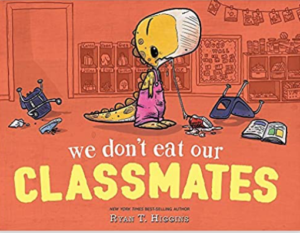 As an example of blurred genre in picture books, Saba recommended looking at Ryan T. Higgins We Don’t Eat Our Classmates. “It’s a totally unexpected dinosaur book, that funny, sweet, cute and is also a first day of kindergarten book.”
 My husband and son also volunteered to read the book, and I sent ten pages and a synopsis to an agent who was doing critiques at the RMC-SCBWI fall conference. The book was definitely stronger, but there were new elements that needed to be evaluated. I was too close to the story to know if they were working. While I waited for my readers to plow through the manuscript, I threw myself into another project.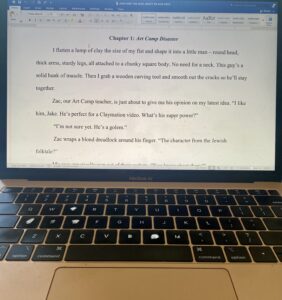
 Ever since I made the decision to become a serious writer, members of my family have asked me to edit their writing projects. I have said yes to college essays, business presentations, and even a Master’s thesis. But before I ever agree to do this, I always require the writer use one important self-editing tool – they must read their work out loud! They can read it alone in a quiet room or give a dramatic performance for the dog. It doesn’t matter, as long as they do it. This may sound like a common revision strategy to those of you who have been writing for a long time. But believe me, many people skip this step.

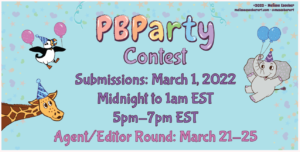
 Not everyone got a request, some got many. And this is where Mindy’s magic really shines. From those who never heard anything, to those who signed with agents and editors, to those (like me) still on the journey waiting to hear back to find out if their work will be picked up—every one of us felt like a winner. The Facebook community of past and present finalists was always there to answer questions, support, commiserate, and celebrate. To call PBParty a contest is not doing it justice. Mindy has achieved something far more difficult. She creates community. And that is truly something to celebrate!

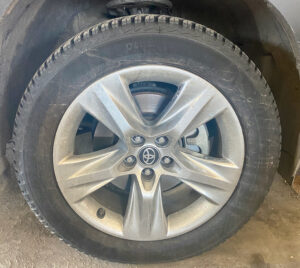 They’re apparently made of a softer rubber and have a unique tread that’s designed to literally push the snow out of your way. They sounded perfect, so we ordered them.


 Valentine’s Day was the official launch of a project near to my heart — the