Category Archives: Uncategorized

Finally, I Celebrated!

I finished. I was wildly happy. Exhausted. Exhilarated. Excited. It was 6:36pm November 30th and I had completed goals that I set November 1st: first draft of a new young adult novel (YA), another revision of my first YA (that I started six years ago), another revision of a new picture book. I didn’t know what to do. My fingers, arms and neck were sore. Take a bubble bath? Eat chocolate? Email my critique group? Call my husband?

I have finished works in progress before, but this time I felt different. Proud. Very proud. It marked the first time that I pushed through several projects simultaneously and kept at them even when it felt mundane, even when I felt incapable. It was a wild ride. Writing madness! Oh, I knew what I should do next – tomorrow. Revise and edit, then submit to my critique group; then, research agents, revise synopses and query letters. I’m grateful that I know the drill now, thanks to my critique group and other writer buds. They get it; I get it.

But, on November 30th, well, honestly, I felt a bit lost and freaked out. I saved all my documents, stretched, yawned, and walked around our house. Opened and closed the fridge. I wasn’t hungry. Opened the cabinet where we keep our chocolate stash. I didn’t even want a piece. My usual incentive-treats didn’t fancy me. I started humming Lionel Richie’s, “Oh, what a feeling, when we’re dancing on the ceiling.” I skipped into our living room. I felt a rush of giddy. Very giddy.

Then, I sang, “What a feeling, bein’s believing,” from What A Feeling (Flashdance movie theme song). I “YouTubed” it. Turned on the stereo. All connected. Volume up. I swayed and sang, “First when there’s nothing, but a slow glowing dream…” I turned the volume up more. The dance floor was all mine!

I moved slowly. Turned on a lamp. And then, I stomped, spun, sang, shook my head up and down, waved my warms up high, clapped, made up dance moves… My steps sped up when I sang (really loud), “Take your passion, and make it happen.” I teared up; I laughed. I couldn’t stop. I played it over and over, and kept right on dancing. I cranked the volume more.

I recalled my first apartment after college when I was working as an editorial assistant. I would play my Flashdance soundtrack cassette tape on my clumsy tape recorder and dance all over my apartment. I would imagine being a writer. Some day. Wow! Awesome coincidence.

I fired up song after song and kept dancing. Happy, I Love Rock And Roll, Walking On Sunshine, Footloose, Born In The U.S.A., We’re Havin’ A Party, Everybody Needs Somebody To Love, Ho Hey, Rolling In The Deep, Roll With The Changes, I Will Wait, Get The Party Started, On Top Of The World.

My dance party lasted 1 ½ hours! I had no idea till I stopped to wipe the sweat off my forehead. I had a blast. FINALLY, I celebrated. I’ve heard writers talk about take time to celebrate, but honestly, I wasn’t sure what that meant. I admit, I thought that I had to wait till “that” day when an agent accepts. Forget that! From now on, I am celebrating every finish – big or small. Perhaps, I can start a playlist for writers!

1 Comment

Filed under Uncategorized

The Journey from Idea to Publication: Writing “Explorations in Science”

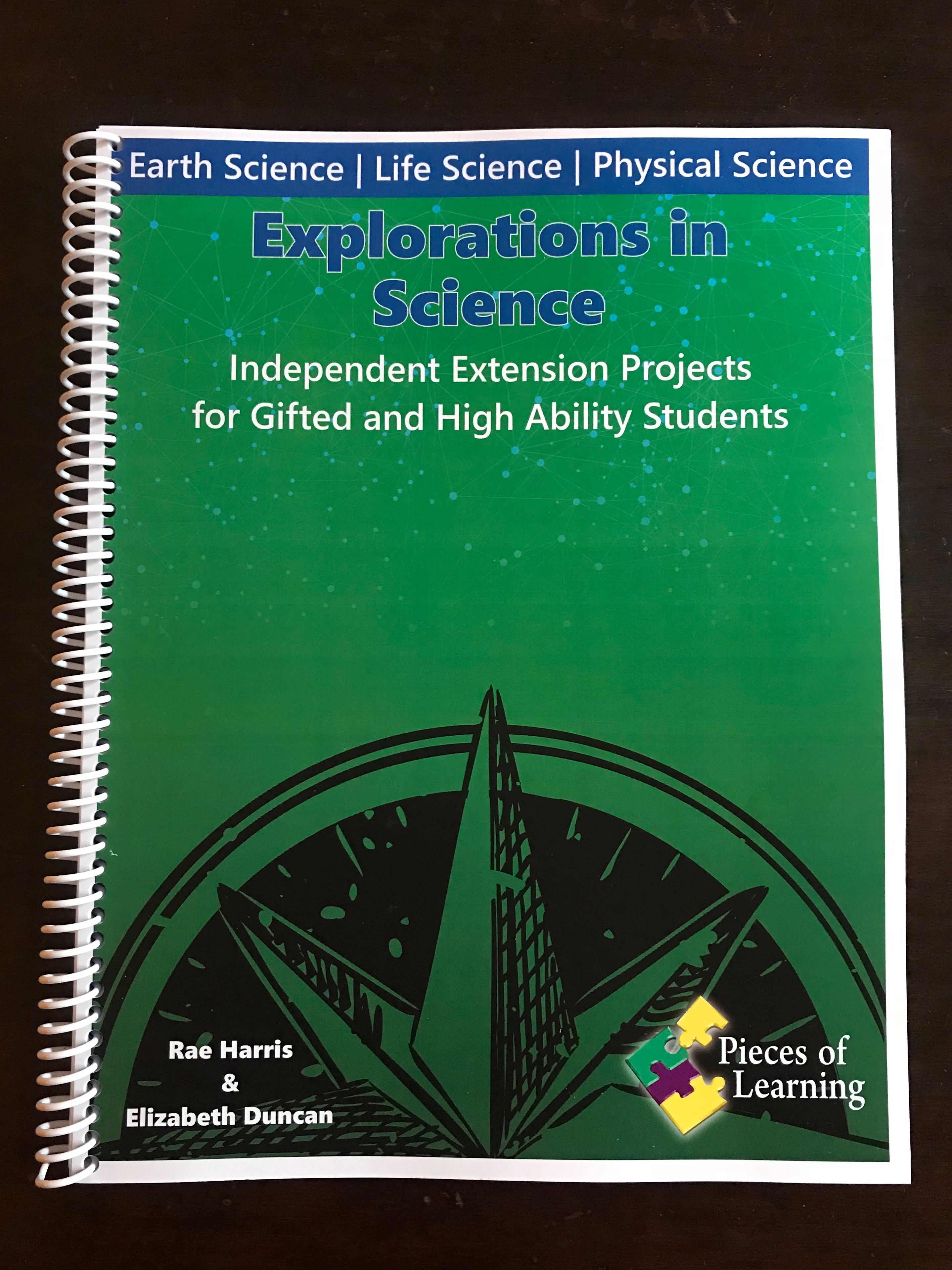
I am pleased to announce the publication of Explorations in Science: Independent Extension Projects for Gifted and High Ability Students. The book will help teachers differentiate instruction in their classrooms for their advanced learners. A companion volume, Explorations in Social Studies,is due out in January.

Gifted education was my specialty during my teaching career. I worked directly with small groups of gifted and high-ability students, as well as functioned as a resource for teachers who taught in mixed-ability classrooms.

Gifted students have abilities that place them in the top 10% of the population and their needs are often overlooked in a one-size-fits-all educational climate. These students are expected to sit through the presentation and review of information that they already know or that they learn very quickly.

To address this problem, over the years I developed extensions of curriculum that advanced students could work on independentlyduring class, while the teacher and other students in the class were involved grade-level instruction or review. I found these worked well to keep advanced students engaged in school and excited about learning. These were the genesis of Explorations.

My colleague, friend and co-author Rae Harris and I thought these kinds of projects we had developed at our schools would be helpful to teachers and welcomed by students. After much thought, we started to call our projects “Explorations.” We knew there were few, if any, resources that were similar to what we wanted to write.

We contacted a publisher of gifted and talented resources and proposed our idea. We included some sample Explorations and the many reasons we were qualified to write thisbook. “Pieces of Learning Press,” a leading publisher of gifted and talented materials, wrote back saying, “We like it!” A contract, reviewed by our legal team (our husbands), was promptly signed. Then we went to work.

Consulting the NextGen Science standards, we determined the curricular topics we needed to cover. The science standards led us to divide the book into three sections: Earth Science, Life Science and Physical Science. We decided that ten Explorations per standard would allow teachers and students ample choice. Our Exploration topics would include topics like volcanoes and space, endangered animals and human body, and electromagnetism and light waves.

Rae and I designed a teacher and student-friendly, two-page format that focused on interesting topics that extend the science curriculum for 3rd-6thgrades. We wrote each Exploration with an educational focus, complex and rigorous important questions, several creative project options and a structured project completion tasks. We dreamed up all the extras we knew teachers would need, like student directions and evaluation rubrics, and created these as well.

Over the course of several months, we met weekly at our local library work on the book. We delved into topic areas and explored resources. I immersed myself in each topic, researching (for example) physical scientists and their theories, the newest missions in space or alternative energy sources. The best part was thinking up the creative projects that were challenging and interesting, as well as do-able by a student working independently in a classroom.

We did final edits on the book and it was submitted. We received and reviewed the proof and found a surprising number of errors. We corrected the proofs, got a second proof… it was getting there… more corrections, then it was finalized. We were excited to get a peek at the cover and back of the book in an email.

Finally, it was done and we held a copies of the finished product in our hands. And, it is ready for the publisher’s booth at the National Association of Gifted and Talented (NAG/T) annual conference, which starts today in Minneapolis.

I imagine my book, Explorations in Science,finding its way into the hands of teachers in a variety of settings- in a large urban classroom or a small rural school or a homeschool table. I picture students, like Trevon or Katie or  Maria or Edwin (real people I have taught) connecting with learning at a deep level while working through an Exploration. It is my great hope that my own creative work and ideas will make a difference in the education of a child.


2 Comments

Filed under E. E. Duncan, Elizabeth Duncan, Uncategorized

Terrific Terrifying Titles for Halloween

Looking for the perfect Halloween picture book to get your little goblins and ghouls ready for the holiday? I stopped by my local bookstore to see what was on the shelf. There is no small supply of hauntingly good spooky stories (but not too spooky). Here are a few of my favorites.

You remember the classic, Goodnight Moon? The Halloween sister title is Goodnight Goon. Saying goodnight to all of the things you’d expect to find in a dark and dreaded dungeon, will be the perfect bedtime story for all of your little monsters.

If you have little mummies who aren’t ready to say goodnight, they would love to have one last game of hide and seek with mommy mummy. One brave baby mummy isn’t afraid of the things that go rattle and shake in the dark. But, what happens when mommy mummy finds the perfect hiding spot? Will baby mummy still be brave?

Readers beware: you think you know what you’re getting into when you start reading Creepy Carrots, but looks can be deceiving. Baby bunny is trying to keep those creepy carrots trapped. But who set the best trap of all?

One good book deserves a squeal. If you couldn’t get enough of Creepy Carrots,  then your little pumpkins  may also enjoy Creepy Pair of Underwear!  The brave little bunny is back and this time he’s battling creepy underwear.  Just like with the carrots, he has a plan for the underwear.

What are your favorite Halloween titles?

Leave a Comment

Filed under Uncategorized

Recharging my creative juices, accidentally

It started out as a search for notes from a workshop that I attended this summer. I wanted to re-read something that I was certain would rescue me from feeling like my revising had gone flat and dull. But, instead, I found notes from other summer workshops. I poured a cup of java and went through my notes – for days. Stepping away from my keyboard and allowing myself to be a student was exactly what I needed!

Here’s what I learned:

Black hole: The moment in a novel when everything collides; the worst moment for the main character.

The Captain Happen character: The troublemaker, narrative enabler, change agent and shaker-upper who directly influences the protagonist’s journey. MG and YA fiction is full of Captain Happens. Examples: Gus in THE FAULT IN OUR STARS, Lara Jean’s friend Chris in the P.S. I STILL LOVE YOU series.

A character’s psychic wound: Explained by YA author Sara Jade Alan at Lighthouse Writers Workshop, “a psychological blow that strikes/struck a character in childhood. It may be part of the inner workings of your main character, such as Harry Potter’s loss of parents…something an adolescent main character attempts to work out and causes h/her to make misjudgements.” These misjudgements are great for building complexity into the character’s inner and outer life, plus characters with psychic wounds engage our sympathies.

Evergreen articles: Stories that are timeless, always relevant and stay “fresh” forever – much like the way evergreen trees retain their leaves all year around.

Flash fiction: Also called short shorts and postcard fiction, it is a very short, super-concentrated story ranging from one sentence to 1,500 words. The writer quickly gets into the story, establishes setting and character, sets up the conflict, fills in critical backstory, and then heads faster than a speeding bullet toward the climax and resolution. Aesop’s Fables are considered the oldest flash fiction.

Heart and re-readability factor: Explained by Sylvie Frank, Senior Editor at Paula Wiseman Books, Simon & Schuster at a SCBWI workshop: “We talk all the time at editorial meetings about this (heart)…that a picture book manuscript that we’re reading fits everything – good writing, plot, etc. – but it doesn’t have heart, doesn’t raise a question, doesn’t leave a kid thinking about something, wondering… We call it heart; we call it theme, the so-what, and, we also call it the re-readability factor. It’s not enough for a picture book to have a good character and plot. For someone to fork over $16.99 for it, they have to feel confident that the book will be worth reading over and over. Each time that book is read, the reader should find deeper meaning and more nuanced characters.”

High concept book: The premise of this type of book will get attention before anyone sees even one word of your writing. A title alone can be high concept. Example: Gallagher Girls series by Ally Carter. The title of book #1 alone is high concept – I’d Tell You I Love You, But Then I’d Have to Kill You.

Logline: A 1-3 sentence description of the story arc and themes that pique interest and leave an agent wanting to know/read more. Shorter is better. Explained by children’s author Julie Hedlund in a SCBWI webinar, “a logline should be the second paragraph of your query letter and concisely answer: who is the hero and what does s/he want, who or what is standing in their way, what is the takeaway or theme?”

Mentor texts: Books that writers study with a purpose to inform their own writing. Explained by children’s author Denise Vega, “I have a very specific process for using picture book mentor texts. First, I look at the type of book I am writing – narrative (character with a goal/problem) or non-narrative (story does not have a protagonist with a goal/problem). Next, I look for books that are similar not only in type, but in tone – humorous, warm, silly, etc. With a narrative, if my character has a growth arc, I look for books like that.”

 Pressure cooker: Explained by author Rebecca Makkai at Lighthouse Writers Workshop, “Build a pressure cooker for your main character and others. Put your character in uncomfortable situations, put h/her through their worst fear and you’ll see what your character becomes capable of by the end of the novel. Look for ways that your character is shocked by their own actions. Go into your main character’s thought process, which is different than going into their thoughts.”

 Theme: It is the juice of the story, our why, the electricity of our story, our elevator pitch. According to children’s author Sarah Aronson, “it’s when I am connected to ‘the why’ behind my story, then my character knows where to go.”

Writer’s doors: Defined by author Eleanor Brown, “Writers come into their story through three doors: plot, character or theme. It’s helpful to identify which way you enter, access your stories. That door is your writing strength.”

Writer’s perception: Defined by YA author Lowry Pei, “it is habits of mind, like being on alert for details, close observation, curiosity, ability to get intrigued, readiness to be engrossed. A writer needs to be receptive to strangeness…willing and able to see the unexpected, to put aside your habitual expectations about the world around you. Rather than perceiving what you “know” (i.e., assume) is out there, you perceive with the assumption that you don’t know all that is out there.”

Perhaps, I need a class on getting organized. Nope. I’d rather enjoy the search, the randomness, and the discovery. I love the spontaneity of re-creating workshops in the comfort of my studio.

3 Comments

Filed under Uncategorized

Lunch With Author Lois Lowry

Lois LowryI recently had the opportunity to have lunch with Lois Lowry … along with 1,184 other participants in the 2018 Society for Children’s Book Writers and Illustrators (SCBWI) Summer Conference in Los Angeles. For me, it was the highlight of the conference.

For this lunchtime conversation, the 81 year-old author was seated in an oversized easy chair set on the stage and interviewed by Lin Oliver, founder of SCBWI. Their discussion was broadcast on two gigantic screens and Lois’s face filled the banquet room. With her pale blue eyes, short-cropped white hair and intelligent, no-nonsense demeanor, she commanded that attention of everyone in the room. Over mass-produced conference salads at large round tables, the experience was surprisingly intimate.

Lois, of course, is the beloved children’s book author of over 40 books, who won the coveted Newbery Award for Children’s Literature … twice! Those two books were ground-breaking and changed the landscape of children’s literature forever.

Number the Stars LowryNumber the Stars(1990) was one of the first novels for children about the Holocaust. Set in Denmark in 1943, an ordinary 10 year-old child, Annelise, finds her life transformed by Nazi occupation and rises to heroic heights when she helps to save the life of her Jewish friend.

The spare, simple language transports elementary school readers to imagine themselves in untenable situations and to dream that they too can be heros. As a teacher, it was one of my all-time favorite books to use in my classroom. I watched my young, gifted students read the book and connect with history and learn about the realities and consequences of war. “Number the Starsis about the role we humans play in the lives of others,” Lois said.

The Giver LowryThe Giver(1994) changed adult ideas about the topics that could be explored in children’s literature. The first dystopian future novel for children, it imagines the terrible underlying darkness of a seemingly perfect world in which there are no memories and emotions. Her character, Jonas, unveils the lies and manipulation, and escapes the community, while saving an “imperfect” baby.
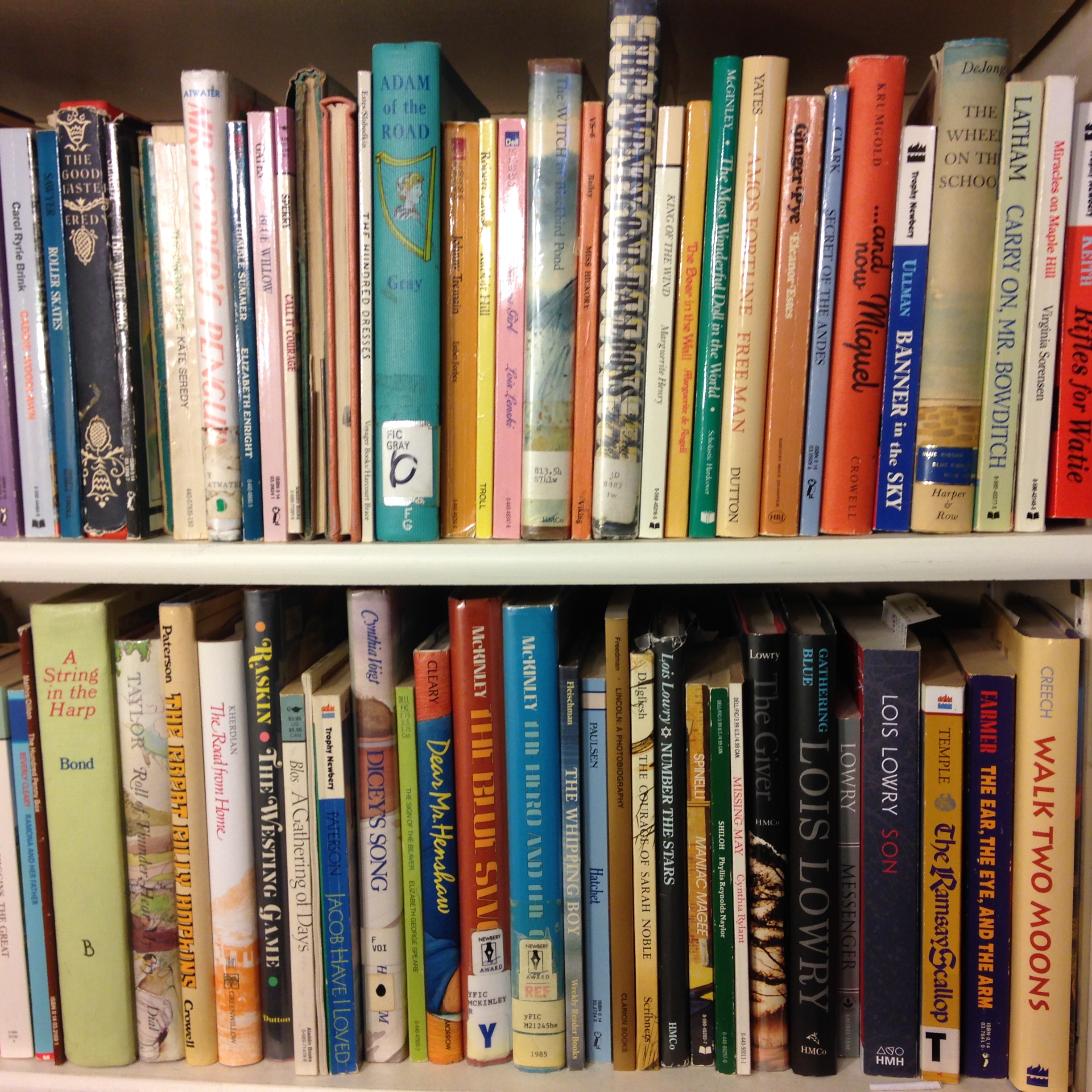
Lois explained the genesis of the book was her own father’s struggle with memory loss. “I began to think about writing a book about people who have found a way to manipulate human memory, so they don’t have to remember anything bad.”

The Giverhas become a classic, selling millions of copies worldwide and placed on the required reading list of schools. It also remains high on the list of most challenged or banned books, although Lois mused, “I still wonder what they are so upset about.” She believes The Giverspeaks to readers of the fundamental interdependence of people with each other, their world and its environment.

So how did a college dropout and 1950’s housewife end up being the agent of tremendous change in the publishing world? Lois was enrolled in the writing program at Brown University, but she quit, like so many other women of the era, to get married at age 19. By the time she was 26, she was the mother of four children. She started writing again at age 40, when her marriage ended. “I started writing for children because I needed a job,” she explained.

Lois is known for writing about difficult subject matter in her work for children. Her first book, A Summer to Die(1977), was a semi-autobiographical novel about the death of a child. Her own older sister died of cancer at a young age. Many other books followed, written for children of all ages and with varying degrees of seriousness.

When asked if she ever planned to write an adult novel, Lois quipped, “That’s like me asking a pediatrician, “When are you going to get a real job and become an internist?”

Lois spoke about her next book, Gripped,due out in 2020. Focusing on the connections between people, the book is about how she and fellow Newbery winner Allen Say crossed paths as children in post-war Japan. Always the storyteller, Lois mesmerized the audience with her dramatic retelling of part of the book, which ended with a collective gasp from the audience. “This new book is more about human connection than any other I have ever written,” she said.

Lois believes all her writing is about “connection” and that is the key to her success as a children’s author. “If I had to choose one word, it would be intimacy… me flowing through the character and connecting with the reader.”

At its heart, Lois Lowry’s writing is about kids making sense of a complicated world. It is what all writers of children’s books aspire to do. She is a master of creating intimacy, whether in her writing or at lunch with me and 1,184 other writers.

2 Comments

Filed under Uncategorized

Books Made into Movies

My kids read, but during the summer they aren’t as motivated because it’s no longer a required school activity. I’ve found myself having to poke, prod, and plead with them to read each day. Until I remembered when the movie Ready Player One came out. My oldest spotted the book on a shelf at the grocery store and begged me to buy it so he could read it before going to see the movie. I bought it because he seemed interested, however the movie was set to release within one week and the book is 579 pages. He was determined to finish by the premiere, and he did. Not because I begged him to or because it was an assignment, but because he wanted to.

Some kids are natural bookworms and devour books, but mine aren’t as inclined if they don’t have some kind of buy in. What’s a mom to do? Inspired by the Ready Player One anecdote, I’ve tried to find more books made into movies. It gives them motivation to read other than their mother bugging them each day.

In the end, I want my kids to grow up and enjoy reading and seek to do it of their own freewill in whatever subject interests them. I’m able to tap into that motivation with books made into movies. My oldest is currently reading and watching his way through the Harry Potter series. For his younger siblings, we have the entire collection of Wimpy Kid books. Lucky for me, some picture books have also been made into movies too. Kids in my house at every age can enjoy a good book and a good movie.

What is your favorite book made into a movie?

1 Comment

Filed under Uncategorized

Writing Longhand

Growing up, I couldn’t wait to get home from school. I would open my top dresser drawer, pull out my spiral notebook and pencil, and write up a storm. My notebook was my adventure, my friend, my secret. I would whip up poems, create characters, record conversations that I overheard at school… I couldn’t keep up with my ideas and thoughts.

I still write longhand – first drafts, dialogue, revisions, plot twists, etc. Writing longhand sparks me, holds my attention, helps me think, and keeps me away from email! Some neuroscientists suggest that writing things out by hand can boost your cognitive ability. Studies have shown that writing longhand stimulates a bunch of cells at the base of the brain called the reticular activating system (RAS). The RAS acts as a filter for everything your brain needs to process and helps you hone in on the present moment.

“Handwriting isn’t just on the wall,” says Henriette Anne Klauser, PhD, author of Write It Down, Make It Happen, “it’s in the RAS that helps direct your attention. Handwriting triggers the RAS, which in turn sends a signal to the cerebral cortex: ‘Wake up! Pay attention! Don’t miss this detail!’”

According to Yale psychologist Paul Bloom, there might be something to this whole writing longhand thing. “The very act of putting it down forces you to focus on what’s important. Maybe it helps you think better.”

Authors talk about writing longhand

I buy a special notebook and write down my character and idea. Then, I write an entire chapter outline and the first draft in the same notebook. Each book gets its own notebook. –Erin Entrada Kelly, HELLO, UNIVERSE (2018 Newberry Medal) 

Whenever I got stuck, no matter what I was writing, I turned to paper and pen. And almost every time, the writing was better than what I’d struggled to generate via the keyboard. –Carmelo A. Martino, PLAYING BY HEART

…sometimes it’s nice to write longhand for the change of pace and to get my eyes away from a screen. Plus the sound of a pen scratching across real paper is very satisfying. —Silvia Acevedo, GOD AWFUL LOSER

I still keep a journal…it’s often the first place that the idea for a new story or poem occurs. Because I don’t have any particular rules about writing in my journal, sometimes I’m surprised by what shows up! —Kathi Appelt, MAYBE A FOX

For novels, I write longhand. I like the whole first and second draft feeling, and the act of making paper dirty. Often I use two pens with different colored ink, so I can tell visually how much I did each day. —Neil Gaiman, THE GRAVEYARD BOOK (2009 Newberry Medal)

As I write a story, I have to be open to all the possibilities of what these characters are thinking and doing… For me, the best way to do this is writing longhand, the way I write the early drafts of a novel. Writing by hand helps me remain open…to all those little details that add up to the truth.Amy Tan, Sagwa, The Chinese Siamese Cat 

If you’re having trouble writing, well, pick up the pen and write. No matter what, keep that hand moving. Writing is really a physical activity. Handwriting is more connected to the movement of the heart.–Natalie Goldberg, WRITING DOWN THE BONES: FREEING THE WRITER WITHIN

I know it’s quicker and more convenient to type notes and ideas into a cell phone or iPad. But, I’ve discovered that paper is everywhere! (Yes, it’s part of the adventure for me.) When I got the idea for this blog, I sat in my car and scribbled out the first paragraph on the back of two grocery receipts. Spiral notebooks are still my favorite. I use green Mead wide-ruled, 70-count, and I fill every inch, including the inside of the front and back cover.


1 Comment

Filed under Uncategorized

Child-Testing Your Work

By Rondi Sokoloff Frieder


During my revision process, I try to read my works-in-progress to actual children. These willing guinea pigs have mostly been my loving sons and adoring first graders. Unfortunately, their reactions are often overly positive. “What’s wrong with those editors, Mom? Your story is awesome!” or “I loved it, Ms. Rondi. It was so funny!” And although these comments make me feel great about my writing, they rarely help me improve my books.

But this year, I had two “constructive” experiences. The first one happened when I asked a writer friend if she’d be willing to critique my middle-grade novel. She said yes, and then wanted to know if she could share the book with her eleven-year-old daughter who was extremely interested in my novel’s time period –World War II. I said yes, but knew better than to expect a great deal of useful feedback. Still, I printed out a hard copy of the manuscript, came up with a page of questions for her to answer, and dropped the binder off at their house.

In a little less than a week, I received an email from my young reader. “Hi Rondi! Is it okay if I write on the manuscript?” This was encouraging. It sounded like she was really digging in and taking the critique process seriously. I wrote back and told her I welcomed her comments and to write away. But deep down, I was a little worried. She was only at the beginning of my book and already making notes. Was it in worse shape than I thought?

In a few weeks, I got an email from my friend saying that although she still needed more time with my pages, her daughter had completed her critique. “She couldn’t put the book down!” were the exact words. This was good news, right? You didn’t zip through a boring book. But I could be wrong. She could have gotten all caught up in the editing process and ripped my words to shreds. All I knew was that the manuscript was ready to be picked up so I dashed to the store, bought a thank-you gift card, and drove to their house.

When we sat down in the family room together, I opened the black binder, not knowing what to expect. Here’s a sample of what I found:

        1.The names of these two characters confused me. You should think about changing them.

       2. How is this person related to the main character? You should tell us right away.

       3. We met this character in chapter 1 so you should change the name of chapter 2.

       4. You should explain this earlier in the story.

       5. You use some big words here that readers may not understand.

I was blown away. Her comments were sophisticated, specific, and helpful. She had taken the time to think about the nitty gritty details of my story and give me suggestions on how to make the book stronger.

There were also thoughtful compliments:

  1. I like how you added an author’s note so I knew the story was based on your mom’s life.
  2. Thanks for adding a glossary so people will know what the Yiddish and Italian words mean.

And last, but not least, the accolades:

  1. This book rocks!
  2. Great job!
  3. This is one of the best books I’ve ever read!

This young reader had turned out to be a fabulous editor! She was well-read in my genre,  the same age as my protagonist, and didn’t know me well enough to worry about pleasing me. But more importantly, she had taken her job seriously and given me an honest critique with positive overtones. It was a winning combination.

The next opportunity to “child-test” my work came when I was invited to do a lesson on “Creating Interesting Characters” in a second grade classroom. Before I read my first chapter to the students, I had their teacher (my former first grader!) interview me as my main character. I had modified the list of questions I often use myself. This immediately drew the children into the life of my protagonist, especially when I tried to sound like an eleven-year-old! And although they were an attentive and engaged audience, I instantly became aware of some glaring problems in the manuscript. There were places where the dialogue was too long and sections with excessive narration and not enough action. I made notes, immediately. But here’s the best part… when I finished reading, their hands shot up and the questions flew. “What happens next? Does Shirley get to sing on the record? Is the new boy a bad guy?” They were hooked. I knew I still had work to do, but the foundation of my story was undeniably solid. “Well,” I said, smiling. “When the book is published, you’ll just have to read it and find out!”

Have you had similar experiences when sharing your work with children? If so, we’d love to hear about them!

5 Comments

Filed under Uncategorized

Plug-Ins, Widgets and Jet Packs

Okay. I get it now. There’s more to being a writer in the 21st century than just writing. If you really wanna make it, you gotta have your “online presence,” your “author platform,” a fancy-schmancy website and up-to-date, clever blog. You need to identify your “target market” and “target audience” and be “discoverable” by current and potential “readers” and “industry figures.” Through your web presence, you need to create “connections” and be “accessible,” as well as be “a source of inspiration and motivation.” You need to “create,” “grow” and “maintain” your “fresh and engaging” author platform.

Oh dear. I just wanted to write children’s books. I thought that my wonderful books would speak for themselves. I believed that my focus should be on my creative process and telling the stories that have floated in my head for years. I wanted to be discovered by a publishing company who would nurture my image and take care of all those tiresome details. It could happen… right?

Nope. Not anymore. In today’s publishing landscape writers apparently need to be on top of their online presence almost as much as they need to be on top of their writing. Or so I am told. So what’s a writer to do?

I did what anyone else would do. I went on the internet. Just like my “target audience.” I learned what current and potential readers, agents and publishers expect from an author in this digital age. I acquired a whole new vocabulary related to creating a web presence. I consulted a website developer to help me get oriented and begin. Exploring and analyzing the author platforms of both successful and unknown children’s writers helped me see possibilities and what works for them. I registered for a class on website design. My own tech-friendly children and colleagues gave me advice and I started to figure it out.

As I involved myself in the process, I started to believe that this might even be a good idea. Surprisingly useful. Kind of interesting. Possibly even … exciting?

So, I am now in the process of creating that all-important author website. I am finally putting to good use a domain name that I claimed years ago. I have a “theme” and an outline for my “pages” and the draft content for each page and sub-page. I’m learning about “plug-ins” and “widgets” and “jetpacks.” Yes, jetpacks!

Soon, I’ll move onto mastering social media. Facebook (no problem), Instagram and Pinterest (sure, why not?), YouTube (well, maybe), and Twitter (maybe not!).

While I would rather be spending my time just writing, I have come to appreciate the creativity and purpose of this process too. It has forced me to think deeply and differently about my writing. I am beginning to know how I want to present myself to the wide, wide world that can be accessed with the touch of a button. The idea of such immediate access is challenging and important. I’m focusing on the ways I can reach and interact with my readers and am considering what they might want from me. I want agents and publishers to know that I can contribute to my own success. Embracing the idea of a web-presence will enable me to connect to the world ways that would have been impossible a generation ago.

And using a jet-pack, even a digital one, is really, really cool.


Leave a Comment

Filed under Uncategorized

Character Driven Picture Books

By Denise Schurr

I recently visited the children’s department at my local Barnes & Noble and found a whole wall dedicated to famous book characters. Classic titles as well as more recent ones lined the shelves and I stopped to get acquainted with a couple.

Ellie by Mike Wu puts a new spin on the dilemma of wanting to help, but not knowing how. Ellie and the other animals at the zoo want to help clean up in a last ditch effort to keep the zoo doors from closing for good. Every animal has a special talent they put to use, everyone except for Ellie. Until, she finds a paint brush and adds some amazing artwork which brings crowds of people. I love the message for young kids. So often children want to help with big or small projects but they don’t know how. It’s important to show them they don’t have to be big to help or even have a special talent. Showing up, pitching in, and having the desire is what makes a difference.

Thelma the Unicorn by Aaron Blabey is a timely story of a horse who thinks her life would be better as a unicorn. When she is given the opportunity to disguise herself as a unicorn, she finds that being a unicorn isn’t as magical as she thought it was. It’s easy to think that if we were someone else, lived somewhere else, had other circumstances, our life would be perfect. But, the grass isn’t always greener on the other side and there are people in our lives, who love us for who we are right now. All you have to do, is you.

If I had more time, I would have loved to read more. Who are your favorite children’s book characters of new or old?

Leave a Comment

Filed under Uncategorized