
Category Archives: Rondi Frieder

“JUST DO IT AGAIN!”

I’m so happy to be here with YOU!

Finally… I’m meeting you in person!

I can’t believe it’s been over two years!

 In April of 2023, I started a two-month online class through the Highlights Foundation called “JUST DO IT!” led by the amazing Sarah Aronson and Chris Tebbetts. (To read more about this, check out my post: https://www.rondibooks.com/just-do-it/.) The goal of this course was to be part of a collaborative support group to finish our draftsThere were weekly meetings on Zoom that provided us with tools to do this, as well as inspirational talks by Chris and Sarah, and the occasional guest speaker. We were also encouraged to participate in weekly word sprints by joining an accountability group. Needless to say, everyone in this group was determined to “get it done.”

And many of us did. I wrote 24,000 words. I didn’t finish my draft, but I made a lot of progress. I also amped up my writing practice, connected with kindred spirits, and wrote half a middle grade novel. But how was I going to finish the second half? The workshop was over. My daily support group and accountability team were gone. After speaking to other class members who felt the same way, we decided to keep going.
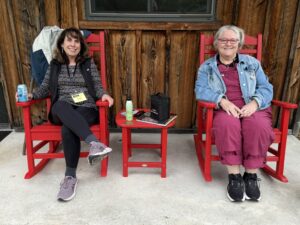
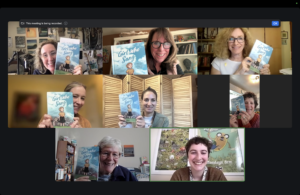
Luckily for us, Dale Marie Bryan (a fellow “Just Do It!” participant and now my dearest friend) kept us on task. Dale organized morning writing sprints, afternoon writing sprints, once a month read-alouds and a goal-setting googledoc. The read-alouds not only helped us revise, it also enabled us to truly get to know each other’s work.

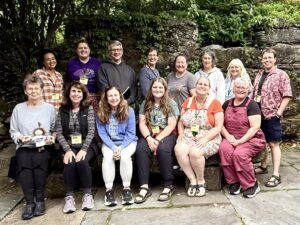
Chris and Sarah attended many of these sessions and often wrote and read right alongside us. They also offered more “Just Do It!” classes and continue to host inexpensive monthly online sprints. (For more information about these, message Chris on FB.) We also invited the next group of “Just Do It” graduates to join us for sprints and read-alouds. And after two years of meeting online on a regular basis, we have definitely bonded. So much so, that when Chris asked if any of us would like to attend a writing retreat at the Highlights campus, fourteen of us said  ABSOLUTELY YES!

At first, I didn’t think I could go. It’s quite a shlepp from Colorado to Honesdale. But the stars aligned. I was already going to NY the week before for my niece’s bridal shower. After spending a few extra days visiting family and friends, I rented a car and drove to Pennsylvania.

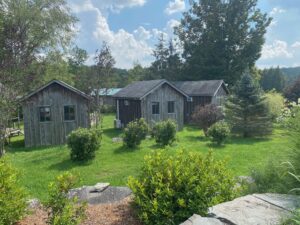
Spending time at the Highlights campus is always magical. Just ask anyone who’s been there. With the idyllic wooded setting, the cozy cabins, and the delicious farm-to-table cuisine, you can’t go wrong. This was my third time. However, the other two workshops I attended were mostly with people I didn’t know. It took a few days to connect and build trust. Gathering with the “Just Do It!” crew was a totally different experience.
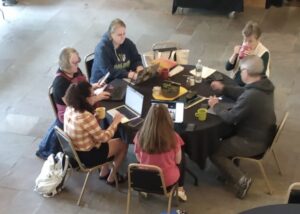


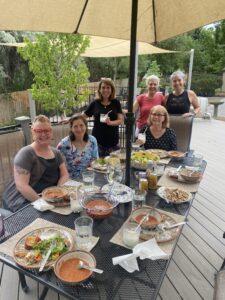
The minute I arrived, I felt like I was at a family reunion. Or a getaway with camp or college friends I hadn’t seen in a long time. There were hugs and exclamations of glee. And after the initial thrill of finally being together in-person, we immediately got to work. Because that’s what we do when we’re together – WE WORK ON OUR STORIES!

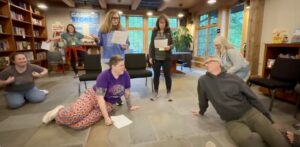
And there was more. Sarah offered inspirational talks and morning yoga. Author/illustrator Daria Peoples joined us and did an art exploration. Chris asked if we’d like to workshop our manuscripts “theater-style” in the evenings. This entailed printing out 500-1000 words of a manuscript that contained a great deal of dialogue. We made multiple copies, highlighted (pun intended) individual parts and passed out the “scripts.” After an initial reading, people were assigned a role and got up and acted out the scene. Wowwy kazowwy! We were able to see our work in a totally different way. Some scenes needed more movement, heightened action, deeper emotion. Others needed a bit more description or a transition or two. We were all mesmerized by this exercise. We gasped at the dramatic pieces and laughed hysterically at the humorous ones. What a great editing tool! If you’d like to participate in one Chris’ future workshops, check out this link:https://www.theatercampforwriters.com/
I have to say, except for bidding farewell to the ridiculous number of ticks that had recently burst onto the scene, it was sad to leave. Sort of.  We were heading home, but we also knew we’d be seeing each other again online the following week. Because the “Just Do It!” community is unstoppable!
If you’d like to take Chris and Sarah’s class, the next one starts in October. https://www.highlightsfoundation.org/workshop/just-do-it-your-collaborative-support-group-for-finishing-your-draft-fall/.

And by the way… I did finish my manuscript. Stay tuned!


1 Comment

Filed under craft advice, critique, Motivation, REVISION, Revision process, Rondi Frieder, Uncategorized

THE GIRL WHO SANG

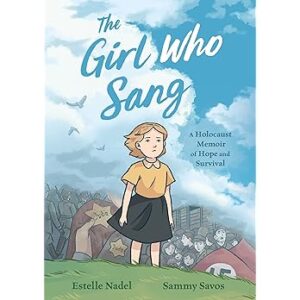
Last year in November, my dear friend Estelle Nadel passed away. She was about to turn eighty-nine-years-old. In January of 2024, only months after her death, her graphic novel memoir, THE GIRL WHO SANG, came out into the world. This saga of Estelle’s (Enia in Polish) traumatic childhood as a young Jewish girl in Borek, Poland during the Holocaust, is moving, heart-wrenching, and powerful. And the story is greatly enhanced by the drawings of illustrator and storyboard artist, Sammy Savos.
Estelle’s story is one of life-threatening events, narrow escapes, and compassionate neighbors. She told it many times – in schools, on the news, and ultimately for the Steven Spielberg’s Survivors of the Shoah Visual History Foundation. She cried during every presentation. She couldn’t help it. Her life had been so difficult. But she was driven to keep going and often said, “People need to know this really happened… and that it happened to me. I have to do it now because I won’t be around forever.”

I was so happy when Estelle told me she had found both an agent and a publisher. I also told her that publishing a book, especially one with illustrations, could take years. At first, she wasn’t sure about it being a graphic novel. She didn’t want the illustrations to minimize the seriousness of what had happened to her. But her agent and editor felt like this was the best format to use in order to get her story into the hands of young readers. And after seeing the final product, I totally agree.

Last month, Estelle’s illustrator, Sammy Savos, did a Zoom presentation for one of my critique groups. I had been communicating with Sammy via email for many months and trusted that she would give us a good sense of her process. I hadn’t met Sammy in person or even spoken to her on the phone. Still, her heartfelt and appreciative correspondence made me think we were in for a treat. And boy, was I was right. Sammy’s talk was INCREDIBLE.

For a group of mostly kidlit writers, seeing and hearing about Sammy’s illustration process was mind-boggling. Not only did it take four-and-a-half years to complete the book, Sammy’s attention to detail was unprecedented. She had a very personal story to tell with many emotional components. Estelle’s father, sister, and one of her brothers were taken to Auschwitz and murdered. Her mother was shot in front of their small farm house. Estelle (Enia) and her one of her surviving two brothers were put in a jail cell as young children. They miraculously escaped and found their way to a neighbor’s house. That neighbor not only took them in, she hid them for over two years in the attic of her barn. And even when the war was over and Estelle and her remaining family members were liberated by the Russians, she still wasn’t safe. She and her brothers were taken to a displaced persons’ camp in Austria. But after a soldier heard Estelle sing, she and her brothers were given passage on a ship to America.

Sammy did an amazing job capturing Estelle’s life in Poland, giving particular attention to the buildings, clothing, and facial expressions of family members. She took great care in choosing the proper color palette to give the story a realistic tone. She made sure all the characters were proportional to one another, wore the proper clothing, and kept detailed notes about the timeline of events. Many of her drawings were inspired by the few photographs Estelle had from her childhood, and from her subsequent trips to Poland. Other information was gleaned by Sammy’s own meticulous research.

But most importantly, Sammy wanted to get the story right. She wanted to honor Estelle and her family, by getting the emotional and factual information as true as possible. She wanted young readers to learn about what had happened to Jews during the Holocaust by learning about a real person who had experienced it. Estelle and Sammy never met, but Sammy would often confer with Estelle by phone. And through it all, they developed a close bond. Sammy is in her twenties, Estelle was in her eighties. But the two connected as if they were related. As it turns out, members of Sammy’s family lived about an hour away from Estelle’s hometown of Borek, Poland before they came to America.

Estelle loved to sing, and I had the privilege of singing with her in our synagogue’s choir for many years. Whenever we were together, she always made time to ask me about my family and how I was doing. Despite her traumatic childhood, Estelle remained positive, active, and compassionate. She went on yearly trips to Poland where she participated in The March of the Living. She, and the grandson of the neighbor who had hidden her, gave talks in Polish schools about what had happened during the war. But her biggest claim to fame, Estelle’s signature line was telling everyone she cared about that she loved them. She didn’t want those words to go unsaid.

I am so thrilled that THE GIRL WHO SANG is out in the world to honor her legacy. Thank you Estelle, for telling your story, and thank you, Sammy, for bringing it to life.


6 Comments

Filed under 2024, Book Review, Graphic Novels, Interviews, Middle Grade, Nonfiction, Persistence, Rondi Frieder

Hosting a Writing Salon in Montreal!

About a month ago, my son Noah asked me if I’d be interested in teaching a writing class for his friends. He lives in Montreal, and my husband I would be visiting him over Memorial Day weekend. Noah has been hosting “salon-type” evenings at his apartment ever since the pandemic. Montreal had an eight o’clock curfew back then,  and in response to this, Noah and his extremely creative friends, began gathering in small groups for events at their apartments. They offered everything from jazz jams to yoga stretching to candle-making. And if the session ran past curfew, many of them unrolled their sleeping bags and spent the night.

I told him I’d be happy to teach a class. After all, I am a teacher and I write almost every day. But my expertise was in elementary education. And I write children’s books. I needed to create an activity that would appeal to a group of international thirty-somethings, many of whom work in the tech field.  Hmm…

I thought about the variety of writing workshops I’d attended over the years. Most of them focused on plotting tools, character arcs, and world building. These were great, but I needed something with more universal appeal. Something that might inspire poetry, song-writing, or journaling. I thought about the prompt intensive I took with Andrea Wang: (https://inthewritersweb.com/2022/12/the-stories-hidden-inside-you/) and the revision workshop with Kate Messner: (https://inthewritersweb.com/2024/03/highlights-from-the-2024-scbwi-winter-conference/). Both of these classes had us tapping into childhood memories to spark the stories within us.

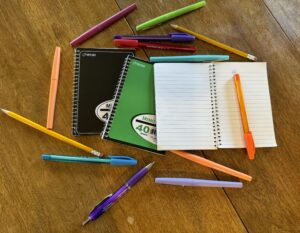
I went through my notes and came up with a variety of prompts, starting with childhood memories and moving to present day experiences. I asked my attendees to bring a blank notebook and their favorite writing implements. (I brought extra of both, knowing some people were rushing over from work to the event.) By 6:30, there were 17 people gathered in my son’s living room. They all settled in on couches, chairs, pillows, and the floor, and looked like they were ready to write.

The prompts would be five minutes in duration. I began by saying that some of the prompts would resonate, while others would not. I told them not to worry. This was not a school assignment. There would be no critique and no grades. I invited them to write poems, draw pictures, or make lists. I wanted them to enjoy themselves. I also told them the writing would get easier as we progressed.

We started with the question: “What is your earliest memory?” People stared at their notebooks. Others looked at the floor or the ceiling, while some got right to work. Eventually, the pens and pencils started moving. Everyone was slowly, but surely, getting into the flow. The teacher in me was thrilled to see my “students” scribbling away.

To be honest, an hour of writing by hand can be tedious. Some people were literally wiggling their fingers in between prompts to loosen up the muscles. I told them writing by hand was important for this fast-paced activity. It made it harder to edit and forced them to keep going. They understood this and before long, were immersed in their writing and flipping through pages in their notebooks. It was going well!

I had prepared twenty prompts and chose the following eleven because of our time constraints.

  1. Describe the house or apartment and neighborhood you grew up in. Use your senses.
  2. Tell us about a memorable family trip. Where did you go? Who was there? Include as many details as possible.
  3. Who was your first real friend growing up? What did you do together? Are you still in touch with this person?
  4. What is your favorite food and when was the last time you had it? Who prepared it?
  5. First crushes: Who was it? Give us details!
  6. Is there a story in your family that gets told over and over again? Tell us that story.
  7. Write about an amazing trip you’ve taken as an adult. Where did you go? Who was with you? Try to include all the five senses in your writing.
  8. Successes: Write about a time you achieved something extraordinary. How did it feel?
  9. Failures: Describe the most devastating failure or disappointment in your life. What happened and how did you handle it?
  10. What is the scariest thing that has ever happened to you? Write about it using lots of emotion.
  11. Think about the most hilarious thing that has ever happened in your life. Write about this now and try to reignite those feelings of fun, laughter, and joy.

This took up the full hour because 12×5=60 minutes! We had twenty minutes to share before the next session, which was being taught by my husband. Each person was invited to read what they had written or tell the story in their own words. Only one person felt uncomfortable doing this, but at the end, she came over and said this was one of the most powerful experiences she’s ever had. She had no idea these events and feelings were lurking inside her brain, waiting to burst forth.

Can you guess which prompts were the most popular? Earliest childhood memories, favorite foods, and first crushes were the winners. Two people even had the same favorite food story – a sweet, buttery, stuffed pastry from India. One person described a crush she had on a boy in kindergarten. Another spoke about how his mother sang to him every night before he went to bed. And one women described the house she lived in as a child, which was so vivid, I told her it would be the perfect setting for a middle grade novel.

As writers, we enjoy creating a compelling plot. We rejoice in finding the perfect verb to convey a feeling. And we love the challenge of imagining a setting with lots of sensory details. Did any of these attendees feel this way? As it turned out, the answer was a resounding yes. One person told me she was now inspired to take a writing class Another said he had no idea these memories would be so emotional for him. A third said he needed to do more prompts when he taught his adult writing class for immigrants. I was elated. Telling our stories is the universal human language.

By the way, my husband’s class was about how to plan a multi-day bicycle trip. Perhaps when our “students” go on a bike trip, they’ll take some time to write about it!


6 Comments

Filed under Andrea Wang, craft advice, Kate Messner, Rondi Frieder, Uncategorized

How Writing Got Me Through a Very Tough Year

2023 has been a tough year for me. It began in January when my 97-year-old father’s health began to seriously deteriorate. And after many trips back and forth from Denver to New York, it was clear that the end was near. He passed away on May 18. It was a long life well-lived, but still, a big loss for everyone who knew him.

Then on the day before the funeral, when we were flying from my son’s business school graduation in Washington DC to New York, my husband received the final diagnosis of his recent health problem. He had multiple myeloma, cancer of the plasma cells, which seriously affects the body’s immune system. After the funeral, three shivas, and a couple of days of cleaning out my dad’s condo, we flew back to Denver. My husband would begin treatment. This included a regimen of twice-a-week infusions of a targeted drug therapy for three months. It was supposed to be followed by a stem cell transplant in October. Only in September, he contracted West Nile virus.

I am not making this up. And for those of you who are unfamiliar with the disease, West Nile is no joke. You get it from a mosquito bite. And although Colorado is known for its dry climate and lack of bugs, this year was different. We had an unusually large amount of rain and much warmer fall temperatures. There were swarms of mosquitoes. Colorado actually had the most cases in the entire country! West Nile can cause a high fever, excruciating headache, tremors, brain fog, paralysis, meningitis or worse. My husband had the first four symptoms. And with his compromised immune system, the virus took hold in a big way. He was hospitalized for two days and sick for five weeks. The stem cell transplant was postponed.

And then in October, the world went crazy. Hamas attacked Israel and a violent war erupted. Anti-Semitism around the world and on college campuses, including my own college campus, reared its ugly head and shook us to the core. It was soul-crushing, complicated, terrifying.

But we had to keep going. My husband slowly recovered from West Nile. Family members flew in to help. Our friends baked and cooked. My morning dog-walking group provided an arena for venting and processing whatever was on my mind. But the biggest distraction of all, was my writing. It became my refuge, my emotional escape hatch, my joy.

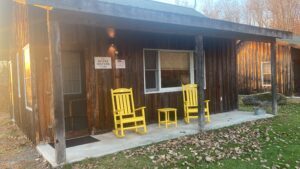
Before my dad died and my husband was diagnosed, I serendipitously signed up for the Highlights Foundation online class, “Just Do It” in April. https://inthewritersweb.com/2023/06/. This class became a lifeline of structure and support during my most difficult months – May and June. It pushed me to get up and work on my novel. Every single day. I was moving along at a clip and decided to apply to the “The Whole Novel Workshop,” an in-person retreat at the idyllic Highlights campus in Pennsylvania. I wasn’t sure if this was going to work with my husband’s transplant schedule, but he really wanted me to go. He thought it would be good for me to do something for me. And as it turned out, the transplant was scheduled for the week after I returned from Highlights. The timing was perfect. Our sons flew home to be with my husband while I spent a week in the “Renee Watson cabin,” surrounded by talented writers, inspirational faculty, and the award-winning Highlights cuisine. Oh, and let’s not forget the pair of roosting bald eagles, the white-tailed deer meandering past my cabin, and a rusty red-colored forest right out my window! It was perfect.


There were other ways my writing supported me in a big way. I continued meeting with my always amazing critique group, The Story Spinners, twice a month. Members of my Tuesday writing group, The Nanos, stepped up to host, since I could no longer have people in my house because of my husband’s compromised immune system. I also joined two new online groups: an accountability group from my “Just Do It” class and a critique group of Jewish writers from around the world. I completed my nine years of being the PAL LIAISON for the RMC-SCBWI by moderating the industry panel at the annual Letters & Lines Conference in September and was asked to moderate two more panels at the Denver Festival of Stories, sponsored by Second Star to the Right Book Shop and the non-profit Books To Kids in October. I even got to introduce the keynote speaker, Bruce Cameron!

“Thinking about my writing” also relieved daily stress. I would take walks and ask myself: How can I strengthen my main character’s arc by throwing more obstacles in her way? Is there a better way to describe the setting? What plot twists will surprise my reader? Throwing myself into the world of my books gave me a constructive outlet when I felt overwhelmed, frustrated, or deflated. It was the best way to reflect, regroup, and recharge.

Despite the challenges of the past year, I do have some good news. After 18 days in the hospital, my husband is coming home. Today! The stem cell transplant was successful. He still has months of healing ahead, but we are moving forward. Our younger son earned his MBA and has started a new job. Our older son continues his humanitarian work around the world and is engaged to be married. One niece got married and another had a baby – the first child of the next generation of our family. One of my manuscripts was a finalist for the Golden Pen Award at the RMC-SCBWI Letters & Lines Fall Conference. And my latest novel, the one I workshopped at Highlights, received glowing feedback. It wasn’t easy, but I made it through 2023. And leaning into my life as a writer was a big part of this accomplishment.

How has writing helped you through a personal challenge? Please share your story in the comments.


13 Comments

Filed under 2023, Middle Grade, RMC-SCBW, Rondi Frieder, Second Star to the Right Book Shop, Uncategorized

JUST DO IT!

In the middle of March, I began sending my middle-grade time-travel novel out to agents. And as all experienced writers know, the best thing to do when you are waiting for query responses is to work on something else. My “something else” was an idea I got from a friend after we attended Andrea Wang’s intensive at the RMC-SCBWI Letters and Lines conference last September. (https://www.rondibooks.com/the-stories-hidden-inside-you/) But even though I had a “Beat Sheet” outline from Save the Cat for the Novel by Jessica Brody, I hadn’t written a single word of the story. Luckily, after an animated conversation with my friend and teacher, award-winning author Sarah Aronson (https://saraharonson.com/), I decided to sign up for her eight-week online Highlights class, JUST DO IT – Your Collaborative Support Group for Finishing Your Draft. Sarah would be co-teaching this class with the incredibly articulate and inspirational author and coach, Chris Tebbetts. (https://christebbetts.com/). It sounded like the perfect way to get this book started.

If you have ever done NANOWRIMO (The National Novel Writing Month-long challenge to write 50,000 words in 30 days) you know the joy of writing fast. Just Do It! has a similar premise. It focuses on a creating a daily writing practice with many extra goodies thrown in. The formal part of the class is a one hour Zoom on Wednesday nights where Sarah and Chris give informative presentations on craft. Only there is so much more. Whether you are working on a picture book or a young adult novel, there are writing sprint sessions every day at a variety of times, morning prompts, and inspirational quotes. There are accountability groups, Discord channels for discussion and sharing, and OPEN MIKES! We also received videos and slides and oodles of handouts. But the best part of these two months was being part of a supportive writing community. Our class had over fifty participants from across North America, two guest speakers, and many Highlights staff members coordinating logistics behind the scenes. I felt like I was at a two-month writing retreat without leaving my house.

So, you may ask, after weeks of diligently sitting  at my computer, did I finish my draft? Unfortunately, the answer is no. A variety of expected, and unexpected, life cycle events collided right smack in the middle of the eight weeks. However, I did write 24,000 words, which is probably half the book, right? And more importantly, I am now totally immersed in the world of my new story. I wake up every morning with character traits, plot twists, and image systems rolling around in my brain. And after my recent critique with Sarah, I am considering all kinds of possibilities. I am in the zone!

But there’s more. The virtual writing sprints will continue through the summer which should help me pound out the next 24,000 words. Also, my accountability group is planning to keep meeting on a regular basis. We are committed to cheering each other on to the finish line. But here is my biggest takeaway – the greatest change in my writing process: I am way much more comfortable with integrating the concepts of “discovery and play” into my drafting. I have also found the courage to silence my internal editor. (One person in my accountability group has named her IE and repeatedly tells her to stop talking. I now do the same thing and it is phenomenal.) I am finally accepting the fact that plot changes happen when your characters come to life on the page. And although my “Beat Sheet” has been dramatically modified, my themes are stronger and my main character’s true wants and needs are clearer to me. It’s funny, but along with me just doing it, my characters are just doing it, too! And I can’t wait to see what they do next.

If this sounds like something you might be interested in, another Just Do It! class is being offered by Sarah and Chris this fall. You can sign up here: https://www.highlightsfoundation.org/workshop/just-do-it-your-collaborative-support-group-for-finishing-your-draft-fall/


4 Comments

Filed under 2023, craft advice, Main character, Middle Grade, Motivation, Persistence, Revision process, Rondi Frieder, WORD NERD

Get Ready To Submit Your Novel!

By Rondi Sokoloff Frieder

As I get ready to submit my latest middle grade novel to agents, I am filled with a mishmash of emotions. I’m excited, nervous, anxious, and dare I say it… petrified! I have been working on this book, on and off, for over ten years. It has been written, critiqued, revised, workshopped, re-imagined, edited, and rewritten. This is my seventh draft. And although it is way better than when I started, I am still filled with a case of the jitters as I get ready to set it out into the world.

I love this book. And I’m hoping agents and editors will, too.

If you are also getting ready to submit your novel to agents, please keep the following in mind:

  1. You must truly believe that you have done everything possible to make this book the best it can be.
  2. Your critique partners should agree and cheer you on.
  3. Write a query letter. Make sure it is tightly written with a unique hook. Have your critique partners give you feedback and rewrite it.
  4. Draft a synopsis. And get feedback on that, too. This is one of the hardest things to write. Especially if you are limited to one page for a 50,000 word book. Use a template and polish it until it shines.
  5. Create  a short bio. Many agents are asking for this, especially if you are submitting to them on Query Tracker – querytracker.net .
  6. Research agents who are looking for what you have written. You can start with Manuscript Wish List – manuscriptwishlist.com , but make sure to visit the agent’s website to make sure they are still with the same agency. Development editor Susan Chang (www.susanchangeditorialcom) also recommends becoming familiar with Publishers Marketplace and reading the acknowledgement pages of comp books to identify the type of agent who would be interested in your genre. Check social media platforms like Twitter, TicTok, Instagram, and Post.news to see what agents are currently looking for. Go through your conference/webinar notes and identify agents who might be a good fit. Even if the conference was a while ago, mention you attended and went to their sessions. Agents know  writing a book takes a very long time.
  7. Make a spreadsheet to keep track of your submissions. Some people do this on Query Tracker. I do it on Excel and use six columns: Name of Agent, Name of Agency, Date Submitted, Why I am Submitting to this Agent (met at a conference or watched a webinar where they presented), Response Time (if stated), Response Date, Comments.
  8. Tailor your query letter to each specific agent. Tell them how you found them and why your book is right for them.
  9. Send your queries out in batches. I would start with ten–twenty. However, Susan Chang says you can go as high fifty! The industry is glutted right now and agents are busy. She recommends casting a wide net.
  10. If your responses are mostly form letters (or no response at all which is THE WORST!), you probably need to rework the query letter or look at your first ten pages. Perhaps you can improve the writing or amp up the pacing. If you are getting personalized rejection letters, you are on the right track. Send out another batch. If you get requests for partials or fulls, CELEBRATE!!!! You are getting close.
  11. It may take months to hear from an agent. To keep from getting totally stressed out, start working on your next project. All agents want clients who are building a career. Outline your next novel, take a class, storyboard a picture book, and don’t forget to READ!
  12. Congratulate yourself for completing the process. You had an idea, you developed it, you got feedback, and you put it out there.

I am in the middle of doing all of the above. Like you, I am thrilled to finally be sending this story out into the world. But I am also nervous about the responses I will get (or never get!). And while I wait and obsessively check my email in-box, I will work on my next project.  I have the idea, an outline, three chapters, and a new notebook for journaling. I have signed up for an accountability class and am hoping to workshop this book later in the year. I am pushing on. Because I am a writer. And this is what writers do.


10 Comments

Filed under 2023, Agents, craft advice, critique, Middle Grade, Motivation, Rondi Frieder, Susan Chang

What I’m doing now: Wrestling With Feedback

By Rondi Sokoloff Frieder

“I love that part!”

“Really? It didn’t work for me.”

Last summer, I attended “The Whole Novel Workshop” on the idyllic campus of the Highlights Foundation in the Pocono Mountains of Pennsylvania. I brought along a middle-grade manuscript that had been revised numerous times, and got ready to make it sparkle and shine.

Before we got started, one of our faculty members gave us an introductory pep talk. “Just so you know,” she began. “All of you will have to rewrite your books. This is why you are here. But don’t worry, you can do it.” Most of us had to be thinking the same thing: “Maybe some people have to redo the entire thing, but my book is amazing. It just needs a few tweaks and a bit of trimming.” To this I now say, LOL!

Despite my overconfidence, I decided to open my mind to possibility. I listened to the suggestions of my Brain Trust partners and marveled at the insights of our well-published faculty. I threw myself into the writing exercises that revealed twists and turns I hadn’t considered. I reworked my plot. I played around with present vs past tense. And most importantly, I thought long and hard about the crucial themes in this story. What did my protagonist really want?

When I got home, I continued the work. I eliminated unnecessary characters (at least four), I changed the personalities of two of my secondaries, and enhanced components of the story that would make it funnier. Then, after months and months of revising, I gave this new draft to my always brilliant SCBWI critique group, The Story Spinners. My husband and son also volunteered to read the book, and I sent ten pages and a synopsis to an agent who was doing critiques at the RMC-SCBWI fall conference. The book was definitely stronger, but there were new elements that needed to be evaluated. I was too close to the story to know if they were working. While I waited for my readers to plow through the manuscript, I threw myself into another project.
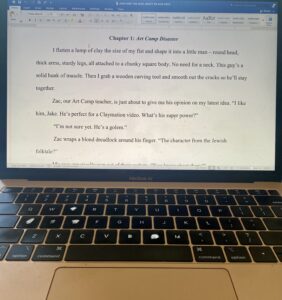

A month later, the feedback began to roll in. And while there was a great deal of consensus, my readers also had conflicting responses. This was when the “wrestling” part of the revision process set in. Who should I believe?

This is the nature of critique. Some comments will be subjective while others will be quite valid. Here’s the rule of thumb: if something in your manuscript is bothering three or four readers, you must consider making the changes. But, if you really want to keep this section in your book, you must make it stronger. For example, one of my critique partners loves when my main character hears his deceased great-grandfather’s voice in his head. But another reader said it didn’t add anything to the story and that I should cut it. I wrestled with the possibilities. Hmm, what to do? Well, I also love the voice of the great-grandfather. Only this feedback let me know that if I want it to stay in the book, I need to amp it up and make it a more integral part of the story.

There were also sections of the book that were flagged by a reader who had a particular expertise. My sporty son said one of the baseball scenes was unrealistic. Another said a parade would never be in the late afternoon. They both had very good points. I fixed both of these things immediately.

But the most important thing I did as I “wrestled with feedback” was to put the manuscript aside. I did not begin revising for two long weeks. I let my readers’ notes roam around in my subconscious and take shape. I also took a lot of deep breaths! Because getting feedback on your creative work can be extremely overwhelming and downright discouraging. Taking a break from the “noise” helped me get back to work with a more positive outlook. I was also more open to making the changes I was resistant to when I first heard them.

Eventually, I was ready to dig in. I pulled up the line edits and read each and every one. I considered all the possibilities and made choices. I finished the revision. Then I sent it off to one more trusted reader – a person who has not read the entire book. He will see it with fresh eyes. Some of his comments will resonate, some will not. I will wrestle with this. Because this is what writers do. We write, get feedback, and rewrite. And as the author who coached us at Highlights said, I CAN do this. And so can you.


6 Comments

Filed under 2022, craft advice, critique, Motivation, Revision process, Rondi Frieder, What I am doing now

Revising OUT LOUD!

By Rondi Sokoloff Frieder

Ever since I made the decision to become a serious writer, members of my family have asked me to edit their writing projects. I have said yes to college essays, business presentations, and even a Master’s thesis. But before I ever agree to do this, I always require the writer use one important self-editing tool – they must read their work out loud! They can read it alone in a quiet room or give a dramatic performance for the dog. It doesn’t matter, as long as they do it. This may sound like a common revision strategy to those of you who have been writing for a long time. But believe me, many people skip this step.



You can begin by reading whatever you have written out loud to yourself. It’s amazing how helpful this is, particularly for creating snappy dialogue and getting rid of repetitive words. You should also record yourself using the Voice Memo app on your phone and then listen back. I use this for first pages and sections with high tension. If you are writing a picture book, listening to yourself read the manuscript  will give you a good sense of rhythm, flow, and word choice.

It is also helpful to have someone from your critique group read your story out loud to you. This will help you hear how easily the book can be read by a parent, teacher, or child. But if you are writing something longer, you may want to have your computer read to you.

That’s right, your computer can read!  If you use “Microsoft Word,” this tool can be found in the “Review” section. Just click on “Review” and look for the “Read Aloud” icon in the top menu bar. Most versions allow you to adjust the speed and gender of the voice. I must warn you though, the voice of this reader is quite flat. There will be no emotion expressed, except for a slight shift when the computer comes to a question mark. If this monotone voice annoys you, there are other programs that have more versatility. My son recently bought one called Speechify. Speechify gives you the choice of a variety of voices and accents and has a much more human tone.

Despite its lack of intonation, I find the Microsoft Word “Read Aloud” feature surprisingly helpful. My middle grade novels range from 40,000 to 60,000 words. It would be almost impossible to have another person read an entire book out loud to me. And when you read to yourself, you miss things. Your brain is ahead of your voice and you are much more focused on plot, rather than word choice and repetition. I just finished having my computer read my latest WIP  before sending the manuscript out to my critique group.


Here’s what happened:

  1. I eliminated 4,000 words. Seriously, 4,000!!!! Many were words I used too much throughout the manuscript, or used too many times on a page. The biggest culprits were: I mean, that, you know, today, right, around, about, on, up, down, back, really, but, pull, nod, smile.
  2. I got rid of unnecessary sentences. One of my worst habits is saying something is going to happen and then have it happen. The actual action is almost always enough.
  3. I got rid of entire paragraphs that DID NOT move the story forward. These were often over-descriptions of a setting or character, or a conversation that went on for too long.
  4. I omitted adjectives, especially colors, sizes of things, and over-descriptions of food.
  5. I tightened up punctuation,  eliminating and adding commas, and getting rid of exclamation points!!!!

I also added things:

  1. I enhanced emotional reactions to action, but made sure they were not overly physical.
  2. I added details that clarified information for the reader. Sometimes, these things were in my mind, but not on the page.
  3. I made sure that changes to the story were consistent throughout the manuscript, especially when I eliminated characters.
  4. I added small words that I had accidentally left out, particularly a, the, in, on, to.
  5. This story used to be in past tense, but I switched it to present. When the computer read it to me, I picked up on places I missed making the changes!

As you probably know, this is not the final version of my book. I will be getting another round of feedback from my critique partners in early July.  And after I review their comments, and input the suggestions that resonate, the dog and I will settle back into my studio and have that Microsoft Word lady read the book to me again . OUT LOUD, OF COURSE!

Authors note: I used the “Read Aloud” feature for this blog!

9 Comments

Filed under 2022, Computer tricks, craft advice, critique, Revision process, Rondi Frieder, WORD NERD

The Joy of New Tires

By Rondi Sokoloff Frieder

In January, I realized I needed new tires for my car. The original factory-installed set was wearing thin and it was time to upgrade. Since I drive back and forth to the mountains every week, I was particularly interested in finding a brand that performed well in the Colorado snow and ice. My husband did some research and found rave reviews for the Michelin Cross Climate+. They’re apparently made of a softer rubber and have a unique tread that’s designed to literally push the snow out of your way. They sounded perfect, so we ordered them.

Every February, the CCIRA (Colorado Council of the International Reading Association) hosts its annual conference. I love this conference. I loved it when I attended it as a first grade teacher, and I love it now as a volunteer for the Rocky Mountain Chapter of the Society of Children’s Book Writers and Illustrators (RMC-SCBWI). For three days, I host a table of local authors and illustrators who share their books with teachers and librarians.

I also moderate a panel of these incredible local celebrities!   

The enthusiasm for literacy at this event is off the charts. Renowned speakers from near and far regale attendees with innovative ways to teach reading and writing to children. Close to a thousand teachers and librarians gather in workshops and banquet halls to discuss their struggles and triumphs in the classroom. And everyone, I mean everyone, is newly inspired.

For the past seven years, CCIRA was held at a hotel, five minutes from my house. It was one of the reasons I agreed to take on this volunteer position. But this year, the venue had changed. My drive would now be a little over a half hour. Except… here’s the thing… it always snows during this conference. Always. It might be a light dusting or a full-out blizzard. There was no way to know what would happen. But the snow rarely affected me. I LIVED FIVE MINUTES AWAY. But this was no longer the case. And as the conference drew near, I began to worry about my commute. Finally, I decided the best thing I could do to alleviate my fears was to reserve a hotel room for Wednesday and Thursday nights.

On the Sunday before the conference, there was good news. The forecast for Wednesday and Thursday was for sunny weather and unseasonably high temperatures. I was psyched, elated, energized! I canceled my hotel reservations. The roads were predicted to be clear and dry.

On Wednesday, I drove to the hotel in record time, set up my table, and greeted my fellow exhibitors. On Thursday, the sky was a bright blue and I got to the hotel without a glitch. Sun poured into the Exhibits Hall through floor to ceiling windows, creating a cheerful mood. Teachers and librarians stopped by our table to chat. Our authors and illustrators pitched their gorgeous books, handed out door prizes, and posed for photos with their adoring fans. My panel of fifteen authors and illustrators wowwed and zowwed the crowd with lyrical readings and articulate answers to thought-provoking questions And when I drove home that night, a colorful sunset dipped below the majestic Rocky Mountains.

But when I woke up on Friday, the weather had shifted. A gray haze loomed over those very same mountains. Snow was predicted for later in the day. After lunch, scattered flurries were spotted through the windows behind our table. Many of the exhibitors decided to leave early to beat the storm. I decided to follow suit and began packing up. Only by the time I was finished, the storm was in full force. I trudged to the parking lot and had to use my scraper to push off the three inches that already accumulated. And when I pulled up to the door of the hotel to load my boxes and bid farewell to my fellow exhibitors, there were hugs and exclamations of “See you next year!” and “Drive safe!” I scraped the additional snow that now covered my windshield, put my wipers on high, and merged onto the packed highway. The traffic was horrendous – a sea of cars and trucks moving at a snail’s pace while fat flakes flew at us like white bullets.

Only something was different. I felt unusually secure on the road. No sliding, no skidding, no getting stuck. I crept along, slow but steady. It was the tires! The zigzaggy Michelin Cross Climate+ tires really did push the snow out of my way. I was going to be okay. I would make it home. Don’t get me wrong, it took me almost two hours. But I got there without a problem, thanks to my new tires. So, you may ask, will I attend this conference again next year despite its distance from my house? I will! But I’ll also reserve a hotel room for Friday night – just in case there’s an even bigger storm!


1 Comment

Filed under CCIRA, RMC-SCBW, Rondi Frieder, Uncategorized

Highlights of Highlights!

By Rondi Sokoloff Frieder

I have very strong childhood memories of getting the Highlights for Children magazine in the mail. First of all, it was mail – for me! (And my brothers, but mostly for me.)  I’d spot it on the kitchen counter, whisk it off to my bedroom, and immediately turn to the hidden pictures page. Then I’d search and search until I found every last rake, spoon, ice cream cone, and whatever else was listed at the bottom of the page! Today, Highlights publishes entire workbooks of these puzzles. They even have an app.
The first issue of Highlights magazine came out in 1946 and was published by the Pennsylvanian husband-and-wife team – Garry Cleveland Meyers and Caroline Clark. These days, the company’s corporate headquarters is  based in Columbus, Ohio, and includes Zaner-Bloser, Stenhouse Publishers, and Staff Development for Educators. But there’s another arm of the organization you may not know about – The Highlights Foundation. This is a 501 c-3 non-profit, established in 1984, that offers “workshops, retreats, and other support to writers, illustrators, and all creators of kid-friendly content.” (For a quick history of the company, go to: https://www.highlights.com/about-us/history.) The Foundation was established in 1984  in Chautauqua NY, but is now located in an idyllic rural setting in Honesdale, PA. George Brown, a descendant of Garry and Caroline, is its dynamic Executive Director.

During the pandemic, I took two of the Foundation’s classes online: “Filling the Writer’s Toolbox” with Emma Dryden, and “DIY Revision for your Novel or Non-Fiction” with Susan Campbell Bartoletti. But in August, after being prodded by my writing coach and award-winning author Sarah Aronson, and fellow Story Spinner and RMC-SCBWI Regional Advisor, Susan Wroble, I attended my first in-person event. And even though I am not a fan of mosquitos, ticks, humidity, or frizzy hair, this truly was the “highlight” of my summer.

“The Whole Novel Workshop,” was a six-day intensive for writers of MG and YA fiction. It differed from my other two classes in that it required an application. That meant submitting the first fifteen pages of my MG manuscript, a synopsis, and a cover letter. When my acceptance arrived, I literally whooped and hollered to the dog! Only that’s when the real work began. Not only would I be working on my revision during the workshop, I would also be receiving an in-depth critique of my full manuscript (from the brilliant, hilarious, and award-winning author, Crystal Allen) before I even arrived on campus. There were also three Zoom meetings with our  group (twenty participants and ten faculty), two books to read (one YA novel, one on craft), and partial manuscripts, synopses, and cover letters to read from the members of our assigned “Brain Trust” group (7-8 people). We used the Canvas platform to introduce ourselves (and our pets) and to explore writing prompts, articles, and podcasts. Needless to say, “The Whole Novel Workshop” could have been called “The Whole Summer Workshop!”

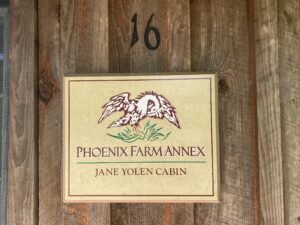
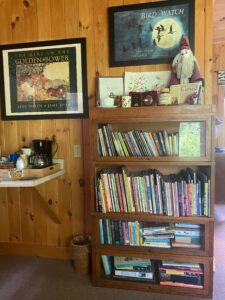
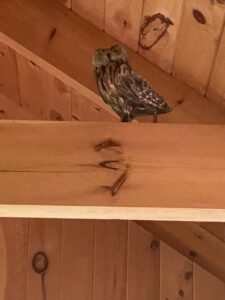
Finally, on August 21, the big day arrived. I pulled up to my home for the week, “#16,” the Jane Yolen cabin! (OMG – how did they know???) and basked in the beauty of my surroundings. There was a lovely front porch, with windows overlooking a wooded glen, a bookshelf filled with Jane’s books, posters on the wall, and an owl perched on the rafters. (I love OWL MOON!)

                .                                 

That evening, we all gathered for the start of what can only be described as a week of serious work, tremendous growth, and pure joy. There were craft workshops, thought-provoking morning prompts, critiques, time to write (alone or in community), Brain Trust groups (45-minute discussions about your manuscript led by YOU), one-on-one discussions, interviews with your main character (conducted by the dramatic Crystal!), pristine walks, and time to think about and work through your revision ideas. And the food! Ask anyone who has attended a Highlights workshop and they will definitely talk about the food. The chefs and servers prepare gourmet works of art three times a day, with snacks available twenty-four seven!

I could talk about this magical week for hours. (And believe me, I have.) Instead, here’s a  stream-of-consciousness recap:

Know who your audience is and what your character really wants. (So true, Rob.) Emotion drives action. Look for the fractals. (Jennifer) Journal until you’ve figured things out and do the swirlies. (Sarah) Discuss ideas with fellow novelists. (We love talking about these things, right Nora?!) Go for long walks. (Thanks for being our guide, George.) Play with tense and POV and balance dialogue, narrative, and description by using colored pens. (Nancy) Get rid of unnecessary characters. (Find your orderly, get rid of the priest- Crystal) Try new plotting tools. (Can’t wait to use yours, Erin.) Writing prompts open your mind to new possibilities! (Yes, Melissa!) No writing is wasted time. (More Melissa) Don’t be afraid of marketing. (I will be in touch, Mia.) And other assorted other words of wisdom: Pay attention to your secondary characters. It’s all about voice. Play and think in the rock garden. Be open about making changes. Make writer friends and support their work. (Miss you all!)

And of course… Keep going!

Our incredible faculty rocked it EVERY DAY and worked alongside us. (There was an open mike night on our last evening… WOW!) Endless thanks to: Crystal Allen, Sarah Aronson, Nora Shalaway Carpenter, Rob Costello, Erin Dionne, Mia Garcia, Jennifer Jacobsen, Erin Entrada Kelly, Alex Villasante, Nancy Werlin, Melissa Wyatt . Can you believe this line-up? I am still in awe of each and every one of them.

You must go to Highlights. (Even with the mosquitoes, ticks, and frizzy hair.) Put it on your to-do list. Right now. highlightsfoundation.org/upcoming/workshops.

I can’t wait to go back.


5 Comments

Filed under craft advice, critique, Partners in Literacy, Revision process, Rondi Frieder, Susan Wroble