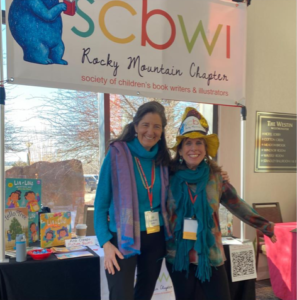
Category Archives: RMC-SCBWI

Making a Marketing Plan that Works for You

By Susan Wroble

Marketing. It usually fall pretty low on the list of things that KidLit creators want to do. But in a series of webinars this spring for Rocky Mountain Chapter of SCBWI, author Jessica Speer set out to change that mindset. Marketing, she noted, has evolved from an approach that focuses on market sales to one that values the audience as partners—an approach that prioritizes authenticity, value and trust.

Jessica’s Marketing Plan 101 started with a simple exercise: think about the ways you market yourself and your book, and add ways you want to try. Then think about what you like to do off that list, and what you think works best for you.

With that in place, Jessica recommended a five-step plan:

  1. defining your target audience,
  2. defining goals and making them measurable,
  3. developing a timeline and budget,
  4. adding action steps
  5. and at the end of the year, review, modify, and start over!

A measurable goal might be something like “raise awareness of my books by appearing on five parenting podcasts” while an action step might be something like “check Podmatch weekly to make connections.”

In the second webinar in the series, RMC members shared how they started putting some of that plan into place, and what has worked for them. Writer and poet Michelle Schaub said that she now has a reminder to reach out to her publisher twice a month, letting them know of good news.

Author Beth Anders with copy of book AN INCONVENIENT ALPHABETBeth Anderson loved the idea of scheduling marketing items on the calendar, and the idea of linking things. She noted that many classroom lessons start with quick, easy videos. Her promotional group has a YouTube channel with information for teachers, and one of her videos was a short (1.5minutes!) question of “What Would You Do?”, a springboard off her INCONVENIENT ALPHABET book that invited students to write persuasively. She adds those videos to the book page, to her podcast, to the teacher guides… all with the goal of reaching and assisting teachers.


Roxanne Troup shared a simple, easy tip—to go back through old blog posts and add “Alt Text” to all the images. Originally developed as a description of images for the visually impaired, Alt Text can link the image to a description—and to your name as author and the book title.

And when your book fits into some niche market, as Roxanne’s MY GRANDPA, MY TREE AND ME did with agricultural education, she recommends sending out pre-publication emails. Rachel’s template was to ask if they “might be able to help get the word out about this book through the [program name].” In her email, she provided a link to the book itself, teacher guides, and the publisher’s sell sheet as a handy way to pass along information about the book. Jenny Elder Moke noted that for her teacher guides, she included a biography, the book pitch, research links, and potential classroom activities.

In terms of book publicity, Lisa Cobb, Malia Maunakea and Lynn Becker all had luck reaching out to local newspapers or magazines of their alma maters. Beth recommended asked the publisher for their marketing plan, and then focusing efforts of the things they were not doing.

One technique for getting publicity, especially if you are a subject matter expert, is through Connectively (formerly HARA: Help A Reporter Out). The “lite” version is free, and allows you to browse the queries, searching by keyword, and send up to ten pitches a month.

Jessica noted that repurposing is a simple but effective way to optimize your website and social media presence. She might aim for at least one new article a month, but she will also update an older article to share again, or share in another place (LinkedIn, or Facebook, or a newsletter). And she ended with a quote from marketing guru Seth Godin, which reframed the idea of marketing for me, replacing at least some of my dread with anticipation:

“Our job is to connect with people , to interact with them in a way that leaves them better than we found them, more able to get to where they’d like to go.”

3 Comments

Filed under Marketing, RMC-SCBWI, SCBWI, Susan Wroble

The Art of the Review (and why to do them!)

By Susan Wroble

In the post-conference survey from last years’ Rocky Mountain Chapter SCBWI’s annual conference, there was one request that really stuck with me. The attendee wrote “I want to learn how more about reviews. How to write them. How to get them.”

This resonated because I had struggled with reviews. While there are many reasons I now write them (learning the market, supporting my writing community, introducing people to books I love…), there is also the hope that one day, others will be writing reviews for me. Writing reviews feels a bit like dipping into karma.

I post most of my reviews on Amazon or Instagram, but Goodreads and Barnes and Noble are both great options, along with podcasts. While Amazon isn’t where I tend to buy new books, it is a place where numbers matter, and one of my goals is to make my reviews as effective as possible for book creators.

My process is fairly simple: I log into Amazon, search for the book I plan to review, then scroll down until I get to “write a customer review.” I give a short paragraph about why I loved the book. If it’s a picture book, I try to include a photo of an interior page, as well as a bit about the artwork—here’s an example with Patty Cisneros Prevo’s book TENACIOUS. I only write reviews for books that I can honestly and happily rate as five stars.

I’ve found that Instagram is a fabulous place to post reviews of books that I want to be able to find and reference easily later on—perhaps as mentor texts, like Roxanne Troup’s compare/contrast structure in MY GRANDPA, MY TREE AND ME, or as comp titles for a work-in-progress.

Taking it to the Next Level:

I’m always in awe of those people who have taken reviewing to the next level. I’d encourage you to take the time to read, follow and get to know these incredible reviewers, their sites, and their reviews and resources.

Bianca Schultz is founder and editor of The Children’s Book Review (TCBR). The Association for Library Service to Children (ALSC) has named TCBR one of the Great Websites for Kids. And no wonder—this amazingly user-friendly site provides lists by author, subject, age, and favorites (including board books, books on activism and diverse and inclusive books). And if that weren’t all, there’s the Growing Reader’s podcast, frequent book give-aways, interviews with authors and illustrators, and a rich trove of articles and writing resources, including this one on the art of getting your children’s book reviewed!

Children’s book expert Melissa Taylor operates the site Imagination Soup. More than 35,000 teachers, parents and librarians subscribe to the Imagination Soup newsletter. Her newsletters give book reviews and learning resources, and the highly searchable site gives books by genre, age and—my favorite as a former homeschooler—playful learning. Being included on Melissa’s incredible booklists provides a lot of exposure. Imagination Soup is a go-to site for lists — say you want a list of books to teach word choice, books in a series by grade-level, exceptional books with autistic characters… just about every possible list you could imagine is on this site! For reviews, Melissa includes a short paragraph about the book and a purchasing link.

If you write middle grade, Greg Pattridge is your guy! Greg runs the “Always in the Middle” site. His reviews provide a summary of the book, the book birthday and page count, “Five More Things to Like” and a bit about the author (and illustrator, when applicable). Greg has a great break-down by category, so if you are looking for MG graphic novels, or nonfiction, or sci-fi, for example, his site is an excellent place to search.

Greg lend his support to other middle grade reviewers with his Marvelous Middle Grade Mondays (MMGM) posts, where he links to several other middle grade review sites — and he makes it super easy to be included. To have your review of a MG book included in the MMGM line-up, all you have to do is email Greg at gpcolo (at) gmail (dot) com by Sunday night with a link to your blog and the title you are featuring, MMGM in the subject line, then schedule a post for a Monday.

Author and reading specialist Laura Roettiger doesn’t do traditional book reviews. Instead, each month she features one author or illustrator and their book on her blog. I was honored to be highlighted in November 2022. Laura’s process is that she sends her interviewees a list of questions and requests a photos to accompany the post. I can tell you that, from an author’s perspective, having an interview like this to be able to link to is a true gift.

So for those of you wondering how to start reviewing, there is no “right” way. Just start, and over time you’ll figure out what works for you! And if you are wondering how to get reviews, that’s easy. Lean into the karma of supporting your kidlit community, and gift them reviews.

2 Comments

Filed under 2024, Book Review, RMC-SCBWI, Susan Wroble

Auditioning: Putting My Pages Out There

The timer went off. I had just finished a productive 50-minute revising session. But then… my break turned into being online too long. I disappeared into the SCBWI website, reading all about upcoming webinars. Yes, I was procrastinating. Yes, I was hoping a super power would finish editing a chunk of my young adult novel. It was due to my young adult novel exchange partner in five days.
Just as I was about to close the website, one webinar jumped out at me. It cheered, “Sign up. Now! Don’t think. Do it.” The webinar featured an agent giving live feedback on the first 10 pages. Ten pages? Wow! Rare, I thought. And curious. One seat was left. It was mid-day. The pages were due at 5pm the next day.

“Nope, too late,” I thought. “Besides, my manuscript isn’t query ready.” Meanwhile, my neuro divergent brain was full speed ahead, doing a jig and high on a possible challenge. I quickly googled the agent’s website and Manuscript Wish List. I got goosebumps. She was seeking the themes steeped in my YA novel.

Minutes later, I was registered. Plus, I paid extra ($25) for the agent’s post webinar detailed critique of my first 50 pages. What an adrenalin rush! What a perfect way to put my pages out there. An audition of sorts.

The spontaneity was energizing. This wasn’t the first time that I had jumped and registered last minute for a pitch or contest. Perhaps, the stars simply align that way for me.

Unfortunately, in this instance, there was one problem. A big problem. I had not looked at the first five chapters of my YA novel in months. Many months. I had been hyper focused on cutting, editing and polishing the last act. Yikes!

I immediately hunkered into my editing cave. The good news, it was easy to cut and edit, because I had moved parts from the beginning to the second and third acts. The bad news, it was very challenging to re-figure the first chapter. It no longer fit, as a result of my final revision. I felt stuck and overwhelmed. If only it made sense to start with chapter two. But, I needed a set up. Ugh.

I re-read the Beat Sheets (from SAVE THE CAT! BEAT SHEET WORKBOOK by Jamie Nash) that I had done and re-done for this novel. I re-read the first act. I handwrote notes; did free writes of possible first pages. Geesh. Was I really going back to the drawing board? Insane! I couldn’t delay; couldn’t stop. I had a deadline.

Fast forward. The webinar was an incredible experience. Each attendee’s first five pages appeared on screen, while the facilitator read them aloud. The agent devoted six minutes to each work, giving succinct, insightful, thought-provoking feedback aloud that she had prepared in advance. Everyone listened. No interactions, discussions, questions. I loved the meditative, deep thinking mood – and generous quiet time to soak up the sound of our prose and a professional’s reaction.

Of course, I was nervous and full of “I should have changed this, cut that…” But it was too late. It was un-polished. It didn’t matter. My work was out there. The curtains were wide open. An audition.

Lesson learned: Put my pages out there before I’m ready to query. The webinar pushed me outside the “I have to” box. I have to have a full manuscript ready before I…  Ever since, it has felt liberating and reassuring to keep entering pages in a contest, online sessions, etc. Intimidating? You bet! But these auditions keep me moving forward and believing in my novel. Best of all, they give me a reality check.

By the way, the agent’s detailed ($25) feedback was a huge perk. Pages of positives, keen insightful suggestions, along with discerning questions. I have added her to my To Query spreadsheet.

Here’s to auditioning your work in progress! Why wait? Give these opportunities a try and look for more. Congratulate yourself on putting your pages out there.

Webinars: SCBWI Regional Virtual Events https://www.scbwi.org/regional-virtual-events

March contests for YA novel excerpts: (Winners are assigned to an editor or mentor that coaches you to a polished manuscript.)

#RevPit 2024 Annual Contest  https://reviseresub.com/annual-contest

First Page Prize   https://www.firstpagesprize.com/

Gutsy Great Novelist  https://gutsygreatnovelist.com/chapter-one-prize/

Uncharted Novel Excerpt Contest  https://www.unchartedmag.com/uncharted-magazine-novel-excerpt-prize-judged-by-keshe-chow/


There’s no time like the present. –MG and YA acclaimed author, Victoria Hanley


2 Comments

Filed under 2023, Agents, craft advice, critique, Karen McChesney, Literacy Program, Main character, Middle Grade, Motivation, Persistence, Revision process, RMC-SCBWI, Upcoming

Finding The YA in Learning


Murder. Secrets. Drugs. Gossip. Lies. Sexuality. Romance. Magic. Identity. Rumors. Breakups.

Hang out with a group of YA writers and you’ll likely hear these words, along with more provocative, dark, odd, edgy, far-out, intense, hilarious, eccentric, juicy, shocking topics. We love teens. We love big drama and conjuring a mess for our teen characters in current time or mystical worlds.

Other kid-lit writers often say we’re nuts for writing over 75,000 words. But we can’t get enough. We want to hold on to every word. No wonder our revisions can take years and years as we cut, trim, tighten hundreds of pages.

Thanks to my critique group, Story Spinners, I unexpectedly joined the YA writer “club” years ago after they nudged me to turn my coming-of-age short story into a YA novel. I was clueless and intimidated, but I couldn’t stop writing. I’m incredibly fortunate to be part of the SCBWI-Rocky Mountain Chapter’s YA community. And I’m in awe of how everyone cheers each other on at book launches and events by and for YA writers.

My fellow YA’ers and I adamantly long to be with our peers and find YA-only classes. No offense, picture book and middle grade writers. We adore you and your books! Just like our teen characters, we long to be belong; we want to be in a YA cluster. But, we’ll be the first to admit, we often feel like the misfits in writer land. Afterall, YA novels are a far cry from Middle Grade.

Perhaps that’s why our search for YA-only learning is constant and fierce. The past few months, for instance, several YA writers and I started researching YA-only workshops, courses, and other ways to amp up our learning.

Here’s what we have found so far:

Workshops/Courses:

Wordsmith Workshops https://www.wordsmithworkshops.com/

Vermont College of Fine Arts https://vcfa.edu/writing-novels-for-young-people-retreat/

Hugo House https://hugohouse.org/product/young-adult-fiction-workshop/

Writer’s Digest University https://www.writersonlineworkshops.com/courses/writing-the-young-adult-novel

UCLA Extension https://www.uclaextension.edu/writing-journalism/creative-writing/course/young-adult-novel-i-writing-x-4451

Tin House https://tinhouse.com/workshop/

From SCBWI:

YA Connect and Other Connects https://www.scbwi.org/regions/rmc/events

YA Connect is free and offered every other month by and for YA writers of all levels to learn and meet fellow YA writers. Most YA Connects are both in-person & Zoom.

Michelle Begley Mentorship – Due Oct. 31, 2023 https://www.scbwi.org/regions/rmc/RMC-mentorship-program

Weekly Podcast https://www.scbwi.org/podcasts

Most recent one featured Deborah Halverson, award-winning YA author, including Writing Young Adult Fiction For Dummies and Honk If You Hate Me

Monthly Virtual Events, hosted by chapters across the U.S. https://www.scbwi.org/regional-virtual-events

Coming soon:

Lighthouse Writers Workshop, Denver – YA workshops, gatherings https://lighthousewriters.org/

Of course, there are a lot more YA-only opportunities out there. Share your findings in the comments, please. Meanwhile, YA writers: Keep reaching out to find other YA’ers. And remember, teens can’t wait to read your stories – and drama!

2 Comments

Filed under 2023, Agents, craft advice, critique, Graphic Novels, Karen McChesney, Main character, Middle Grade, Motivation, Persistence, Revision process, RMC-SCBWI, Upcoming, What I am doing now

Go Writers, Go!

It was a writer’s dream. That’s how I felt at the recent grand opening of Lighthouse Writers Workshop new building. I was with over 500 other writers in the stunning, custom-built, cozy three-story building designed just for writers. Just for writers!
“We want this to be your home,” said Co-Founder and Director Michael Henry. And, we want it to be a place where writers of all ages, levels, backgrounds, genres come “hang out and write,” added Andrea Dupree, Co-Founder and Program Director.

What could be better? That night, when I left this writer’s paradise, I was riding high. High on great gratitude.

Gratitude for:

-living in a city that has invested in Lighthouse and writers

-living in a state with an incredibly supportive kid-lit writer community

-getting to teach youth at Lighthouse

-my awesome writer critique group, Story Spinners

-SCBWI-RMC

-my writing groups: Young Adult writers, NaNo writers

-my Monday accountability group

-my super supportive husband and friends

-my manuscript exchange partners

-my two late aunts who modeled creative follow-your-dreams living

Wow, I have been incredibly fortunate to have many, many cheerleaders on this crazy journey of querying picture books and revising young adult novels. At the grand opening, one author-speaker reminded, “writers need other writers, create your community.” I am immensely proud that I have created my writer community. And it keeps growing! I have great cheerleaders. Best of all, they have shown me how to be a cheerleader; they have inspired me to make time and show up for other writers.

In that spirit, I decided to share some of my favorite cheers from other writers. I keep them in a notebook and glance at them often, especially when I get a bad case of imposter syndrome. These words give me courage; remind me to have fun; renew my “I can do this.”

May these comments cheer you on, too.

For imposter syndrome: Before writing, take a few minutes to jot down what you’re thinking. Your doubts, your insecurities. Spit ‘em out! Then, write your goal for your session, such as word count, number of pages. At the end of your session, write down what you did.

 Congrats on doing the hard work on your YA. It’ll pay off. Sometimes you just have to plough through the hard stuff.

What an achievement! I am so proud and inspired by your achievement of finishing another revision.

Did you sign on yet for film rights for your book?!!!! I can picture it as a movie.

You hooked me with your pitch. I want to read it!

You sound very clear on your intentions for your YA. Get your story out there!

Hip, hip hooray! I know you’re passionate about this story and I applaud you for sticking with it. This is very hard work!

Aim to send 100 queries. I got my agent on query 101.

It doesn’t matter how long it takes you to finish. What’s most important is that you are staying with the hard work.

Here’s to being cheerleaders and having cheerleaders. Go writers, go!

Lighthouse Writers Workshop is the largest literary center in the Rocky Mountain West. They offer writing instruction, workshops, events, and support for writers of kid-lit, fiction, nonfiction, poetry, and many other genres. New location: 3844 York St., Denver CO 80205. For more information: Lighthouse Writers Workshop |


4 Comments

Filed under 2023, Agents, craft advice, critique, Karen McChesney, Literacy Program, Motivation, PBParty, Persistence, Picture Books, Revision process, RMC-SCBWI

Not to be Missed Nonfiction

By Susan Wroble

The Rocky Mountain Chapter of SCBWI is one of those truly great organizations, filled with people who willingly share their knowledge to support others. It was the reason I stepped in to volunteer for the chapter’s leadership team—I wanted to keep this organization going. In the nearly two years since then, one of the accomplishments I am happiest about is that we have created some Connect Groups to meet the specific needs of some of our members.

One of those newly created Connect Groups is specifically for nonfiction. The chapter has a strong and growing group of nonfiction creators, and this past year marked the birth of some noteworthy nonfiction that I wanted to bring to your attention. Not only are these great books for the kids in your life, but many should make it to your keeper shelves as both beloved treasures and mentor texts.

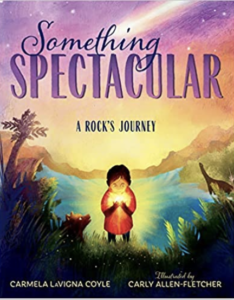
For many kids and adults, Carmela LaVigna Coyle is a rock star for her 20-year series PRINCESSES (starting with DO PRINCESSES WEAR HIKING BOOTS). But my personal favorite is her latest, SOMETHING SPECTACULAR: A ROCK’S JOURNEY (Muddy Boots, illustrated by Carly Allen-Fletcher). Structured as a timeline from about 272 million years to today, this story traces the geological journey of a rock through time, from the sediment on the bottom of a forgotten sea to a sandstone heart found and treasured by a young girl. Layered and lyrical, filled with onomatopoeia and alliteration, this book is a stunning read-aloud. And I’ve marveled at the way Carmela kept the young girl, who does not appear until the last page, central to the story. This book lives up to its name—it is truly spectacular!


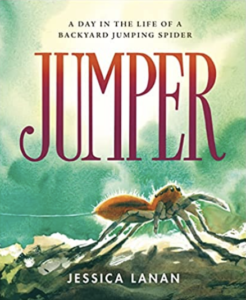
One of the favorite and most influential books of my childhood was BE NICE TO SPIDERS by Margaret Bloy Graham. When I saw RMC author and illustrator Jessica Lanan’s book, I knew it would be a book I would treasure. JUMPER: A DAY IN THE LIFE OF A BACKYARD JUMPING SPIDER (Roaring Book Press, 2023) draws readers in from the very first spread reaching out to ask them to imagine: “What if you were very small? Smaller than a cat or a dog, a bar of soap or a bottle cap. As small as a bean. What would your world be like?” The pages of backmatter are exceptional and include not only a glossary and life cycle and anatomy, but sections on how jumping spiders hear and see and feel—and walk on walls! Jessica’s illustrations, done in ink, watercolor, and gouache, shift back and forth from the perspective of Jumper to the perspective of a child. Both her text and her artwork invite comparisons.
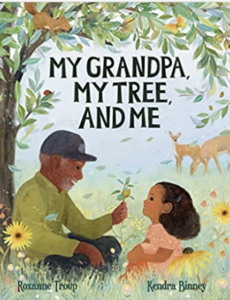
Roxanne Troup lives in Colorado now, but growing up in Missouri, her family (like everyone around) had a pecan tree in their yard. Roxanne’s book MY GRANDPA, MY TREE AND ME (Yeehoo Press, 2022; illustrated by Kendra Binney) flows between the care of a girl’s pecan tree and those in her grandfather’s pecan orchard. Set over the course of a year, the story is so quietly beautiful that it was only on the second reading that I realized it was one of the best examples of a compare and contrast book that I had seen. It’s now one of my favorite mentor texts for that structure. Teachers could use both MY GRANDPA, MY TREE AND ME and JUMPER for a fabulous lesson on two very different and very effective ways to contrast subjects.


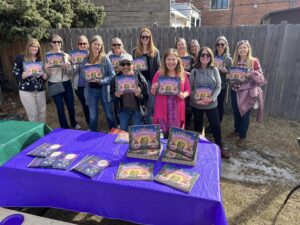
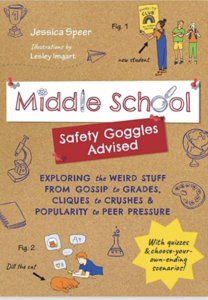
With a master’s degree in social sciences, author Jessica Speer has carved out a niche for her books that blends science and activities with true stories. In researching her latest book, MIDDLE SCHOOL: SAFETY GOGGLES ADVISED (Familius, illustrated by Lesley Imgart), Jessica spent time in conversation with a hundred middle schoolers, asking them what their greatest challenges were, and those top concerns became the chapters in her book. Coming out in August, Jessica has a book that most families with kids will need: THE PHONE BOOK: STAY SAFE, BE SMART AND MAKE THE WORLD BETTER WITH THE POWERFUL DEVICE IN YOUR HAND. For authors, her books are fabulous mentor texts, not only for engaging and interactive books, but for activities that can be included as resources either within a book or on websites.
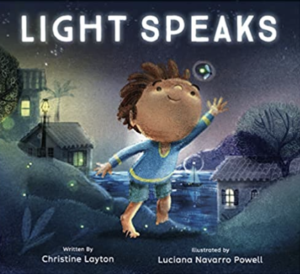


Christine Layton’s picture book LIGHT SPEAKS (Tilbury House, illustrated by Luciana Navarro Powell) is so gorgeous that it brought me near tears. Using spare, poetic text, she introduces the physical properties of light to very young listeners. As a former volunteer in the space section of Denver’s Museum of Nature and Science, I especially loved this spread: “Light tells the space between stars. It echoes off planets and moons—doppled, glowing and brilliant.” Christine’s brilliant backmatter takes each of those properties and explains them each in more detail.


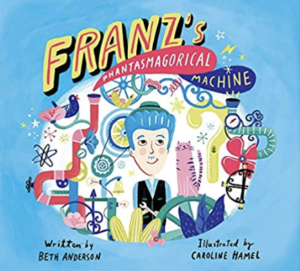
Beth Anderson had not one but THREE (!!!) books come out this past year. Beth is a master at picture book biographies and in finding the heart layer, that lens or angle or viewpoint that makes her subject matter and her book stand out. Her biography FRANZ’S PHANTASMOGORICAL MACHINE (Kids Can Press, Illustrated by Caroline Hamel), about the self-taught inventor Franz Gsellmann, celebrates the drive to build and create and invent—just for the sake of invention—and to not give up. Beth’s books are all so well-crafted that I find myself turning to them again and again for insights on language choice, structure, and most of all, heart.

I hope that you too find yourself drawn to this incredible list—for reading, for gifting, for learning the craft of nonfiction writing. Enjoy!

3 Comments

Filed under 2023, Nonfiction, RMC-SCBWI, Susan Wroble

The Secret of Children’s Book Publishing

By Susan Wroble, February 2023

Psssst… Want to know the secret of children’s book publishing? At the Rocky Mountain Chapter of SCBWI’s panel at the CCIRA literacy conference in February, authors and illustrators shared some of the stories behind their stories. The answer? It’s simple and painful, both.

Persistence.

For some, persistence has meant staying focused over time. Author/Illustrator Kaz Windness is truly on fire, with seven book deals this year! But getting to this point? That took twenty years. And learning the industry also meant learning when a book would be best illustrated by someone else. Kaz wrote A BOOK IS A FRIEND (fall 2024) with illustrator Heather Brockman-Lee’s artwork in mind

Author Jennifer Chambliss Bertman joined SCBWI back in 2000. She worked on writing picture books for years, getting nowhere. She was ready to give up when she decided to try writing for an older audience, and began work on her highly successful middle-grade books instead. After 23 years, Jennifer’s debut picture book, A GOOD DEED CAN GROW, was released last month.

Bianca Schultz’s passion is literacy and growing readers. She founded The Children’s Book Review in 2008 with the goal of helping kids and their parents, caregivers and librarians find great books. The first of her popular “Dragon” series was published in 2020.

Persistence can come in other forms. For Laura Perdew, it meant being willing to write about lots of topics. She found one of the short-cuts into publishing—the work-for-hire market. WFH books are typically found in school libraries. The publisher, not the writer, determines the specifications. Laura now has more than fifty WFH books, along with her debut traditionally published picture book, THE FORT.

Author/Illustrator Gregory Barrington had published his first picture book with Harper Collins, but the editor wasn’t at all excited about Greg’s new manuscript. Greg was asked to write a fractured fairy tale instead. He wrote five completely different stories featuring Goldilocks and the Three Bears. He picked his favorite—and was too nervous to submit it. It didn’t come across the way he wanted on the page. Greg decided the solution was NOT to send it. He asked for a virtual meeting, then he read the manuscript aloud. GOLDILOCKS AND THE THREE KNOCKS was released in November.

Albert Whitman had published Jenny Goebel’s book ADELITA, about a sea turtle, when they asked her to write one on insects. No problem, she thought. The catch? They wanted a book on insects as food. By release date, Jenny still hadn’t managed to eat an insect. Imposter syndrome hit hard. The Butterfly Pavilion was all out of edible insects, so Jenny spent the day in search of a bug to eat. Unfortunately, success came in the form of jalapeno-flavored fried crickets. She’s since discovered more easily purchased (and eaten!) “gateway bugs.” And just like her book, they are CHOCOLATE CHIRP COOKIES.

Both Julie Danneberg and Natasha Wing have had incredibly successful series—Julie with the JITTERS series and Natasha with THE NIGHT BEFORE series. And both have worked not only to keep those series going, but to publish in other areas, from nonfiction to jokes.

Sometimes persistence means a lot of research. Author Jessica Speer knew she wanted to focus on problems kids face in middle school. But she wasn’t exactly sure what the biggest challenges were. So she went to schools and listened. She surveyed students. Her book MIDDLE SCHOOL: SAFETY GOOGLES ADVISED focuses on the top ten problems identified by kids.

For authors Andrea Wang and Beth Anderson, persistence has entailed digging deep—sometimes into hard places emotionally—to find the heart of the story. For others, it has been work to find the words. Lynn Becker was hooked by the idea of a sea shanty. Finding just the right words for MONSTERS IN THE BRINY meant literally walking it out, pounding out the beat with her feet. With her novel-in-verse ALONE, author Megan E. Freeman struggled to find the best ways in each poem to convey the story in the fewest possible words, leaving the rest up to the reader.

Author/illustrator Julie Rowan-Zoch was faced with an unusual request—illustrating for a celebrity author. Saturday Night Live’s actor Bobby Moynihan had submitted sample illustrations with his manuscript NOT ALL SHEEP ARE BORING, but the publisher reached out to Julie instead. Many of her initial sketches were turned down before Julie hit the type of compositions the publishers felt comfortable with for this book that they knew would have a huge circulation run.

COVID in the family kept author Kellye Crocker from the CCIRA conference, but PAL Liaison Rondi Frieder told teachers about her book. What Rondi didn’t tell them was that DAD’S GIRLFRIEND AND OTHER ANXIETIES had been hit by supply chain problems, and the publication date had been delayed by months. Then the books didn’t even arrive on time for the rescheduled publication date. Kellye refused to give up, and held a launch party with advance reader copies of the book!

Sometimes, it is the characters who are persistent. Heather Mateus Sappenfield was an adult and YA author. When a fully-formed 12-year-old character named Rill hit her mind, Heather wasn’t remotely interested in writing middle grade. It took Heather and Rill more than a year together before Heather realized that Rill was just the right person to tell an important story. As a teacher, Heather had sometimes walked into her school to find clusters of children, crying. Their parents had been deported the night before. After her book was published, Heather almost threw away an envelope from the Colorado statehouse, assuming it was junk. Instead, it was a treasure—the Colorado General Assembly acknowledged her book’s importance in the state.


Whatever the form it may take for you, the secret is clear. Stick with it. Persist.

8 Comments

Filed under 2023, CCIRA, Persistence, RMC-SCBWI, Susan Wroble

ODE TO REVISION

Revision.

You make me crazy!

“Explain,” you say.

You’re akin to blisters, pests, chores, and petty necessaries.

I have sweat and steamed over you,

rehashing plots, revamping chapters, recasting characters.

“Your point?” you ask.

Now, I am a fanatical, fervored writer

glued to my written mess.

Revision,

others warned

you would be a storm, thorns, and bricks on my brain!

“Why stay?” you say.

For those spectacular moments

when my story flows smooth as syrup

and sparks fill me,

singing “you can do this!”

And suddenly,

I’m a dancer, a bird, a shooting star, a perfect snowflake…

“Follow your characters,” you declare.

Exciting when I let them get into grand muck,

but then, I’m stuck in another written mess.

I breathe, cuss,

resume re-doing:

reorganizing scenes,

recalibrating action,

reconditioning description and dialogue.

Again.

Repeat.

Again.

Insane.

But my hope is refueled.

Alas, my main character has a new coat of conviction and chutzpah.

I can’t let her down.

Revision,

you’re a wild renovation that I can’t fully resolve.

“Congrats!” you say. “Resolving is for readers.”

Revision,

you wake me to characters in chaos,

off stowing secrets and lies.

Please give me a shortcut!

“Butt in chair,” you remind.

Revision,

my thick-skinned constant,

you make me crazy,

but I’ll keep my seat on your train,

wrecks and all.

Thank you.

Much obliged.

Appreciate you.


5 Comments

Filed under craft advice, critique, Karen McChesney, Main character, Motivation, Picture Books, Revision process, RMC-SCBWI

The Secret Agent Files: Notes about Agenting

By Susan Wroble

“Why,” asked a woman near me, “is it so very hard now to find agents who want to represent picture books? I can find plenty of agents for Middle Grade and YA, even for graphic novels and author/illustrator books. But finding one to come to our conference that represent author-only picture books is getting really tough.”

It was a great question, and was addressed to an industry panel during the Regional Team meeting of the Society of Children’s Book Writers and Editors in New York in October. Our chapter has the same problem. We have lots of members who write picture books, but finding agents who would be good fits for our conferences and who are also open to picture book submissions is hard.

The answer, of course, was money. Stacey Barney is an Associate Publisher at Nancy Paulson Books, an imprint of Penguin Random House. She explained that picture books simply make less money than other formats for everyone involved, including the agents. It doesn’t mean that you can’t find an agent for a picture book. It does mean—like so much else in this industry—that it takes persistence.

Writers often talk about their “training books,” the first books they wrote when they were learning the process. Almost always, those books are languishing in some file, never having made it to print. But Stacey talked about an entirely different set of training books as she explained the publisher’s ‘Rule of Three.’ “You start by buying a book you love,” she explained, “and you build up a good rapport with the author. By the time you get to their third book, you have established the author in this industry. The first and second books are like a training camp. They won’t be break-out best-sellers. With the third, the author has arrived.” That means that an author’s beloved debut novel—the one that finally made it to print after writing a few others—is, for the publisher, just the first of the training books. For me, that comment explained a lot about agents’ and publishers’ desires to help build a career, not publish one book.

A week later, I attended an agent panel put on virtually by SCBWI Metro New York that provided additional insights into the author/agent relationship. One question asked of each of the three agents (Saba Sulaiman at Talcott Notch, Linda Camacho at Galt & Zacher, and Eve Adler at Red Fox Literary) was how they got their clients. Surprisingly, meeting someone in person at a conference was low on each list. However, the majority of clients came in through the query inbox. The catch is that many agents are closed, with the only way to submit through attending a conference or workshop. So those conferences and events remain an essential way to reach agents.

Given that, it may seem that cost is a barrier to entry, but that isn’t necessarily true. The panel I attended was free. More than five hundred people signed up. And each of the agents who presented has opened their submissions to all attendees at the panel if they have works that fit.

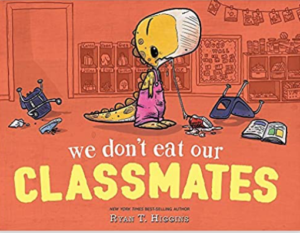
The panel’s moderator was Harold Underdown, Executive Editor at Kane Press and creator of The Purple Crayon website, a gold mine of information on children’s publishing. Harold asked the agents about recent developments in the industry, and the answer was fascinating… they recommended leaning into the weird. Specifically, they noted that neat genre categories are blurring. Saba Sulaiman noted that “there is a thirst for stories that blur genre, like a horror comedy. We want the weird!” Linda Camacho backed this up, saying that “there is a need for escapism, and a thirst for horror and for romance. Blurring genres tends to provide more avenues for creativity.” As an example of blurred genre in picture books, Saba recommended looking at Ryan T. Higgins We Don’t Eat Our Classmates. “It’s a totally unexpected dinosaur book, that funny, sweet, cute and is also a first day of kindergarten book.”
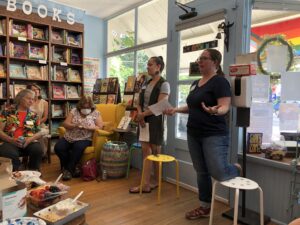
Harold also asked about tips and best practices in terms of searching for an agent. Some of the best resources are agency websites, SCBWI’s Essential Guide, Manuscript Wishlist, and Query Tracker. In addition, Saba recommended getting a short-term subscription ($25 for one month) or a limited subscription ($10 for a day) to Publisher’s Marketplace.  And then, she suggested, pay attention to the pitches. “It’s a great way to learn how to pitch a book.”

And that may be a great way to land one of those elusive agents!

3 Comments

Filed under 2022, Agents, Harold Underdown, Picture Books, RMC-SCBWI, Saba Sulaiman, Stacey Barney, Susan Wroble

Lessons from the Booksellers

By Susan Wroble

Over the summer, I had the opportunity to attend three different events hosted by the Rocky Mountain Chapter of SCBWI that focused on relationships with booksellers. First, RMC’s Perfect Partners webinar featured a panel of five local Indie booksellers:

Later in the summer, the chapter’s PAL (published and listed) group gathered at the Wandering Jellyfish bookstore for a session hosted by Jerilyn Patterson and Carissa Mina. Finally, the RMC Northern Colorado Connect hosted author Susan Kusel, who has held jobs as both a librarian and book buyer, focused on how your book gets into bookstores and libraries.

The three events differed in scope but complemented and built on each other. The biggest takeaway? As Jerilyn Patterson noted, “The big A can’t do community.” That’s the role and the benefit of Indies.

Indie Bookstores and Bookshop.org:

If you are looking for independent bookstores, search IndieBound. Type in a city or a zip code, and you’ll get a map and list of all the local Indies.

Once you know the Indies around you, start using Bookshop. Bookshop.org launched just before Covid as an alternative to Amazon for socially conscious shoppers, and their platform was instrumental in helping Indies survive the pandemic shutdowns.

As an author or illustrator, you can set up a Bookshop link—but don’t! As a creator, you will get back only a very small percentage back on each sale from Bookshop. But if you have an Indie sell your books through Bookshop links, they earn 30% on each sale. That is enough to make a huge difference in their bottom line, and helps keeps these stores stay afloat. Here are the takeaways:

  • As an author or illustrator, select and work with a local Indie. Have the buying link on your website for your books go to that Indie’s bookshop page.
  • When you want to buy a book, go to Bookshop.org, click on “choose a bookstore” on their top menu, and from their map of participating bookstores in that area, click on “Support this Shop!”
  • Don’t post Indie buying links in the same post as Amazon buying links. Amazon already sells 60% of books in the US with a growing market share, and the Indies need all our support.

Developing Relationships with Bookstores:

  • Follow bookstores and engage with them on social media. This engagement can be as simple as taking a selfie outside of their store, perhaps with a book that you bought. Respond to their posts with a share or a comment or an emoji.
  • Attend events at the bookstores.
  • Email or text or message and social media the bookstore to introduce yourself, or talk to them while you are there—they want to hear from you. Megan E. Freeman, RMC Webinar Coordinator, recommends bookstore tourism, visiting Indie bookstores at each place you travel!
  • If you can go into the store in person, give advance notice. This allows them to round up your books to sign—and perhaps, given enough advance notice order additional books for signing.
  • Follow the Indies not only in your area, but also in the area where you grew up. As Susan Kusel noted, developing a relationship at the bookstore near where your mother lives is especially important, because family friendships lead to book purchases!
  • SWAG: Bookmarks are the best. Bookstores can set out your bookmarks on the counter and put them in books in a similar genre to promote your book. Temporary tattoos or stickers are also really popular. Don’t send postcards—the bookstores can’t really do anything with them.
  • Bookstores work with publishing sales reps to order books. If you would like local bookstores to carry your books, you need to notify them very early in the process (as soon as you know release dates and long before the actual release), so that they can order copies.

Launches and Events at Bookstores:

  • Visit all the local bookstores and explain that you are a local author with a book coming out. Give an ARC (Advanced Reader Copy) if possible. Shelf Awareness has free newsletters about newly released books and the book industry. Indie bookstores can tailor the copy of Shelf Awareness that they send to their mailing lists, and they will often tailor that to highlight local authors and illustrators.
  • Select one local Indie as the one you will feature to pre-order signed copies that buyers can pick up in the store, or have mailed from there. Use that bookstore for your book launch.
  • If possible, set up a date to go into the bookstore in advance of your event to plan things out.
  • Work with the bookstore to develop a plan for your event—and it needs to be an event, not just a book signing. Brainstorm activities with the booksellers for events that could generate excitement.
  • Tie the event into your book. For example, Megan E. Freeman, whose middle grade book ALONE is in free verse, held a poetry workshop, and Kaz Windness, whose picture book book SWIM, JIM! is about overcoming fears, hosted a pool party parade.
  • Public speaking can be scary. Consider joining Toastmasters if you need practice in engaging your audience.
  • Publicize your event—bookstores do a lot of different events, so they need your audience. The most successful events are a true partnership. There are events where no one shows up, and the difference between those events and the highly engaged ones is often the amount of advance planning.
  • Celebrate the release of a paperback version as if it is a brand-new book, and plan events.

A Few Notes on Libraries:

Unlike bookstores, libraries are ordering books much later in the release process, often after the books have been released and almost always after the initial reviews have come out.

  • Request that your local library carry your books. It is perfectly acceptable for an author or illustrator to submit a request for their own books—and you can have your friends ask too!

Book Reviews:

Posting a supportive book review is a fabulous way to support other creatives, and it can lead to more sales at bookstores. Goodreads is the world’s largest site for book recommendations. It is owned by Amazon, and you can post the same review in both places. You can post reviews on Amazon without buying the book from them. Collect good karma and post, post, post!

  • As you read mentor texts and comp titles, post reviews of the books you enjoy.
  • Post reviews of books from any group you are in (critique groups, debut groups, SCBWI groups, classes…)
  • If you have friends writing work-for-hire (WFH), post reviews of those books as well. They don’t tend to get reviewed, but those rare reviews are incredible gifts, because they can be used in the author’s press kit and promotional materials.

Looking forward to hearing tips from others — please add your suggestions in the comments!

1 Comment

Filed under 2022, RMC-SCBWI, Second Star to the Right Book Shop, Susan Wroble, Wandering Jellyfish