Category Archives: Nonfiction

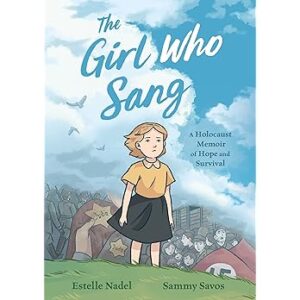
THE GIRL WHO SANG

Last year in November, my dear friend Estelle Nadel passed away. She was about to turn eighty-nine-years-old. In January of 2024, only months after her death, her graphic novel memoir, THE GIRL WHO SANG, came out into the world. This saga of Estelle’s (Enia in Polish) traumatic childhood as a young Jewish girl in Borek, Poland during the Holocaust, is moving, heart-wrenching, and powerful. And the story is greatly enhanced by the drawings of illustrator and storyboard artist, Sammy Savos.

Estelle’s story is one of life-threatening events, narrow escapes, and compassionate neighbors. She told it many times – in schools, on the news, and ultimately for the Steven Spielberg’s Survivors of the Shoah Visual History Foundation. She cried during every presentation. She couldn’t help it. Her life had been so difficult. But she was driven to keep going and often said, “People need to know this really happened… and that it happened to me. I have to do it now because I won’t be around forever.”

I was so happy when Estelle told me she had found both an agent and a publisher. I also told her that publishing a book, especially one with illustrations, could take years. At first, she wasn’t sure about it being a graphic novel. She didn’t want the illustrations to minimize the seriousness of what had happened to her. But her agent and editor felt like this was the best format to use in order to get her story into the hands of young readers. And after seeing the final product, I totally agree.

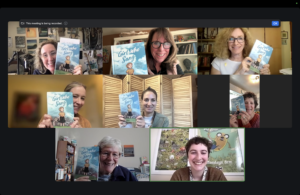
Last month, Estelle’s illustrator, Sammy Savos, did a Zoom presentation for one of my critique groups. I had been communicating with Sammy via email for many months and trusted that she would give us a good sense of her process. I hadn’t met Sammy in person or even spoken to her on the phone. Still, her heartfelt and appreciative correspondence made me think we were in for a treat. And boy, was I was right. Sammy’s talk was INCREDIBLE.

For a group of mostly kidlit writers, seeing and hearing about Sammy’s illustration process was mind-boggling. Not only did it take four-and-a-half years to complete the book, Sammy’s attention to detail was unprecedented. She had a very personal story to tell with many emotional components. Estelle’s father, sister, and one of her brothers were taken to Auschwitz and murdered. Her mother was shot in front of their small farm house. Estelle (Enia) and her one of her surviving two brothers were put in a jail cell as young children. They miraculously escaped and found their way to a neighbor’s house. That neighbor not only took them in, she hid them for over two years in the attic of her barn. And even when the war was over and Estelle and her remaining family members were liberated by the Russians, she still wasn’t safe. She and her brothers were taken to a displaced persons’ camp in Austria. But after a soldier heard Estelle sing, she and her brothers were given passage on a ship to America.

Sammy did an amazing job capturing Estelle’s life in Poland, giving particular attention to the buildings, clothing, and facial expressions of family members. She took great care in choosing the proper color palette to give the story a realistic tone. She made sure all the characters were proportional to one another, wore the proper clothing, and kept detailed notes about the timeline of events. Many of her drawings were inspired by the few photographs Estelle had from her childhood, and from her subsequent trips to Poland. Other information was gleaned by Sammy’s own meticulous research.

But most importantly, Sammy wanted to get the story right. She wanted to honor Estelle and her family, by getting the emotional and factual information as true as possible. She wanted young readers to learn about what had happened to Jews during the Holocaust by learning about a real person who had experienced it. Estelle and Sammy never met, but Sammy would often confer with Estelle by phone. And through it all, they developed a close bond. Sammy is in her twenties, Estelle was in her eighties. But the two connected as if they were related. As it turns out, members of Sammy’s family lived about an hour away from Estelle’s hometown of Borek, Poland before they came to America.

Estelle loved to sing, and I had the privilege of singing with her in our synagogue’s choir for many years. Whenever we were together, she always made time to ask me about my family and how I was doing. Despite her traumatic childhood, Estelle remained positive, active, and compassionate. She went on yearly trips to Poland where she participated in The March of the Living. She, and the grandson of the neighbor who had hidden her, gave talks in Polish schools about what had happened during the war. But her biggest claim to fame, Estelle’s signature line was telling everyone she cared about that she loved them. She didn’t want those words to go unsaid.

I am so thrilled that THE GIRL WHO SANG is out in the world to honor her legacy. Thank you Estelle, for telling your story, and thank you, Sammy, for bringing it to life.


6 Comments

Filed under 2024, Book Review, Graphic Novels, Interviews, Middle Grade, Nonfiction, Persistence, Rondi Frieder

KidLit Nonfiction Awards

NONFICTION AWARDS

By Susan Wroble

This past summer, my planned presentation on award-winning nonfiction books took a tangent. I realized that instead of award-winning books, what I really wanted to learn about was the nonfiction awards themselves. I knew about the Sibert Awards from the American Library Association but had no idea if there were any other KidLit nonfiction awards out there.

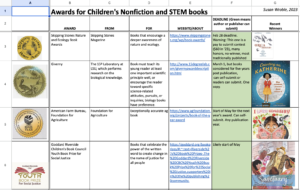
For authors, awards are one way to try to help give your book a longer life—and it turns out that there are other awards besides the Sibert. A LOT of others. I found 17 awards where, unlike the Sibert, the author or the publisher has some input into the nomination process. Some of my favorites of the nonfiction children’s awards include:

The Foundation for Agriculture Award from the American Farm Bureau. Their “Book of the Year Award” goes to
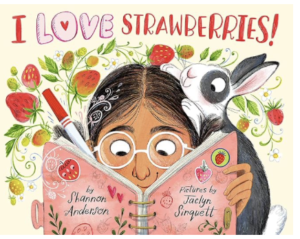
books that have accurate information about agriculture with a positive portrayal. Shannon Anderson’s delightful I LOVE STRAWBERRIES, illustrated by Jaclyn Sinquett, is a fabulous example. And as a side note on this award, the Farm Bureau has its own publishing house, Feeding Minds Press. If you are working on a manuscript that pertains to agriculture in a broad sense, consider submitting it to Feeding Minds.


The AAAS/Subaru SB&F Prize for Excellence in Science Books. This prize is awarded in four different categories: children’s (PBs), middle grade, hands-on, and young adult. The criteria vary a bit by group, but in general must support the development of positive attitudes about learning about STEM topics. The books must be well-organized, with the scientific concepts accurately presented. One of the joys of this particular site is that it is very searchable, both by category and by year.

The Eureka! Children’s Nonfiction Book Awards from the California Reading Association carry a lot of weight—their list is a reference for librarians in other states and around the world. Awards are given to a lot of books: in 2023, there were 10 Gold Awards and 40 Honors Awards.  The authors and illustrators do not need to be from California, and the list of what constitutes nonfiction is simple: everything that is not fiction. That means that this award is a great fit for harder categories like memoir or poetry, folktales or cookbooks.

You can access my “Awards for Children’s Nonfiction and STEM” spreadsheet here.  The list is focused on awards that authors have some control over, and is organized by submission date. There may still be others out there that I missed. If you find additions or errors, please contact me. And best wishes on your own awards!

3 Comments

Filed under 2023, Nonfiction, Susan Wroble

Not to be Missed Nonfiction

By Susan Wroble

The Rocky Mountain Chapter of SCBWI is one of those truly great organizations, filled with people who willingly share their knowledge to support others. It was the reason I stepped in to volunteer for the chapter’s leadership team—I wanted to keep this organization going. In the nearly two years since then, one of the accomplishments I am happiest about is that we have created some Connect Groups to meet the specific needs of some of our members.

One of those newly created Connect Groups is specifically for nonfiction. The chapter has a strong and growing group of nonfiction creators, and this past year marked the birth of some noteworthy nonfiction that I wanted to bring to your attention. Not only are these great books for the kids in your life, but many should make it to your keeper shelves as both beloved treasures and mentor texts.

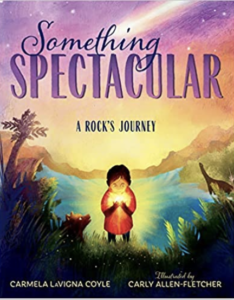
For many kids and adults, Carmela LaVigna Coyle is a rock star for her 20-year series PRINCESSES (starting with DO PRINCESSES WEAR HIKING BOOTS). But my personal favorite is her latest, SOMETHING SPECTACULAR: A ROCK’S JOURNEY (Muddy Boots, illustrated by Carly Allen-Fletcher). Structured as a timeline from about 272 million years to today, this story traces the geological journey of a rock through time, from the sediment on the bottom of a forgotten sea to a sandstone heart found and treasured by a young girl. Layered and lyrical, filled with onomatopoeia and alliteration, this book is a stunning read-aloud. And I’ve marveled at the way Carmela kept the young girl, who does not appear until the last page, central to the story. This book lives up to its name—it is truly spectacular!


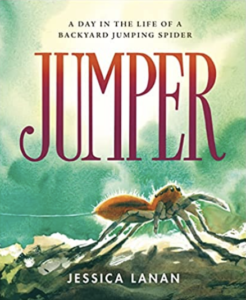
One of the favorite and most influential books of my childhood was BE NICE TO SPIDERS by Margaret Bloy Graham. When I saw RMC author and illustrator Jessica Lanan’s book, I knew it would be a book I would treasure. JUMPER: A DAY IN THE LIFE OF A BACKYARD JUMPING SPIDER (Roaring Book Press, 2023) draws readers in from the very first spread reaching out to ask them to imagine: “What if you were very small? Smaller than a cat or a dog, a bar of soap or a bottle cap. As small as a bean. What would your world be like?” The pages of backmatter are exceptional and include not only a glossary and life cycle and anatomy, but sections on how jumping spiders hear and see and feel—and walk on walls! Jessica’s illustrations, done in ink, watercolor, and gouache, shift back and forth from the perspective of Jumper to the perspective of a child. Both her text and her artwork invite comparisons.
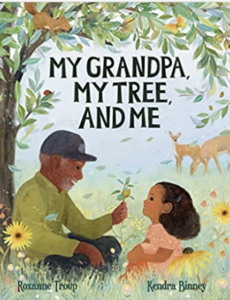
Roxanne Troup lives in Colorado now, but growing up in Missouri, her family (like everyone around) had a pecan tree in their yard. Roxanne’s book MY GRANDPA, MY TREE AND ME (Yeehoo Press, 2022; illustrated by Kendra Binney) flows between the care of a girl’s pecan tree and those in her grandfather’s pecan orchard. Set over the course of a year, the story is so quietly beautiful that it was only on the second reading that I realized it was one of the best examples of a compare and contrast book that I had seen. It’s now one of my favorite mentor texts for that structure. Teachers could use both MY GRANDPA, MY TREE AND ME and JUMPER for a fabulous lesson on two very different and very effective ways to contrast subjects.


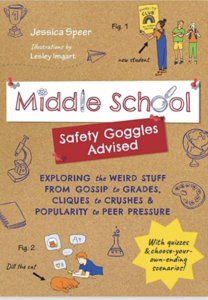
With a master’s degree in social sciences, author Jessica Speer has carved out a niche for her books that blends science and activities with true stories. In researching her latest book, MIDDLE SCHOOL: SAFETY GOGGLES ADVISED (Familius, illustrated by Lesley Imgart), Jessica spent time in conversation with a hundred middle schoolers, asking them what their greatest challenges were, and those top concerns became the chapters in her book. Coming out in August, Jessica has a book that most families with kids will need: THE PHONE BOOK: STAY SAFE, BE SMART AND MAKE THE WORLD BETTER WITH THE POWERFUL DEVICE IN YOUR HAND. For authors, her books are fabulous mentor texts, not only for engaging and interactive books, but for activities that can be included as resources either within a book or on websites.
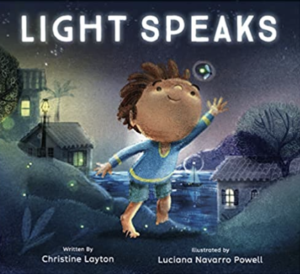


Christine Layton’s picture book LIGHT SPEAKS (Tilbury House, illustrated by Luciana Navarro Powell) is so gorgeous that it brought me near tears. Using spare, poetic text, she introduces the physical properties of light to very young listeners. As a former volunteer in the space section of Denver’s Museum of Nature and Science, I especially loved this spread: “Light tells the space between stars. It echoes off planets and moons—doppled, glowing and brilliant.” Christine’s brilliant backmatter takes each of those properties and explains them each in more detail.


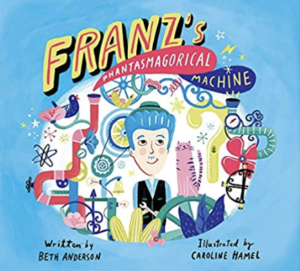
Beth Anderson had not one but THREE (!!!) books come out this past year. Beth is a master at picture book biographies and in finding the heart layer, that lens or angle or viewpoint that makes her subject matter and her book stand out. Her biography FRANZ’S PHANTASMOGORICAL MACHINE (Kids Can Press, Illustrated by Caroline Hamel), about the self-taught inventor Franz Gsellmann, celebrates the drive to build and create and invent—just for the sake of invention—and to not give up. Beth’s books are all so well-crafted that I find myself turning to them again and again for insights on language choice, structure, and most of all, heart.

I hope that you too find yourself drawn to this incredible list—for reading, for gifting, for learning the craft of nonfiction writing. Enjoy!

3 Comments

Filed under 2023, Nonfiction, RMC-SCBWI, Susan Wroble

Kids Love Nonfiction

By Susan Wroble, February 2022

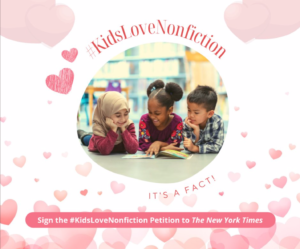
Valentine’s Day was the official launch of a project near to my heart — the #KidsLoveNonfiction Campaign. Mary Ann Cappiello, Professor of  Language and Literacy at Lesley University, and Xenia Hadjioannou, Associate Professor of Language and Literacy Education at the Harrisburg Campus of Penn State University, released a letter to the New York Times requesting that the paper add lists of bestselling children’s nonfiction.

All too often, the adult book-buying public is trapped by their own childhood experiences. Their belief can be summed in the title of an article in December 2020 by Washington Post education columnist Jay Mathews: “Will my grandkids still love me if I buy them nonfiction?”

For most kids, the answer to that question is “Yes.”

Kindergarten teacher Marlene Correia realized that most of the books she read to her class were nonfiction. Then she started paying attention to the books they checked out of the school library. For nineteen weeks, she tracked the data. She discovered that for 14 of those weeks (74% of the time!), her students checked out a greater number of nonfiction and informational fiction books over fiction. (Informational fiction has facts, but also made-up parts — a great example is Adam Rex’s picture book Pluto Gets the Call, where the planet does the talking!)

Another study followed 4-7 years olds—and again found that this age group, despite being the ago of make-believe, had a strong preference for stories that were true. Author Melissa Stewart,  who writes the incredible Celebrate Science blog, notes that 40% of elementary children prefer nonfiction, which another 30% prefer nonfiction and fiction equally.

So for The New York Times, it’s time. Time to support the books that kids love. Time to let the grown-ups know that kids love them. Time to align your children’s bestseller lists with the adult lists, highlighting both fiction and nonfiction and put a spotlight on the incredible nonfiction available to kids today.

And for everyone else, if you are interested in adding your support, you can sign your name to the letter (your email address will remain private). The kids will thank you!


2 Comments

Filed under #KidsLoveNonfiction, Nonfiction, Susan Wroble