

Category Archives: Agents

RESEARCHING AGENTS: LEARNING AND MORE LEARNING!

Research, research, research. I have been doing lots lately. I’m in search of agents to query. This isn’t my first time. But yay me! After years of practice, I have become a quick-study combing through online resources: Manuscript Wish List (MSWL), QueryTracker, PublishersMarketplace, AgentQuery, Reedsy Marketplace, agent websites, interviews with agents, etc. Researching agents is being a detective – double-checking information; sleuthing for key words and phrases to find ones that fit the theme, plot, voice and vibe of my picture book and young adult novel; and running through agent’s social media posts.

One thing has stayed the same. It’s very tedious work. Very!! And there is no short cut. But I am always learning, especially when I see unfamiliar words and phrases on MSWL Some I need to know; others pique my curiosity. So, I thought I would share my latest “glossary.”

AYKB – Stands for “As you know, Bob…,” a technique writers often use to reveal important background information without taking readers out of the story.

BAME – Stands for Black, Asian, Minority Ethnic (writers).

Complex dynamics – Can mean complex characters or dynamic relationships between characters. When creating “complex dynamics,” here are tips for creating your characters: Find out what matters to them. Free write, play with characters to understand their complexities. Explore their backstory. Use characters’ surroundings to develop them.

Dark academia – Set in an elite school with old, crumbling gothic architecture, a dark library, eerie common rooms. Students wear uniforms and enjoy discussing art, literature, philosophy. Typically, there is one group of students that set themselves apart – by choice or through prejudice. Recommend: THE RAVENS (series) by Kass Morgan.

Dead genres – In the words of an agent, “I want the genres everyone says are dead. There is absolutely still room for ‘dead’ genres.”

DEAI – Stands for Diversity, Equity, Accessibility, and Inclusion.

Epistolary novel – Fiction written in the form of letters or other documents, such as emails, journal entries, texts, etc. Recommend: YOURS FROM THE TOWER by Sally Nicholls

Escapism – Stories with big characters, high stakes, and ideally, a happy ending. Recommend: DRAGONFRUIT by Makiia Lucier.

Fabulism –Stories that have fantastical elements entwined with the everyday perfectly ordinary – and don’t explain why. Recommend: THE ASTONISHING COLOR OF EVER AFTER by Emily X.R. Pan.

HEA – Stands for Happily Ever After.

Head hopping – When a writer hops between different characters’ perspectives (“heads”) within the same scene.

Intersectionality – Describes the way people’s social identities can overlap. Coined by Columbia law professor Kimberle Crenshaw: “It’s basically a lens, a prism, for seeing the way in which various forms of inequality often operate together and exacerbate each other.”

LitRPG – Stands for Literary Role-Playing Games, a genre combining the conventions of computer role-playing games with science fiction and fantasy novels. Recommend: Clan Dominance: The Sleepless Ones 1 by Dem Mikhailov.

Lower YA – category of young adult fiction aimed at ages 11-13. Typical elements: 1) Likeable protagonist with hints of heavy family topics/issues. 2) Mostly happy, resolution filled ending. 3) High school setting and first love type romance. Recommend: LUCKY IN LOVE by Kasie West.

Middle YA – category of YA aimed at ages 14-16. Typical elements: 1) Traumatic protagonist backstory. 2) Protagonists have a clear identity outside of their family. 3) More diverse, dynamic supporting characters. 4) Romantic relationships with more intimacy and meaning. Recommend: THE NAMES THEY GAVE US by Emery Lord.

Upper YA – category of YA aimed at ages 17+. Typical elements: 1) Protagonist out of high school or close to graduating; navigating post high school life; could be living on own. 2) Deeper introspection of protagonist’s flaws, strengths, wants. 3) Higher stakes and consequences for protagonist’s actions, decisions. 3) Romantic relationships with physical intimacy and/or focusing on long term. Recommend: THE REAPPEARNCE OF RACHEL PRICE by Holly Jackson.

Message novels – The author has a specific agenda – a message. Written to specifically promote an idea or concept.

Mirrors, windows and sliding glass doors – Dr. Rudine Sims Bishop, known for her groundbreaking research and advocacy for diversity and representation in children’s books, pioneered the concept that all readers must experience “seeing” themselves (mirrors), different perspectives (windows) and “stepping into” the experiences of others (sliding glass doors).

Selkies – Mythological creatures from Scottish folklore. They shapeshift between seal and human forms by removing or putting on their seal skin. Recommend: TIDES by Betsy Cornwell, SEVEN TEARS INTO THE SEA by Terri Farley.


Mind-boggling? Sure is. Every phase of writing is mind-boggling. But I keep soaking up support, like the recent advice from one of my author-mentors: “Work hard, work harder. What comes will come.”



5 Comments

Filed under Agents, Karen McChesney, Main character, Marketing, Motivation, Persistence, Picture Books

Auditioning: Putting My Pages Out There

The timer went off. I had just finished a productive 50-minute revising session. But then… my break turned into being online too long. I disappeared into the SCBWI website, reading all about upcoming webinars. Yes, I was procrastinating. Yes, I was hoping a super power would finish editing a chunk of my young adult novel. It was due to my young adult novel exchange partner in five days.

Just as I was about to close the website, one webinar jumped out at me. It cheered, “Sign up. Now! Don’t think. Do it.” The webinar featured an agent giving live feedback on the first 10 pages. Ten pages? Wow! Rare, I thought. And curious. One seat was left. It was mid-day. The pages were due at 5pm the next day.

“Nope, too late,” I thought. “Besides, my manuscript isn’t query ready.” Meanwhile, my neuro divergent brain was full speed ahead, doing a jig and high on a possible challenge. I quickly googled the agent’s website and Manuscript Wish List. I got goosebumps. She was seeking the themes steeped in my YA novel.

Minutes later, I was registered. Plus, I paid extra ($25) for the agent’s post webinar detailed critique of my first 50 pages. What an adrenalin rush! What a perfect way to put my pages out there. An audition of sorts.

The spontaneity was energizing. This wasn’t the first time that I had jumped and registered last minute for a pitch or contest. Perhaps, the stars simply align that way for me.

Unfortunately, in this instance, there was one problem. A big problem. I had not looked at the first five chapters of my YA novel in months. Many months. I had been hyper focused on cutting, editing and polishing the last act. Yikes!

I immediately hunkered into my editing cave. The good news, it was easy to cut and edit, because I had moved parts from the beginning to the second and third acts. The bad news, it was very challenging to re-figure the first chapter. It no longer fit, as a result of my final revision. I felt stuck and overwhelmed. If only it made sense to start with chapter two. But, I needed a set up. Ugh.

I re-read the Beat Sheets (from SAVE THE CAT! BEAT SHEET WORKBOOK by Jamie Nash) that I had done and re-done for this novel. I re-read the first act. I handwrote notes; did free writes of possible first pages. Geesh. Was I really going back to the drawing board? Insane! I couldn’t delay; couldn’t stop. I had a deadline.

Fast forward. The webinar was an incredible experience. Each attendee’s first five pages appeared on screen, while the facilitator read them aloud. The agent devoted six minutes to each work, giving succinct, insightful, thought-provoking feedback aloud that she had prepared in advance. Everyone listened. No interactions, discussions, questions. I loved the meditative, deep thinking mood – and generous quiet time to soak up the sound of our prose and a professional’s reaction.

Of course, I was nervous and full of “I should have changed this, cut that…” But it was too late. It was un-polished. It didn’t matter. My work was out there. The curtains were wide open. An audition.

Lesson learned: Put my pages out there before I’m ready to query. The webinar pushed me outside the “I have to” box. I have to have a full manuscript ready before I…  Ever since, it has felt liberating and reassuring to keep entering pages in a contest, online sessions, etc. Intimidating? You bet! But these auditions keep me moving forward and believing in my novel. Best of all, they give me a reality check.

By the way, the agent’s detailed ($25) feedback was a huge perk. Pages of positives, keen insightful suggestions, along with discerning questions. I have added her to my To Query spreadsheet.

Here’s to auditioning your work in progress! Why wait? Give these opportunities a try and look for more. Congratulate yourself on putting your pages out there.

Webinars: SCBWI Regional Virtual Events https://www.scbwi.org/regional-virtual-events

March contests for YA novel excerpts: (Winners are assigned to an editor or mentor that coaches you to a polished manuscript.)

#RevPit 2024 Annual Contest  https://reviseresub.com/annual-contest

First Page Prize   https://www.firstpagesprize.com/

Gutsy Great Novelist  https://gutsygreatnovelist.com/chapter-one-prize/

Uncharted Novel Excerpt Contest  https://www.unchartedmag.com/uncharted-magazine-novel-excerpt-prize-judged-by-keshe-chow/


There’s no time like the present. –MG and YA acclaimed author, Victoria Hanley


2 Comments

Filed under 2023, Agents, craft advice, critique, Karen McChesney, Literacy Program, Main character, Middle Grade, Motivation, Persistence, Revision process, RMC-SCBWI, Upcoming

Finding The YA in Learning


Murder. Secrets. Drugs. Gossip. Lies. Sexuality. Romance. Magic. Identity. Rumors. Breakups.

Hang out with a group of YA writers and you’ll likely hear these words, along with more provocative, dark, odd, edgy, far-out, intense, hilarious, eccentric, juicy, shocking topics. We love teens. We love big drama and conjuring a mess for our teen characters in current time or mystical worlds.

Other kid-lit writers often say we’re nuts for writing over 75,000 words. But we can’t get enough. We want to hold on to every word. No wonder our revisions can take years and years as we cut, trim, tighten hundreds of pages.

Thanks to my critique group, Story Spinners, I unexpectedly joined the YA writer “club” years ago after they nudged me to turn my coming-of-age short story into a YA novel. I was clueless and intimidated, but I couldn’t stop writing. I’m incredibly fortunate to be part of the SCBWI-Rocky Mountain Chapter’s YA community. And I’m in awe of how everyone cheers each other on at book launches and events by and for YA writers.

My fellow YA’ers and I adamantly long to be with our peers and find YA-only classes. No offense, picture book and middle grade writers. We adore you and your books! Just like our teen characters, we long to be belong; we want to be in a YA cluster. But, we’ll be the first to admit, we often feel like the misfits in writer land. Afterall, YA novels are a far cry from Middle Grade.

Perhaps that’s why our search for YA-only learning is constant and fierce. The past few months, for instance, several YA writers and I started researching YA-only workshops, courses, and other ways to amp up our learning.

Here’s what we have found so far:

Workshops/Courses:

Wordsmith Workshops https://www.wordsmithworkshops.com/

Vermont College of Fine Arts https://vcfa.edu/writing-novels-for-young-people-retreat/

Hugo House https://hugohouse.org/product/young-adult-fiction-workshop/

Writer’s Digest University https://www.writersonlineworkshops.com/courses/writing-the-young-adult-novel

UCLA Extension https://www.uclaextension.edu/writing-journalism/creative-writing/course/young-adult-novel-i-writing-x-4451

Tin House https://tinhouse.com/workshop/

From SCBWI:

YA Connect and Other Connects https://www.scbwi.org/regions/rmc/events

YA Connect is free and offered every other month by and for YA writers of all levels to learn and meet fellow YA writers. Most YA Connects are both in-person & Zoom.

Michelle Begley Mentorship – Due Oct. 31, 2023 https://www.scbwi.org/regions/rmc/RMC-mentorship-program

Weekly Podcast https://www.scbwi.org/podcasts

Most recent one featured Deborah Halverson, award-winning YA author, including Writing Young Adult Fiction For Dummies and Honk If You Hate Me

Monthly Virtual Events, hosted by chapters across the U.S. https://www.scbwi.org/regional-virtual-events

Coming soon:

Lighthouse Writers Workshop, Denver – YA workshops, gatherings https://lighthousewriters.org/

Of course, there are a lot more YA-only opportunities out there. Share your findings in the comments, please. Meanwhile, YA writers: Keep reaching out to find other YA’ers. And remember, teens can’t wait to read your stories – and drama!

2 Comments

Filed under 2023, Agents, craft advice, critique, Graphic Novels, Karen McChesney, Main character, Middle Grade, Motivation, Persistence, Revision process, RMC-SCBWI, Upcoming, What I am doing now

Go Writers, Go!

It was a writer’s dream. That’s how I felt at the recent grand opening of Lighthouse Writers Workshop new building. I was with over 500 other writers in the stunning, custom-built, cozy three-story building designed just for writers. Just for writers!

“We want this to be your home,” said Co-Founder and Director Michael Henry. And, we want it to be a place where writers of all ages, levels, backgrounds, genres come “hang out and write,” added Andrea Dupree, Co-Founder and Program Director.

What could be better? That night, when I left this writer’s paradise, I was riding high. High on great gratitude.

Gratitude for:

-living in a city that has invested in Lighthouse and writers

-living in a state with an incredibly supportive kid-lit writer community

-getting to teach youth at Lighthouse

-my awesome writer critique group, Story Spinners

-SCBWI-RMC

-my writing groups: Young Adult writers, NaNo writers

-my Monday accountability group

-my super supportive husband and friends

-my manuscript exchange partners

-my two late aunts who modeled creative follow-your-dreams living

Wow, I have been incredibly fortunate to have many, many cheerleaders on this crazy journey of querying picture books and revising young adult novels. At the grand opening, one author-speaker reminded, “writers need other writers, create your community.” I am immensely proud that I have created my writer community. And it keeps growing! I have great cheerleaders. Best of all, they have shown me how to be a cheerleader; they have inspired me to make time and show up for other writers.

In that spirit, I decided to share some of my favorite cheers from other writers. I keep them in a notebook and glance at them often, especially when I get a bad case of imposter syndrome. These words give me courage; remind me to have fun; renew my “I can do this.”

May these comments cheer you on, too.

For imposter syndrome: Before writing, take a few minutes to jot down what you’re thinking. Your doubts, your insecurities. Spit ‘em out! Then, write your goal for your session, such as word count, number of pages. At the end of your session, write down what you did.

 Congrats on doing the hard work on your YA. It’ll pay off. Sometimes you just have to plough through the hard stuff.

What an achievement! I am so proud and inspired by your achievement of finishing another revision.

Did you sign on yet for film rights for your book?!!!! I can picture it as a movie.

You hooked me with your pitch. I want to read it!

You sound very clear on your intentions for your YA. Get your story out there!

Hip, hip hooray! I know you’re passionate about this story and I applaud you for sticking with it. This is very hard work!

Aim to send 100 queries. I got my agent on query 101.

It doesn’t matter how long it takes you to finish. What’s most important is that you are staying with the hard work.

Here’s to being cheerleaders and having cheerleaders. Go writers, go!

Lighthouse Writers Workshop is the largest literary center in the Rocky Mountain West. They offer writing instruction, workshops, events, and support for writers of kid-lit, fiction, nonfiction, poetry, and many other genres. New location: 3844 York St., Denver CO 80205. For more information: Lighthouse Writers Workshop |


4 Comments

Filed under 2023, Agents, craft advice, critique, Karen McChesney, Literacy Program, Motivation, PBParty, Persistence, Picture Books, Revision process, RMC-SCBWI

QUERY, REVISE, REPEAT

If you glanced at my weekly calendar, you would see time blocks for Research Agents & Query and for Revise. In my weekly goals, I note the number of queries along with the number of pages that I plan to revise. Time blocking makes me show up. Of course, life gets in the way (and I let it!), but I’m proud to report that I have had better-than-ever attendance the past four months. I suspect it’s because sending out queries while deep in the messiness of revising keeps me on my creative toes. Doing both reminds me: I am a writer, I can do this.
Every time I send off a query for my picture book, I feel a loud “YES!” in my writer bones. Yay, my story is out there. And so is my sweat. Each word contains years and years of being turned upside down and inside out. Eventually, I may have to revise my manuscript again. Ugh! I don’t think about that though. I’d rather celebrate that it’s done. For now, it feels great to finally send off 500 words that I care the world about.

Every time I finish revising pages of my YA novel, I feel a huge “I did it!” When a whimper of “I wish I got further” creeps in, I give myself a “you got this!” Yay, my revising is getting there, as I cut, re-arrange, rewrite and enjoy an occasional epiphany when I carve out a new scene or one sentence flows smooth and crisp. It feels great to be close to the finish line of 80,000 words that I think about day and night.

Querying and revising balance my writer mojo. They are yoga. Querying is me following my teacher’s specific instructions. Revising is me slowly sinking into the pose, adjusting my feet, tweaking the shape of my hand, remembering to breathe, and challenging myself to stretch longer, further till gradually, my body does something I never knew possible. Just like my characters do when I follow them. Just like my story flows when I remember to breathe!

Undoubtedly, querying is a refreshing change of pace and motivates me to stay in the revising trenches.

-It’s concrete and point-blank – a healthy break from the land of fiction.

-Researching agents keeps me tuned in to this crazy industry.

-Learning. Helps me update my package for my YA novel (logline, pitch, synopsis, etc.).

-Gives me a sense of completion amid day-after-day plowing through revision.

-Amps up my writer confidence.

Querying is baking. The don’t-deviate exactness of baking pushes me to diligently concentrate, the same way that I follow submission guidelines to a tee. I go to hyper focus mode to get everything right. Recently, for example, an agent’s instructions said to attach picture book manuscripts. I re-read that line several times. Because? All other agents have stated, NO attachments. I do the same when I bake. I re-read each step to make sure I use a teaspoon vs a tablespoon, baking soda vs baking powder, whisk in vs stir in… Like querying, reading baking instructions works my brain muscles. But, what a thrill to pull my cake out of the oven. It’s done. I feel that way after I send off another query. It’s done. Yes, a rejection is a cake gone wrong. It burns me. But, I get to bake another. I get to send out another query. Afterall, I must reach my goal.

Revising is cooking. I prefer cooking, because I get to invent, combine, add another spice and research (what’s a Lepiota mushroom?). I love revising recipes – cutting, adding, switching spices and ingredients… Just like revising my YA. Letting myself play and experiment keeps me energized. For instance, I’ve relied on freewriting dialogue to take my secondary characters from flat cardboard to three-dimensional humans. I’ve resorted to longhand to rewrite highly emotional scenes. My pen makes me slow down the rolling-boil action and grant my character a chance to sit on simmer. What a joy to sit with my characters! I feel that way when I finish cooking, especially a soup that’s simmered all day. Yes, some soups have no zing, just like so many of my sentences.  But, I always return to my writing recipe – Beat Sheets, notes and my synopsis – to stay on track. Then, it’s back to the keyboard. Afterall, I must reach my goal.

Juggling querying and revising doesn’t make this whole writing thing any easier. It’s such hard, hard work. Juggling feeds my creative longing and insatiable curiosity – and by gosh, it gives me hope!


Over time, juggling would come to seem slower.  You are doing it.  –Heather Wolf, juggler and author, Birding at The Bridge: In Search of Every Bird on the Brooklyn Waterfont


3 Comments

Filed under Agents, craft advice, critique, Karen McChesney, Main character, Motivation, Persistence, Picture Books, Revision process, What I am doing now

Get Ready To Submit Your Novel!

By Rondi Sokoloff Frieder

As I get ready to submit my latest middle grade novel to agents, I am filled with a mishmash of emotions. I’m excited, nervous, anxious, and dare I say it… petrified! I have been working on this book, on and off, for over ten years. It has been written, critiqued, revised, workshopped, re-imagined, edited, and rewritten. This is my seventh draft. And although it is way better than when I started, I am still filled with a case of the jitters as I get ready to set it out into the world.

I love this book. And I’m hoping agents and editors will, too.

If you are also getting ready to submit your novel to agents, please keep the following in mind:

  1. You must truly believe that you have done everything possible to make this book the best it can be.
  2. Your critique partners should agree and cheer you on.
  3. Write a query letter. Make sure it is tightly written with a unique hook. Have your critique partners give you feedback and rewrite it.
  4. Draft a synopsis. And get feedback on that, too. This is one of the hardest things to write. Especially if you are limited to one page for a 50,000 word book. Use a template and polish it until it shines.
  5. Create  a short bio. Many agents are asking for this, especially if you are submitting to them on Query Tracker – querytracker.net .
  6. Research agents who are looking for what you have written. You can start with Manuscript Wish List – manuscriptwishlist.com , but make sure to visit the agent’s website to make sure they are still with the same agency. Development editor Susan Chang (www.susanchangeditorialcom) also recommends becoming familiar with Publishers Marketplace and reading the acknowledgement pages of comp books to identify the type of agent who would be interested in your genre. Check social media platforms like Twitter, TicTok, Instagram, and Post.news to see what agents are currently looking for. Go through your conference/webinar notes and identify agents who might be a good fit. Even if the conference was a while ago, mention you attended and went to their sessions. Agents know  writing a book takes a very long time.
  7. Make a spreadsheet to keep track of your submissions. Some people do this on Query Tracker. I do it on Excel and use six columns: Name of Agent, Name of Agency, Date Submitted, Why I am Submitting to this Agent (met at a conference or watched a webinar where they presented), Response Time (if stated), Response Date, Comments.
  8. Tailor your query letter to each specific agent. Tell them how you found them and why your book is right for them.
  9. Send your queries out in batches. I would start with ten–twenty. However, Susan Chang says you can go as high fifty! The industry is glutted right now and agents are busy. She recommends casting a wide net.
  10. If your responses are mostly form letters (or no response at all which is THE WORST!), you probably need to rework the query letter or look at your first ten pages. Perhaps you can improve the writing or amp up the pacing. If you are getting personalized rejection letters, you are on the right track. Send out another batch. If you get requests for partials or fulls, CELEBRATE!!!! You are getting close.
  11. It may take months to hear from an agent. To keep from getting totally stressed out, start working on your next project. All agents want clients who are building a career. Outline your next novel, take a class, storyboard a picture book, and don’t forget to READ!
  12. Congratulate yourself for completing the process. You had an idea, you developed it, you got feedback, and you put it out there.

I am in the middle of doing all of the above. Like you, I am thrilled to finally be sending this story out into the world. But I am also nervous about the responses I will get (or never get!). And while I wait and obsessively check my email in-box, I will work on my next project.  I have the idea, an outline, three chapters, and a new notebook for journaling. I have signed up for an accountability class and am hoping to workshop this book later in the year. I am pushing on. Because I am a writer. And this is what writers do.


10 Comments

Filed under 2023, Agents, craft advice, critique, Middle Grade, Motivation, Rondi Frieder, Susan Chang

The Secret Agent Files: Notes about Agenting

By Susan Wroble

“Why,” asked a woman near me, “is it so very hard now to find agents who want to represent picture books? I can find plenty of agents for Middle Grade and YA, even for graphic novels and author/illustrator books. But finding one to come to our conference that represent author-only picture books is getting really tough.”

It was a great question, and was addressed to an industry panel during the Regional Team meeting of the Society of Children’s Book Writers and Editors in New York in October. Our chapter has the same problem. We have lots of members who write picture books, but finding agents who would be good fits for our conferences and who are also open to picture book submissions is hard.

The answer, of course, was money. Stacey Barney is an Associate Publisher at Nancy Paulson Books, an imprint of Penguin Random House. She explained that picture books simply make less money than other formats for everyone involved, including the agents. It doesn’t mean that you can’t find an agent for a picture book. It does mean—like so much else in this industry—that it takes persistence.

Writers often talk about their “training books,” the first books they wrote when they were learning the process. Almost always, those books are languishing in some file, never having made it to print. But Stacey talked about an entirely different set of training books as she explained the publisher’s ‘Rule of Three.’ “You start by buying a book you love,” she explained, “and you build up a good rapport with the author. By the time you get to their third book, you have established the author in this industry. The first and second books are like a training camp. They won’t be break-out best-sellers. With the third, the author has arrived.” That means that an author’s beloved debut novel—the one that finally made it to print after writing a few others—is, for the publisher, just the first of the training books. For me, that comment explained a lot about agents’ and publishers’ desires to help build a career, not publish one book.

A week later, I attended an agent panel put on virtually by SCBWI Metro New York that provided additional insights into the author/agent relationship. One question asked of each of the three agents (Saba Sulaiman at Talcott Notch, Linda Camacho at Galt & Zacher, and Eve Adler at Red Fox Literary) was how they got their clients. Surprisingly, meeting someone in person at a conference was low on each list. However, the majority of clients came in through the query inbox. The catch is that many agents are closed, with the only way to submit through attending a conference or workshop. So those conferences and events remain an essential way to reach agents.

Given that, it may seem that cost is a barrier to entry, but that isn’t necessarily true. The panel I attended was free. More than five hundred people signed up. And each of the agents who presented has opened their submissions to all attendees at the panel if they have works that fit.

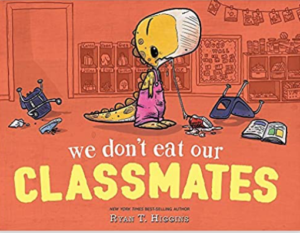
The panel’s moderator was Harold Underdown, Executive Editor at Kane Press and creator of The Purple Crayon website, a gold mine of information on children’s publishing. Harold asked the agents about recent developments in the industry, and the answer was fascinating… they recommended leaning into the weird. Specifically, they noted that neat genre categories are blurring. Saba Sulaiman noted that “there is a thirst for stories that blur genre, like a horror comedy. We want the weird!” Linda Camacho backed this up, saying that “there is a need for escapism, and a thirst for horror and for romance. Blurring genres tends to provide more avenues for creativity.” As an example of blurred genre in picture books, Saba recommended looking at Ryan T. Higgins We Don’t Eat Our Classmates. “It’s a totally unexpected dinosaur book, that funny, sweet, cute and is also a first day of kindergarten book.”

Harold also asked about tips and best practices in terms of searching for an agent. Some of the best resources are agency websites, SCBWI’s Essential Guide, Manuscript Wishlist, and Query Tracker. In addition, Saba recommended getting a short-term subscription ($25 for one month) or a limited subscription ($10 for a day) to Publisher’s Marketplace.  And then, she suggested, pay attention to the pitches. “It’s a great way to learn how to pitch a book.”

And that may be a great way to land one of those elusive agents!

3 Comments

Filed under 2022, Agents, Harold Underdown, Picture Books, RMC-SCBWI, Saba Sulaiman, Stacey Barney, Susan Wroble