Climate change is on the minds of everyone, including our children. Ellen Herbst, a UCSF psychiatrist and mother of two, suggests that the climate crisis is impacting the mental health of children and adolescents. She explains that children are, appropriately, being educated about climate change in many schools and learning about it in the news. But they are not necessarily given the coping skills to handle the devastating and anxiety-producing information. https://magazine.ucsf.edu/helping-kids-cope-with-climate-change-anxiety
There is a new trend in middle-grade fiction in which thoughtful, well-written novels for children address the climate crisis. The books vary widely, sometimes set in the future and detailing the effects of climate change on the characters’ lives or set in the present day and focusing on real climate change situations that children face. But all the novels offer students hope that they can face a challenge and make a difference. Most importantly, they all highlight that the values of family, friendship, and working together will always endure.
Fiction allows people to imagine themselves in different situations and these books allow children to see themselves making a contribution. Instead of feeling hopeless and that the situation is out of their control, these books can help ease anxiety as students read how the creative, thoughtful, and brave characters work to solve problems and change the world.
One Small Hop by Madelyn Rosenberg (Scholastic Press, 2021) This novel finds a balance of humor, adventure, and a glimpse into the future and the effects of global warming. It is set in the not-so-distant future when global warming has made the world a very different place. Ahab and his friends risk the polluted waters of the ocean, which is now devoid of life, and go to an off-limits island and find a real, live bullfrog. It is possibly one of the last bullfrogs alive.
After an internet search, Ahab convinces the rest of his friends to embark on a bicycle journey to unite their frog with another frog. Their adventure is hilarious, exciting, and alarming. It teaches the kids that hope is alive and that they can make a difference. Author Madelyn Rosenberg builds an all-too-imaginable future ravaged by climate change but also one where a kid can still lean on his friends and work toward a better tomorrow.
Hello from Renn Lake by Michele Weber Hurwitz (Wendy Lamb/Random House, 2020.) 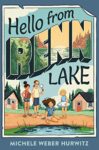 Annalise Oliver is the adopted daughter of a family that has owned lakeside cabins in Renn Lake, Wisconsin for generations. The story, told from the perspective of Annalise, the Lake, and a nearby stream, reinforces the complexity of how climate change affects communities and ecosystems. Annalise’s special relationship with the lake lets her sense what Renn Lake thinks and feels.
A harmful algae bloom emerges and begins to cover the lake and Annalise can no longer hear the voice of the lake. The lake is closed to human activity, which threatens the livelihoods of her family and the town. Annalise and her friends use research, ingenuity, and community organization to take action and save the lake. As the community supports the children’s work, everyone learns important lessons about working together and listening to nature.
The First Rule of Climate Club by Carrie Firestone (G.P. Putnam, 2022) 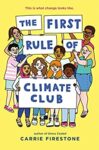 In this novel, Mary Kate Murphy participates in a unique science program focused on climate change. The class opens her eyes to many things she had never noticed before about her small suburban town: Kids throw away tons of food at school, adults drive ozone-depleting vehicles, people buy clothes they don’t need, and the birds in the local preserve seem distressed. Complicating the situation, her best friend is plagued with a mysterious illness.
The class tries to bring their concerns to the mayor who isn’t willing to listen to new ideas for addressing any of the pressing issues. Frustrated and fired up, Mary Kate and her classmates take matters into their own hands and work to bring lasting change to their community and beyond.
Haven Jacobs Saves the Planet by Barbara Dee (Aladdin/Simon and Shuster, 2022.) 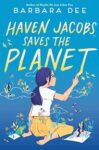 Haven Jacobs is a twelve-year-old girl who is unable to stop thinking about the climate crisis. Her anxiety about the state of the planet begins to interfere with her schoolwork, friendships, and even her sleep. She can’t stop worrying about why adults aren’t trying to solve the problems.
Haven’s social studies teacher challenges students to find a specific way to address environmental issues and she focuses on the annual science class project at the local river. Her brother tells her about the frogs he loved when he did the project several years before. But when Haven and her classmates get to the river, there’s no sign of the frogs —but there is evidence of pollution. The only thing that has changed near the river is the opening of a new factory. Haven is challenged to work with her community to make changes that benefit everyone.
Global Warning by Steven B. Frank (Clarion/HarperCollins, 2023)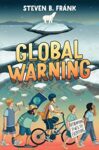 A group of 12-year-old friends concerned about climate change propose a new way to save the earth– crafting a new amendment to the United States Constitution. Their project sends them on a journey through America and Norway as they take steps to save the planet. Sixth grader Sam Warren and his friends think that climate change is too pressing to ignore. Adults don’t seem to be up to the challenge of real change, but the kids know their futures depend on action now.
With a little help from some enlightened adults, the friends draft an amendment to the Constitution that protects the plane, passes it in Congress, and changes the hearts and minds across the country to get it ratified! Although the scenario in the book is very unlikely, the book challenges students to think big to make their voices heard.
A wonderful resource for book lists of middle-grade novels is a blog written by Afoma called https://readingmiddlegrade.com/blog/ For even more suggestions, check it out!
Author Archives: Elizabeth Duncan
Middle-Grade Novels that Address Climate Change
Filed under Uncategorized
Finding the Heart of Your Story
I had the opportunity to spend a lovely day attending an inspiring workshop called “Creating the Hearts and Bones of Your Next Nonfiction Picture Book.” Sponsored by the Rocky Mountain Chapter of SCBWI, the presenters were Colorado powerhouse writers Beth Anderson, Laura Perdew, and Julie Danneberg. These three women, who are prolific nonfiction picture book authors, are also former teachers. They were eager and willing to share their expertise with attendees.*
I needed help getting started on drafting my next picture book biography. I had done hours and hours of research and had filled two spiral notebooks with fascinating information about my person. I found everything about her interesting, important, and worthy. I would look at my research and try to imagine fitting her story into 1000 words– and I was paralyzed.
What I needed to do was to find the “heart” of the story. But how?
Fortunately, Beth Anderson’s presentation was just what I needed to hear. Beth’s books pulse with heart and every sentence in her books contributes to her identified heart. Everything else is left on the cutting room floor or salvaged for the back matter.
Heart, she explains, isn’t the theme, the hook, the nugget, or the emotional arc. Instead, the heart is more elusive and more important. Sometimes called the “so what?” or take-away, it is the vital idea that lingers in the reader’s heart.
The key to finding the heart of your story is to focus on your connection to the story. Beth suggests you think about why you love your topic. Ask yourself repeatedly why you want to tell this story. Why does this story matter? What is the story REALLY about?
Through this idea of heart, an author will find the way to make their story stand out. At its essence, this vital idea will allow children to connect with the story and feel part of it. She suggests digging deeper and deeper until you find that one extraordinary and meaningful idea.
When researching, Beth gathers ideas in a list at the front of her research, recording insights that might be or contribute to the heart of her story. She looks for a key idea or a question that could guide the story. This should be a fresh take that pushes thinking or a personal angle that resonates.
Beth has been focused on how heart matters since she started writing. In her blog series, “Mining for Heart,” she reviews published picture books through the lens of that one idea that drives the book. Her insights and recommendations were helpful to me as I explored the concept related to my own work. You can access her blog here. https://bethandersonwriter.com/category/mining-for-heart/
After the workshop, I went back through my research, riffling through the information with new eyes. I started analyzing and began to identify where my passion for my subject started and what would resonate with readers. It’s been fun to explore ideas and tangents. The different perspectives are helping me wrestle the story I want to tell into a meaningful book.
Thanks Beth, for a wonderful presentation and your dedication to helping other writers tell their stories!
*As an extra bonus, the workshop was held at the incomparable Penrose House of the El Pomar Foundation in Colorado Springs. The sprawling, historic, Italianate mansion next to the Broadmoor Hotel was built in 1910. The foundation is dedicated to serving non-profit organizations and is available free of charge to groups like ours. The beautiful setting added to the day.
Filed under Uncategorized
Hope for the Future: Book Review of “Energy from the Earth” by Susan Wroble
As greenhouse gases warm the planet and the climate crisis looms, students are understandably concerned about the future. Students wonder what can be done to reduce dependence on fossil fuels and what the future of energy will look like. Susan Wroble’s new book Energy from the
Earth (part of an educational series titled “Energy for the Future”) offers positive information and hope to students. Her book focuses on geothermal energy and how it can be an important part of our energy future.
The author, Susan Wroble, one of my critique partners and fellow “Story Spinner,” has a passion for teaching science and writing children’s books. Her concise, information-rich book offers an introduction to alternative energy. The overall tone of the book is positive, looking indepth at fossil fuel alternatives to combat climate change.
Aimed at the elementary school reader, the language is simple and specific, making difficult concepts accessible. Interesting photographs, explanatory diagrams, and informative sidebars enhance the text and draw the reader into the topic.
The book explains that geothermal energy makes use of the vast amount of heat under the surface of the earth. Scientists have learned how to tap into this heat and use it as an alternative energy source. This clean, renewable energy is making scientific advances and is growing in popularity. Young readers are given an up-close look at how geothermal energy is created, harnessed, and used. Emphasizing the need for sustainable energy, the book offers specific historical examples and highlights various geothermal technologies.
As a literacy tool, the book contains all the elements of non-fiction, including a table of contents, pictures with captions, labeled diagrams, a glossary, and an index. A short quiz tests for comprehension and the book includes resource material for students inspired to learn more. It is an excellent classroom resource, both for the science information it imparts and for its use in teaching about non-fiction books.
The Next Generation Science Standards requires the nation’s 4th grade students focus on “Energy,” including alternative energy. Energy from the Earth is a valuable introductory resource for students to learn more about the science and engineering behind geothermal energy.
Congratulations to Susan on the publication of her first children’s book!
The book is available at your local, independent bookstore (special order) or online at:
https://www.amazon.com/Energy-Earth-Future-Susan-Wroble/dp/1637390580
Filed under Uncategorized
The Best Children’s Books That Capture the True Spirit of Christmas
Part of the magic of Christmas is telling and sharing stories. Christmas picture books offer the opportunity to share the Christmas message with the children we love. The images and language in these special picture books convey the beauty and emotion of the season.
Year after year, I seek out and collect children’s books that capture the true spirit of Christmas. My collection began when my first child was born, which was also the first year (of 25 or so years!) that I volunteered to teach Sunday School at my Presbyterian Church. As I read these books to my children and my students, I learned to love these stories. Repeated readings have made me appreciate the powerful language and illustrations that accompany these stories of deep faith and lessons for living.
On Christmas Eve, our family gathers to discuss the past year and to talk about our dreams for the coming year. Then we read a story and appreciate the emotions the book taps into… from remembering the wonder we felt as children to the spiritual messages that speak to our current lives.
I have put together a collection of these must-read books that address the spirit of Christmas for your bookshelf, from cherished classics to modern masterpieces, arranged by ages. Put yourself in the holiday spirit with these Christmas books, perfect for adults and children to read together this season.*
For Preschool and Early Elementary: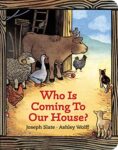 Who is Coming to Our House? by Joseph Slate, Ill. Ashley Wolff
Who is coming to our house? “Someone, someone,” says Mouse.
A modern Christmas classic with lovely woodcut illustrations shows how the animals prepare a cozy welcome for the baby Jesus. While Mary and Joseph are on their way to Bethlehem, Pig makes room, Lamb cleans up, Goose stacks the hay, and Duck lines the crib with eiderdown. All the animals are eager to welcome baby Jesus to their home. A warm, lyrical book your family will cuddle up with for years.
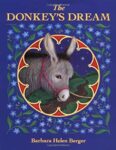 The Donkey’s Dream by Barbara Helen Berger “Come. See what you and I have carried all this way, you and I.” It was only a tiny child. Yet, when the baby opened his eyes, the cave was full of light. The donkey blinked… and suddenly, the donkey was not tired anymore.
A beautifully illustrated story of the Nativity. As the donkey makes the long journey from Nazareth to Bethlehem, he carries a pregnant Mary. Along the way he dreams he is carrying a city, a ship, a fountain, and a rose. Finally, he dreams he is carrying a lady full of heaven. Barbara Helen Berger’s glowing artwork and lyrical text perfectly convey the beauty and majesty of the story of the Nativity.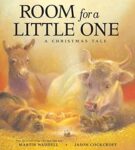 Room for a Little One: A Christmas Tale by Martin Waddell, Ill. Jason Cockcroft
“Come inside,” Kind Ox said. “There’s always room for a little one here.”
In the stable next to an inn, Kind Ox is just settling in for the night when Old Dog comes into the stable. Kind Ox makes room for Old Dog, who in turn makes room for Stray Cat, who then makes room for Small Mouse–and each time, the larger animal making room for a smaller animal. Finally, the tired Donkey comes by, carrying Mary, who asks “Where will my child be born?” Kind Ox replies, “There is always room for a little one here.” And so, Jesus is born in the stable with the animals all around Him. 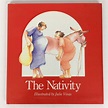 The Nativity, ill. Julie Vivas
“In the days of Herod the King, the Angel Gabriel was sent from God to the city of Nazareth. To a virgin espoused to a man whose name was Joseph, and the virgin’s name was Mary.”
The biblical story of the Nativity with text taken straight from the Bible is one about faith, love, and a miracle. It is a down-to-earth and humorous imagining of the events with a scruffy Angel Gabriel delivering the news, a clearly uncomfortable Mary on the exhausting journey to Bethlehem, and at last the deliverance of the baby Jesus.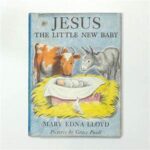 Jesus the Little New Baby by Mary Edna Lloyd
Gray Donkey stood very still. One long gray ear was up. One long gray ear was down. That day he had walked and walked and walked. He had carried someone on his back.
This sweet nativity story, published in 1951, with its simple pencil drawings, and child-friendly text capture the innocence and simplicity of the Christmas story for young children. Although it may be out-of-print, the book is a wonderful introduction to the nativity story.
For Elementary Grade Children: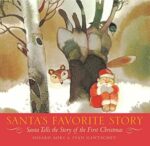 Santa’s Favorite Story by Hisako Aoki, Ill. Ivan Gantschev
“No, no, no,” said Santa in a kindly voice, “Christmas hasn’t got anything to do with me. Sit down and I’ll tell you the story of the first Christmas.”
The true meaning of the holidays is revealed as Santa Claus retells the story of the first Christmas in this picture book. When Santa Claus tells the forest animals that he is tired of delivering heavy packages, they are worried there won’t be a Christmas. To help the animals understand Christmas would still come even if he didn’t deliver presents, Santa tells the story of the first Christmas, and everyone, including Santa, learns lessons about the meaning of this special holiday.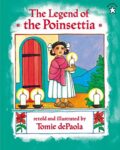 The Legend of the Poinsettia retold and illustrated by Tomie dePaola
A hush fell over the church. Voices began to whisper. “Look! Look at the weeds!” Lucida opened her eyes and looked up. Each weed was tipped with a flaming red star. The manger glowed and shimmered as if lit by a hundred candles.
This retelling of a Mexican legend tells how the poinsettia came to be, through a little girl’s unselfish gift to the Christ Child. Caldecott honor-winning illustrator Tomie dePaola’s distinctive illustrations highlight the Christmas traditions of Mexico. The book captures the excitement of the children preparing for Christmas as well as the hope of Lucida, who comes to learn what makes a gift truly beautiful.
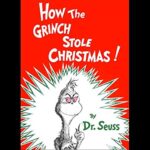 How the Grinch Stole Christmas by Dr. Seuss
Then the Grinch thought of something he hadn’t before!
“Maybe Christmas,” he thought, “doesn’t come from a store.
Maybe Christmas… perhaps… means a little bit more?
Although this classic has been commercialized in recent years, it remains the ultimate book about the real meaning of Christmas. This heartwarming story about the Christmas spirit will touch even the smallest of hearts. Like mistletoe, candy canes, and caroling, the story of the Grinch is a mainstay of the holidays.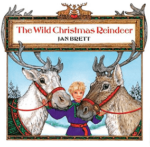 The Wild Christmas Reindeer by Jan Brett
Teeka was excited. And a little afraid. This year Santa had asked her to get the reindeer ready to fly on Christmas Eve.
Little Teeka is firm with the reindeer to get them ready for Santa’s important flight, but her yelling only gets them tangled up. She learns that kindness and love solve problems better than any firm hand. The beautiful, intricate illustrations draw on Swedish folk art and require readers to look closely to see all the details.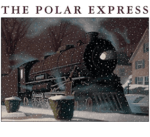 The Polar Express by Chris Van Allsburg
What I wanted more than anything was one silver bell from Santa’s sleigh. When I asked, Santa smiled. He stood, holding the bell high above him, and called out, “The first gift of Christmas!”
Skip the movie and take a ride aboard the Polar Express in this classic holiday picture book. A boy, lying awake one Christmas Eve, is welcomed aboard a magical train to the North Pole. The Polar Express makes its way to the city on top of the world, where the boy will make his Christmas wish. This is a story for all who believe in the spirit of Christmas and those who treasure the sound of a reindeer’s silver bell. The Polar Express is the 1986 Caldecott Medal winner and reading the story together is a beloved holiday tradition held by generations of families.
For Older Children: The Fourth Wise Man retold by Susan Summers, Ill. Jackie Morris
Dark ledges of rock rose around him like the bones of ancient monsters. Shifting hills of treacherous sand blistered the earth … by night jackals prowled and barked in the distance. But he pressed on, faithfully following the bright new star…
Long ago a man named Artaban and three companions observed a new star in the night sky. They knew it signified the birth of a child who would bring change and hope to the world so they decided to follow the star. But along the way, Artaban stopped to help those in need. He never makes it to the stable to pay homage to the baby Jesus. Beautifully written and stunningly illustrated, this Christmas story is unlike any other. It focuses on one man’s lifelong commitment to doing good. The Fourth Wise Man truly captures the real meaning of Christmas. 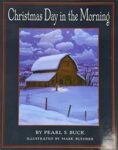 Christmas Day in the Morning by Pearl Buck, Ill. Mark Buehner
The thought struck him like a silver dagger. Why should he not give his father a special gift, too, out there in the barn? He could get up early, earlier than four o’clock, and he could creep into the barn and get all the milking done…. Milking for once was not a chore. It was something else, a gift to his father who loved him.
Rob wants to get his father a gift that shows how much he loves him. But it’s Christmas Eve and he doesn’t have any money to spend. Then, Rob thinks of the best gift of all. The acclaimed author Pearl S. Buck captures the spirit of Christmas in this elegant, heartening story about a boy’s gift of love. Originally published in 1955, this timeless, nostalgic story shares a long ago, beautiful Christmas morning. 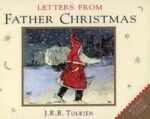 Letters from Father Christmas by J.R.R. Tolkien
For over twenty years the children of J.R.R. Tolkien got letters from the North Pole—from Father Christmas himself and from his remarkable assistant, the North Polar Bear, and his secretary, the elf Ilbereth.
Dear John, I heard you ask daddy what I was like and where I lived. I have drawn me and my house for you. I am just off now for Oxford with my bundle of toys- some for you. Your loving Father Christmas.
Every December an envelope bearing a stamp from the North Pole would arrive for J.R.R. Tolkien’s children. Inside would be a letter in strange, spidery handwriting and a beautiful colored drawing or painting. The letters were from Father Christmas. Tolkien’s love for his children and his vivid imagination is central to the wonderful tales of life at the North Pole. You’ll be charmed by Tolkien’s inventiveness and love in this holiday book. The Best Christmas Pageant Ever by Barbara Robinson, Ill. Judith Gwyn Brown
The Herdmans were absolutely the worst kids in the history of the world. They lied and stole and smoked cigars (even the girls) and talked dirty and hit little kids and cussed their teachers and took the name of the Lord in vain and set fire to Fred Shoemaker’s old broken-down tool house.
The Best Christmas Pageant Ever follows the Herdman siblings, or “the worst kids in the history of the world.” The siblings take over the annual Christmas pageant in a hilarious yet heartwarming tale. In this laugh-out-loud middle-grade novel, Ralph, Imogene, Leroy, Claude, Ollie, and Gladys Herdman show up at church for the free snacks and take over the Christmas pageant. It’s obvious that they’re up to no good, but the Herdmans, who have never heard the Christmas story before, reimagine it in their own, wonderful way.
*Thanks to amazon.com for providing great information about the books, including publishing information and synopses. I used amazon.com as a starting point for this blog.
Book Review: We Are Water Protectors by Carole Lindstrom, illustrated by Michaela Goade
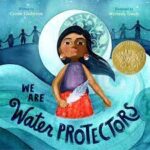 “We fight for those/ Who cannot fight for themselves…
The winged ones/ The crawling ones,
The four-legged/ The two-legged/The plants, trees, rivers, lakes,
The Earth. We are all related.”
We Are Water Protectors by Carole Lindstrom, illustrated by Michaela Goade, is a powerful reading experience for children that highlights how water affects and connects all living things. The book explores the fight to protect water from pollution and invites all children to become stewards of the Earth and protectors of water.
This picture book won the 2021 Caldecott Medal, awarded annually to the artist of the most distinguished picture book published for children in the United States. Artist Michaela Goade, a member of the Tlingit and Haida Tribes of Alaska, is the first Indigenous artist to win the award. Carole Lindstrom, the author of the text, is an enrolled member of the Turtle Mountain Band of Ojibwe.
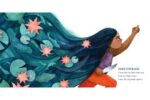 Goade’s illustrations, vibrant, multi-hued watercolors are the highlight of the book. Swirling, flowing strokes of paint bring the natural world to life. The theme of water flows through every illustration and connects everything with blue and green cascading colors. Linstrom’s text makes effective use of a chorus, “We stand/ With our songs/ And our drums./ We are still here,” emphasizing the enduring connection that native peoples have with the land.
An ancestral prophecy from Ojibwe culture forms the basis of the book. While the people honor water as sacred, the text recounts the Seven Fires Prophecy, which foretells a black snake that “…will destroy the land… spoil the water… and wreck everything in its path.” A “snake” has now fulfilled the prophecy, in the form of oil pipelines that cross native lands, damaging the Earth and polluting the water.
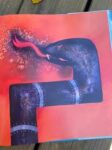
The illustrations show the contrast of humankind choosing a natural path that leads to peace, unity, and a healthy Earth and the alternate path in which humans embrace technology with little regard for the Earth. One breathtaking illustration shows a sparkling mountain lake at sunset, bathed in russet light and surrounded by animals, revealing to the reader the beauty of our untouched world. In another double-page spread, the black snake fills the pages, the pipelines that form its body cover a barren blood-red field, its frighting head spewing fire and venom.
 For the reader, the choice is clear. The book then calls people to action. The young Ojibwe narrator, with hair that spills like water across the pages, joins others in protest of the pipeline. She evokes the stories of her people and the spirits of her ancestors to give her strength to stand strong for the water and the land, against the black snake. She invites other children to join her as Earth stewards and water protectors.
We Are Water Protectors reflects the “own voices” movement, allowing children who are underrepresented in books to see themselves and celebrate their culture. The book introduces all children to Native American heritage and the philosophy that underlies their worldview. It promotes an environmental imperative, showing the world is in danger and that everyone, including the children, must take a stand for a better tomorrow.
This book can be shared with children as young as preschoolers, its bright, (although sometimes scary) pictures drawing them into the wonders of nature and the beauty of Ojibwe culture. It can be used to show how individuals take action for issues they care about. They will understand the idea of standing up for what is right. For older students, it can serve as a springboard to understanding the underlying ideas that move people to action, as well as the power of groups of people standing together for a common goal. I believe the book will be a powerful teaching tool for the elementary classroom.
Carole Lindstrom and Michaela Goade’s picture book, We Are Water Protectors is a book that deserves the praise and honors it has been given.

Filed under Ojibwe Picture Book, Uncategorized, We Are Water Protectors
A How-To Guide to Twitter Pitch Parties: Reflections by a Twitter Novice
Twitter pitch events provide a way to get the eyes of a potential agent on your work. The traditional submission process involves researching agents and sending off your manuscript— and can feel like a shot in the dark. At a Twitter pitch party, you put your precious manuscript out there, its essence squeezed into 280 characters, and agents come to you.
Sounds great— but daunting to a Twitter novice like myself. I decided to participate in the #PBPitch in February, a pitch party specifically for picture books. But I started my research into the process long before the date of the pitch party.
Years ago, I signed up for a Twitter account but never used it. I reactivated the account and started spending a few minutes a day exploring the platform. It has a lot of the same features as Facebook and Instagram, but with its own twists.
I wanted my Twitter account to focus on children’s book writing (although it was tempting to follow #CatsOfTwitter.) I began to follow children’s book authors and people I know in the writing community. I discovered Twitter soul-mates, published and pre-published picture book authors like myself, who are connecting to the writing community using this platform. As I became more familiar with Twitter, I liked, commented, and re-tweeted posts that I found interesting. Twitter, it turns out, is easy—and is a window into an active and supportive community.
I researched Twitter pitch parties on the internet. Many agents and others have blogs on the topic. It helped to take a free webinar (Julie Hedlund’s “How to Participate in a Twitter Pitch Party) to learn the basics.
Three of my picture book manuscripts were ready for submission. At a Twitter pitch party, you can pitch as many manuscripts as you want, but they need to be ready to send to an agent if you are lucky enough to get a “like” or a “heart” by an agent.
A Twitter pitch is its own writing genre. The 280-character limit on tweets presents a huge challenge. I already had log-lines and elevator pitches for my books. But those were much longer than 280-characters. I wrote and rewrote my tweets, trying to capture the story, voice, and heart of my stories in the limited space. (A helpful tool is a Twitter Character Counter available on the Internet.)
I had parsed my Twitter pitches down to their 280-character essence when I learned the hashtags (#) had to be included in the character count. #s are the way that Tweets are linked to all the other Tweets that include it. Essential to a Twitter pitch party is the name of the event, so I needed to make room for #PBPitch (8 characters). One can also include other hashtags like #NF (non-fiction), #L (lyrical), PB (picture book), DV (diverse voices) to help agents locate the kinds of work they are looking to represent. So I re-edited, making room for important hashtags.
I ran my pitches by my writing group and my family members. Then I posted them for feedback on the 12 x 12 Picture Book website (of which I am a member) and joined a #PBPitch Facebook group and posted them there too. These two forums were extraordinarily useful in seeing how others wrote their pitches and what worked or didn’t work for them. In addition to getting feedback, I also gave feedback to others, which made me really focus on the core elements of a Twitter pitch. I rethought, adjusted, and revised.
Ready or not, the big day arrived. I still was not entirely sure how a Twitter pitch party worked. For me, the best way to learn something is to actually do it, so I posted my pitches on #PBPitch, and waited to see how the day would unfold. I checked my Twitter feed constantly, even obsessively, throughout the day. I wrote comments on other pitches and reposted ones that I liked. I received complimentary comments from fellow writers and friends, who in turn reposted my tweets.
Agents and editors came to the party/Twitter feed throughout the day and reviewed the pitches. If a pitch caught their eye, they “liked or “hearted” the tweet, indicating an invitation to submit a query or manuscript to them. While this is no guarantee the agent will eventually represent you or your work, it is a step in the right direction.
Did I receive the dreamed of and longed for “like” or “heart” from an agent? I did not.
Am I glad I participated in a Twitter Pitch Party? I am.
Will I participate again? Absolutely yes.
After going through the process, I have insight and understanding of what a Twitter pitch party involves. These events provide another way to have access to agents and they could short-cut the submission process if your pitch catches the eye of an agent.
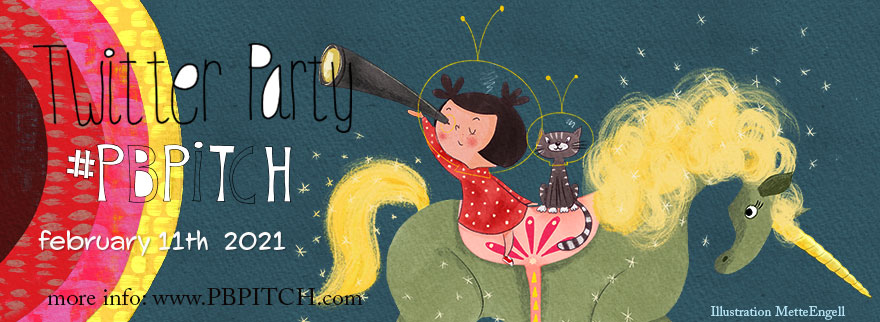
The next #PBPitch is on June 17th, 2021. Hope to see you there!
Filed under Uncategorized
Great Lives in Colorado History Biography Series: Great on So Many Levels!
The “Great Lives in Colorado History Biography Series” offers Colorado’s 3rd and 4th grade students the opportunity to peek into the lives of some of Colorado’s most interesting personalities from the past. In a partnership among the Denver Public Schools Social Studies Department, the Colorado Humanities Organization, and publisher Filter Press, the 33 biographies were written by teachers who were inspired to provide resourc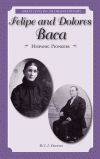 es to teach Colorado history to their elementary school students.
I was one of those teachers/authors who had the opportunity to participate in the Great Lives project. The three biographies I wrote for the series gave me a foundation for my future work as an author of both children’s books and encyclopedia articles. The experience ignited my passion for detailing the past through lives well lived and introduced me to the pleasure of delving into research that reveals information about a person in the context of their time.
The project was premised on the belief that viewing history through the lens of a person’s life is a meaningful experience for elementary school students. As the students read a biography, they are able to see that ordinary people can lead extraordinary lives. From the humble beginnings, these Colorado luminaries rose to make a difference in history.
Students gain knowledge and appreciation of the struggles and hardships that one person had to overcome, perhaps gaining insight and perspective into their own problems. Students can also be inspired to pursue their dreams or to act in more principled ways with insight from real lives. Understanding a person in the context of history can help students know a specific time and place, as well as stimulate a broader interest in history.
Each teacher wrote a biography of an interesting Colorado historic figure of their choice. The resulting set of books represent of a cross-section of people that include writers, politicians, activists, adventurers, explorers, dissenters, professional people, visionaries, and pioneers who were men and women of all ethnicities. 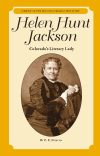 To write the biographies, we used the same skills we expect of our young students: to identify and locate reliable resources for research, to document those sources, to use appropriate information from the resources, and to convey the information we learned in an interesting and creative way. We adapted our writing to our upper-elementary audience, explaining difficult concepts and using student-centered vocabulary.
Being teachers, we made sure the books were resources that included all the elements of non-fiction that we teach to our students. The books are traditional biographies in the “cradle to grave” format. There are chapter headings, a table of contents, a glossary, an index, pictures with captions, a timeline, a bibliography, an “about the author” page, and a dedication. The books were published in English and Spanish, reflecting our student population.
The result is a full classroom set of age-appropriate, accessible biographies on truly notable and fascinating people from Colorado’s past. Students are able to read and research on their own, learning valuable reading and writing skills. In my elementary school, each student is given their own biography. They read about and study their person, then write a first-person account of the subject’s life. The students dress as their person and tell about “their” lives in a Great Lives in Colorado History event. It is the second-best day of the school year (the first always being the Denver Public Schools Shakespeare Festival.) 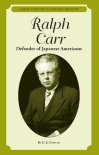 My three books in the series were Helen Hunt Jackson: Colorado’s Literary Lady; Ralph Carr: Defender of Japanese Americans; and Felipe and Dolores Baca: Hispanic Pioneers. To this day, four of the people I admire most in the world include Helen, Ralph, Felipe, and Dolores.
The books are available through Filter Press. They are great gifts for elementary students and are a bargain at $8.95 each. The entire set of 33 can be purchased for only $237.00 and would be welcome in any Colorado classroom.
Here is the link to access the series on the Filter Press Website: https://www.filterpressbooks.com/shop/greatlivescolorado/3
The “Great Lives in Colorado History” Series includes the following bilingual titles:
Augusta Tabor: Enterprising Pioneer
Barney Ford: Pioneer Businessman
Benjamin Lindsey: Father of the Juvenile Courts
Bill Hosokawa: Journalist
Charles Boettcher: Colorado Businessman
Chief Ouray: Ute Chief and Man of Peace
Chin Lin Sou: Chinese-American Leader
Clara Brown: African-American Pioneer
Doc Susie: Mountain Doctor
Elbridge Gerry: The Paul Revere of Colorado
Emily Griffith: Educational Opportunity for All
Enos Mills: Rocky Mountain Conservationist
Fannie Mae Duncan: Entrepreneur
Felipe and Dolores Baca: Hispanic Pioneers
Florence Sabin: Scientist and Teacher
Francis Wisebart Jacobs: Denver’s Mother of Charities
Hazel Schmoll: Colorado Botanist
Helen Hunt Jackson: Colorado’s Literary Lady
Kate Slaughterback: Legendary Rattlesnake Kate
Katharine Lee Bates: Author of “America the Beautiful”
John Dyer: Snowshoe Preacher
John Routt: Colorado’s First Governor
John Wesley Powell: American Hero
Josephine Aspinwall Roche: Humanitarian
Justina Ford: Baby Doctor
Little Raven: Chief of the Southern Arapaho
Otto Mears: Pathfinder of the San Juans
Ralph Carr: Defender of Japanese Americans
Richard Russell: City Leader
Robert Speer: Denver’s Building Mayor
Rodolfo “Corky” Gonzales: Chicano Activist
William Bent: Frontiersman
Zebulon Montgomery Pike: Explorer and Military Officer
Filed under Uncategorized
Starting the Conversation: Using Picture Books to Talk to Children About Racism and Protest
We live in a time when we are confronted by the complexities of race and racial identity.
The deaths of Black men at the hands of police officers has challenged our collective consciousness. Recent events have left me simultaneously heartbroken for the tragedies the Black community has endured for so long, yet optimistic that we can change systems of injustice.
As teachers and parents, this moment presents an opportunity to have difficult conversations with our children about racism, discrimination, white privilege, and protest. To move to a more just society, our children must be part of the solution. We must make sure they grow up equipped with the mindset and knowledge to create a better world.
Fortunately, we are not alone in this effort, because there are many notable children’s books that introduce readers (young and old) to these complicated and emotional topics. These books can be used as a springboard for discussion.
The following picture books about racism and protest—many of them by people of color— will help start the conversations in classrooms, in homes, and among individuals. Although many libraries are closed due to COVID-19, these resources are available at book stores or through your local library’s e-reader programs. Most are also available as videos on YouTube, read aloud by teachers and librarians. Consider buying a book or two to support the important work of these authors and illustrators.
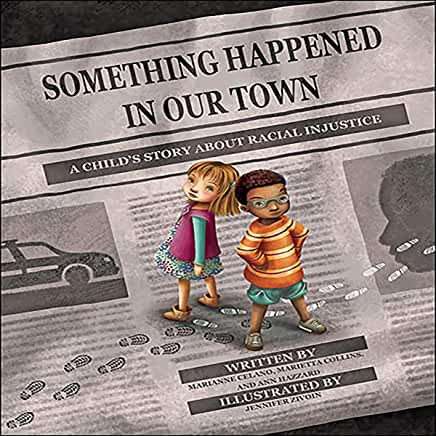 Something Happened in Our Town: A Child’s Story about Racial Injustice by Marianne Celano, Marietta Collins, and Ann Hazard; illustrated by Jennifer Zivoin; Magination Press, 2018. (ages 4-10)
When a Black man is shot by the police in their community, two families discuss the incident. The story helps children to identify and counter racial injustice in their own lives and includes extensive notes to adults, child-friendly definitions, and sample dialogues.
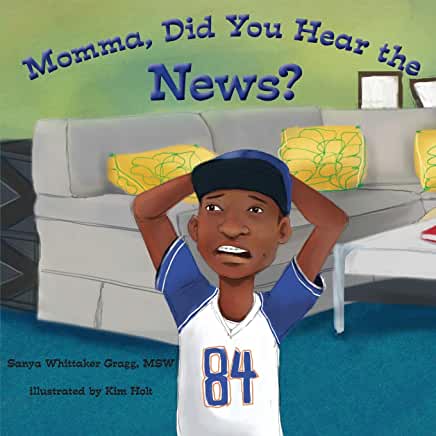 Mama, Did You Hear the News? by Sanya Wittaker Gragg; illustrated by Kim Holt; CreateSpace, 2017. (ages 8-12)
Written to talk to children about police violence, this book addresses how Black children, especially boys, can stay safe. Anyone who cares about an African-American boy should share this book with him. That such a book exists is testament to the need for radical change in our society.
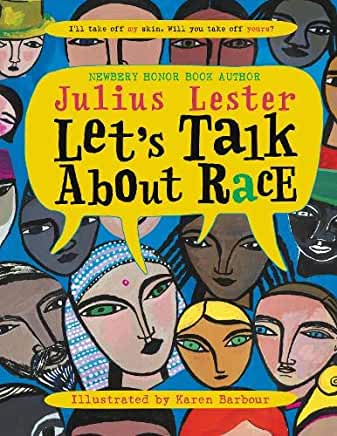 Let’s Talk About Race by Julius Lester; illustrated by Karen Barbour; Harper Collins, 2008. (ages 4-8)
This beautifully illustrated book highlights that people are more than the color of their skin. It suggests ways to push past biases and stereotypes by focusing on individual stories and the gifts that each person brings to the world.
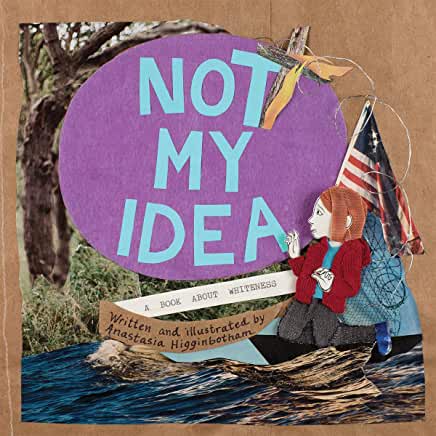 Not My Idea: A Book About Whiteness by Anastasia Higginbotham; Dorris Press, 2018. (ages 8-12)
This book discusses how power and privilege factor into the lives of white children and how all children can help to seek justice for everyone. The book invites all children to be curious about racism, accept that it’s real, and to work toward justice.
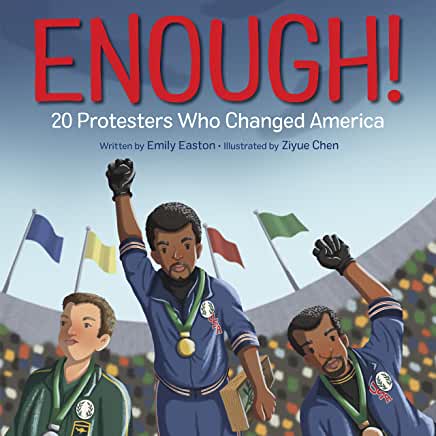 Enough! 20 Protesters Who Changed America by Emily Easton; illustrated by Ziyue Chen; Crown Books, 2018. (ages 5-8)
This alphabet book highlights influential protesters, including contemporary ground breakers, like Colin Kaepernick and the Parkland students, who march in the footsteps of historical protesters like Harriet Tubman and Martin Luther King.
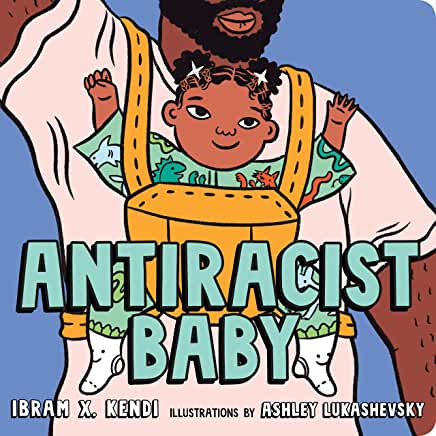 Antiracist Baby by Ibram X. Kendi; illustrated by Ashley Lukashevsky; Kokila Press, 2020. (ages 3-8)
Featuring a really darling baby. this board book for toddlers and preschoolers outlines nine ways to build a more equitable world. It contains advanced concepts, so it is also appropriate as a conversation starter with older children.
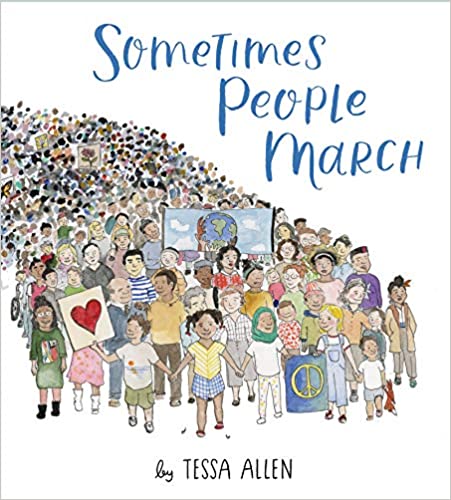
Sometimes People March by Tessa Allen; Balzer and Bray, 2020. (ages 4-8)
People participating in recent and historical social movements are the subject of this book, with poetic text and lovely water-color illustrations. It explains why people march and how people can act and show concern for the causes they care about.
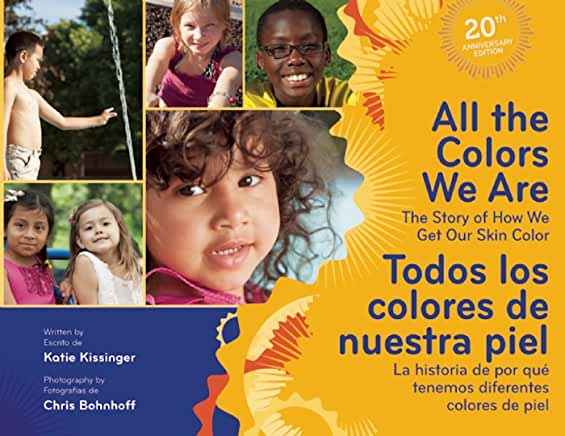 All the Colors We Are: The Story of How We get Our Skin Color by Katie Kissinger; photos by Chris Bohnhoff; Red Leaf Press, 2014. (ages 3 and up)
This book describes the scientific reasons people have different skin colors and introduces the idea that skin color is just one part of any person. It is filled with colorful photographs that capture the variety of skin tones and encourages children to value our diverse world.
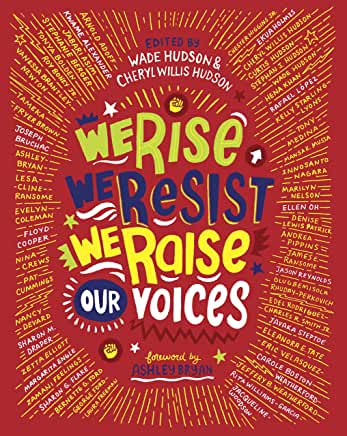 We Rise, We Resist, We Raise Our Voices, edited by Wade Hudson and Cheryl Willis Hudson; Crown Books, 2018. (ages 8-12)
Fifty luminaries of the children’s book writing community, including Kwame Alexander, Jacqueline Woodson, and Rita Williams-Garcia, share their experiences and give advice to young people in this anthology of poems, letters, personal essays, and art. The beautiful art and prose work together to empower children to listen, learn, and to work toward a better tomorrow.
Filed under Uncategorized
Book Review: The Undefeated by Kwame Alexander, illustrated by Kadir Nelson
“This is for the unforgettable…and the ones who survived…and the ones who didn’t.” …“This is for the undefeated. This is for you. And you. And you. This is for us.” (from The Undefeated)
The Undefeated by Kwame Alexander with illustrations by Kadir Nelson, is a powerful reading experience that highlights for children the history of African-Americans and the promise of our hope for the future.
This outstanding picture book won the 2020 Caldecott Medal, awarded annually to the artist of the most distinguished picture book published for children in the United States. It was also given a Newbery Honor Medal for its distinguished contribution to American literature for children and the Coretta Scott King Award, given to an African-American author and illustrator for outstanding inspirational and educational contributions. On all three levels, the illustrations, the text and the message, the book is an inspiring read that belongs in classrooms, homes and libraries homes across America.
A successful picture book for children balances words and illustrations, which work together to tell a story. The text is Kwame Alexander’s free-verse poem, spare and minimal, which was written in 2008 to celebrate the birth of his second daughter and the election of Barak Obama as president. He strove to highlight African-American history that had been forgotten and to embrace the “woes and wonders” of this American story.
The illustrations, photo-realistic oil paintings by Kadir Nelson, are the highlight of the book. He infuses the faces of people from history, both the famous and the nameless, with emotion and beauty. Their portraits speak to the viewer of the joy and suffering of the African-American people. The illustrations have a luminous, glowing quality that spread across the oversized pages, and illuminate the determination and grit of the subjects.
Alexander’s poem makes brilliant use of “un –words”: unforgettable, undeniable, unflappable, unafraid, unspeakable, unlimited, undiscovered, unbelievable, unbending, underdogs, uncertain, unspoken, and finally undefeated. The repetition of “un-words” builds to a climax, and Nelson’s final illustration of “undefeated” is a crowd of children of today, with bright smiles and sparkling eyes, inspired by the past and dreaming of the future.
Alexander and Nelson honor the achievements, courage and perseverance of prominent Black artists, athletes, and activists. The pictures are an assembly of famous Americans, from Jesse Owens to Ella Fitzgerald to Langston Hughes to Serena Williams. On one large spread, historical and contemporary musicians are pictured together, making past and present interrelated. Also highlighted are important moments in American history, which include the Civil War, highlighting Black soldiers who fought “to save an imperfect union” and the freedom marches of the Civil Rights Movement, with a diverse group of people singing “we shall not be moved.” Several pages are dedicated to ordinary people “who survived America by any means necessary,” followed by a haunting, blank, two page spread with the words “…and the ones who didn’t.” Joy and sadness intertwine together in this book, like the experiences of the people whose story is being told.
The book addresses the horror of slavery, the violence of the civil rights movement and the police brutality of today. The most moving portion of the book involves three pages illustrating: “This is for the unspeakable.” The first of these three spreads, subtle and powerful, duplicates a drawing from the 1780s of the hold of a slave ship, and shows men’s bodies laying side-by-side, margin to margin, looking like patterned African cloth, until one looks closer. The second includes framed portraits of the four little girls murdered in the Birmingham Church bombing, with shattered glass covering their sweet faces. The last shows a spontaneous memorial to youth killed in recent police violence: teddy bears, burning candles, bouquets of flowers, and school pictures of the victims, superimposed over an American flag. The reality of these events cannot be denied and adds honesty and depth to the story, but ultimately does not detract from the overall positive message of the book.
One of the great assets of this book it that it can be accessed by children at different levels of understanding. It can be shared with children as young as preschoolers, as an introduction to both American and Black-American history. For older students it can serve as a springboard to understanding history through individuals or groups. The book’s back matter includes an annotated list of historical figures and events featured in the book. I can see the book being a treasured by parents and children, as well as being a powerful teaching tool for the elementary classroom.
Sometimes, I think the American Library Association, which awards the Caldecott Medal, does not always choose the best book. This year, however, they got it right. The Undefeated by Kwame Alexander and Kadir Nelson is an extraordinary book that richly deserves the praise and honors that it has been given.

Filed under Uncategorized
Breaking Barriers; Inspiring Others: Author Julia Alvarez
In early November, I had the opportunity to hear Dominican-American author Julia Alvarez (say Hoo-lia!) speak about her life and books. Julia was in Denver to celebrate her book In the Time of the Butterflies, which had been chosen as the “Big Read” for the Denver Community for 2019.
Since her first novel, How the Garcia Girls Lost Their Accents, was published in 1991, I have been an avid admirer of her writing. Her works are known for their vivid characters, multiple points of view, poetic language and her sharp insights into human nature.

Julia Alvarez signing her book, In the Time of the Butterflies.
Julia Alvarez is a powerful female voice in American and Hispanic literature. Her early novels became the first Latina works to find their way into the mainstream of American literature. Now, her books are regularly read as part of the American cannon in schools around the country. At 69-years old, she balances writing, teaching and public appearances with a calm grace.
Dwarfed by the Newman Center stage, Julia reminded me of Yoda: diminutive, humble and infinitely wise. She spoke about her life and her writing, while encouraging and inspiring the packed house of writers who filled the seats.
Here are some highlights from Julia’s wisdom about writing, reading and life. These were culled from a several sources, the presentation that I attended and others I searched out on the internet:
On Inspiration: Where do I get inspired? By the pebble in my shoe, by the thing that unsettles me, by the story that takes me out of myself and makes me see things differently. It’s the story that won’t let me go… the story that I feel I must tell. Curiosity is the place I begin.
On being a “Real Writer:” I used to think real writers started at the beginning and went through to the end, maybe making a change here or there. So I thought I wasn’t a real writer because what I did was so messy. But I know now that writing is messy, but that, when it is all said and done, being a writer is a great blessing. It’s such an honor to be able to do what I was put on this earth to do.
On History: History is the story we tell ourselves about what really happened. What we remember is always filtered through a point of view. A novel is a lens to see a story and is the truth according to character. Novels arise out of the shortcomings of history. Just the facts can’t begin to tell the full human story.
On the Power of Stories: Stories have the ability to transform, encourage empathy and spur the imagination. Stories have the ability to show us our full humanity. I believe stories have the power to change the world.
On Books: I found, at the table of literature, a place where all were welcome. Here, I entered worlds, between the covers of books, that I longed to know more about. Being a reader is the beginning of being a writer. Once you become a reader, you realize that there is one story you haven’t read… it’s the story only you can tell.
On Revising: I am an endless reviser. When you begin, you write the best book you can write at that moment. Revision is part of the process of growing and improving as a writer. Through revision you read your book as your reader would and change your book for them. You become the best advocate for your reader through revision.
On Reading and Writing: Whether we are reading or writing a book, when we see with clarity all the complexity of another person, it is an amazing connection to humanity. When we walk in another’s shoes, it is a radical, transforming experience.
On Process: I am a person of ritual and I like structure. I write every single day. Sometimes the muse comes and sometimes it doesn’t. But writing is a muscle and needs to be exercised everyday. A dancer doesn’t just dance when she feels like it, she dances and practices everyday. This is the same of a writer.
On Characters: Give thanks to your characters and the stories they came to tell you. Honor them and put them to rest. The truth your characters speak is multifaceted, and what I love about a story is that it can hold all of the complexity that exists in that situation.
Filed under Uncategorized