

In the middle of March, I began sending my middle-grade time-travel novel out to agents. And as all experienced writers know, the best thing to do when you are waiting for query responses is to work on something else. My “something else” was an idea I got from a friend after we attended Andrea Wang’s intensive at the RMC-SCBWI Letters and Lines conference last September. (https://www.rondibooks.com/the-stories-hidden-inside-you/) But even though I had a “Beat Sheet” outline from Save the Cat for the Novel by Jessica Brody, I hadn’t written a single word of the story. Luckily, after an animated conversation with my friend and teacher, award-winning author Sarah Aronson (https://saraharonson.com/), I decided to sign up for her eight-week online Highlights class, JUST DO IT – Your Collaborative Support Group for Finishing Your Draft. Sarah would be co-teaching this class with the incredibly articulate and inspirational author and coach, Chris Tebbetts. (https://christebbetts.com/). It sounded like the perfect way to get this book started.
If you have ever done NANOWRIMO (The National Novel Writing Month-long challenge to write 50,000 words in 30 days) you know the joy of writing fast. Just Do It! has a similar premise. It focuses on a creating a daily writing practice with many extra goodies thrown in. The formal part of the class is a one hour Zoom on Wednesday nights where Sarah and Chris give informative presentations on craft. Only there is so much more. Whether you are working on a picture book or a young adult novel, there are writing sprint sessions every day at a variety of times, morning prompts, and inspirational quotes. There are accountability groups, Discord channels for discussion and sharing, and OPEN MIKES! We also received videos and slides and oodles of handouts. But the best part of these two months was being part of a supportive writing community. Our class had over fifty participants from across North America, two guest speakers, and many Highlights staff members coordinating logistics behind the scenes. I felt like I was at a two-month writing retreat without leaving my house.
So, you may ask, after weeks of diligently sitting at my computer, did I finish my draft? Unfortunately, the answer is no. A variety of expected, and unexpected, life cycle events collided right smack in the middle of the eight weeks. However, I did write 24,000 words, which is probably half the book, right? And more importantly, I am now totally immersed in the world of my new story. I wake up every morning with character traits, plot twists, and image systems rolling around in my brain. And after my recent critique with Sarah, I am considering all kinds of possibilities. I am in the zone!
But there’s more. The virtual writing sprints will continue through the summer which should help me pound out the next 24,000 words. Also, my accountability group is planning to keep meeting on a regular basis. We are committed to cheering each other on to the finish line. But here is my biggest takeaway – the greatest change in my writing process: I am way much more comfortable with integrating the concepts of “discovery and play” into my drafting. I have also found the courage to silence my internal editor. (One person in my accountability group has named her IE and repeatedly tells her to stop talking. I now do the same thing and it is phenomenal.) I am finally accepting the fact that plot changes happen when your characters come to life on the page. And although my “Beat Sheet” has been dramatically modified, my themes are stronger and my main character’s true wants and needs are clearer to me. It’s funny, but along with me just doing it, my characters are just doing it, too! And I can’t wait to see what they do next.
If this sounds like something you might be interested in, another Just Do It! class is being offered by Sarah and Chris this fall. You can sign up here: https://www.highlightsfoundation.org/workshop/just-do-it-your-collaborative-support-group-for-finishing-your-draft-fall/
 This novel finds a balance of humor, adventure, and a glimpse into the future and the effects of global warming. It is set in the not-so-distant future when global warming has made the world a very different place. Ahab and his friends risk the polluted waters of the ocean, which is now devoid of life, and go to an off-limits island and find a real, live bullfrog. It is possibly one of the last bullfrogs alive.
 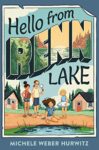 Annalise Oliver is the adopted daughter of a family that has owned lakeside cabins in Renn Lake, Wisconsin for generations. The story, told from the perspective of Annalise, the Lake, and a nearby stream, reinforces the complexity of how climate change affects communities and ecosystems. Annalise’s special relationship with the lake lets her sense what Renn Lake thinks and feels.
 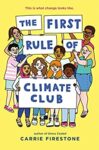 In this novel, Mary Kate Murphy participates in a unique science program focused on climate change. The class opens her eyes to many things she had never noticed before about her small suburban town: Kids throw away tons of food at school, adults drive ozone-depleting vehicles, people buy clothes they don’t need, and the birds in the local preserve seem distressed. Complicating the situation, her best friend is plagued with a mysterious illness.
 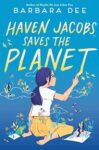 Haven Jacobs is a twelve-year-old girl who is unable to stop thinking about the climate crisis. Her anxiety about the state of the planet begins to interfere with her schoolwork, friendships, and even her sleep. She can’t stop worrying about why adults aren’t trying to solve the problems.
 A group of 12-year-old friends concerned about climate change propose a new way to save the earth– crafting a new amendment to the United States Constitution. Their project sends them on a journey through America and Norway as they take steps to save the planet. Sixth grader Sam Warren and his friends think that climate change is too pressing to ignore. Adults don’t seem to be up to the challenge of real change, but the kids know their futures depend on action now.